





Table of Contents
Voter identification, in a campaign context, is the process (and art) of finding out who supports you, who opposes you, and who is undecided.
It turns raw lists into clear insight. The goal is to improve persuasion and turnout effectively before an election, union vote, or other ballot measures. A strong voter identification program is not a one‑off effort but a recurring program that campaigns and unions run in every cycle, learning from each cycle.
What is voter identification for campaigns?
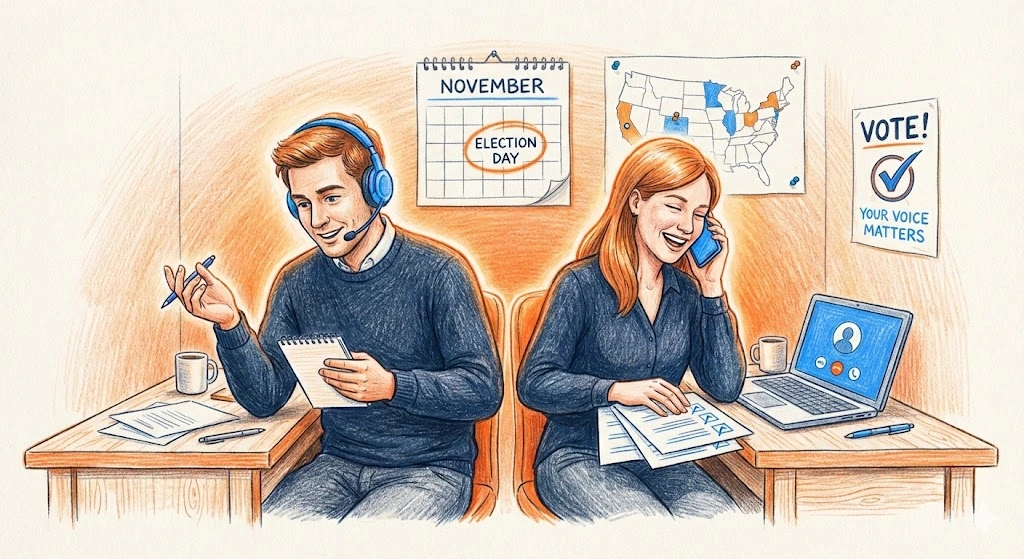
For campaigns and organizations, voter identification (voter ID) means systematically discovering each contact’s support level and key traits so you can prioritize outreach.
(Here, voter ID is different from government-approved identification documents used during voting.)
Campaigns use voter identification to answer three core questions for each person:
- Are they a supporter, opponent, or undecided?
- What issues, messages, or identities matter most to them?
- What barriers might stop them from voting (including legal identification in strict‑ID states)?
These barriers are often systematic in nature and are considered a form of ‘voter suppression’ – that is, any legal or illegal attempt to prevent voters from exercising their right. Read more about voter suppression and mobilization here.
Why voter identification matters for political campaigns, unions, and nonprofits

Canvassing pre-identified voters during an election campaign increased turnout by roughly 6–7 percent in field experiments from 2000. This sort of canvassing is not possible unless a strong voter identification campaign precedes it.
Whether you need supporters to sign a petition, identify potential voters, or collect reactions for a new union proposal, voter identification ensures you don’t enter the battleground blind.
Done well, voter identification turns an anonymous list of supporters, voters, or members into polished segments. These segments then give your outreach team a clear map of who you need to move and how to move them.
It improves both efficiency and impact for field and digital programs. Key benefits include:
- Smarter targeting: Focus persuasion on undecided or soft supporters and GOTV on strong supporters, rather than wasting money on the entire voting pool.
- Better messaging: Use voter profiling to tailor scripts and content to each bloc or segment. This way, you are telling people what matters to them, instead of a generic message to everyone.
- Risk management: Identify barriers (e.g., documentation issues, language barriers, transportation), the groups most likely to face them, and plan how to overcome them for your supporters. This way, there are no ‘surprises’ on the day of the polls. You know who you can expect to show up.
Pro tip: Don’t overdo the tailoring. It is tempting to send extremely personal messages. But resist that urge. A meta‑style analysis of microtargeting experiments shows that tailoring for broad things – age, gender, partisanship, etc. – yields most of the electoral gains. Adding many more attributes does not systematically improve persuasion and can even make your supporters uncomfortable. |
So, how does one run a voter identification campaign? Here are the steps:
- Get a contact list of all potential supporters, members, and voters.
- Write a powerful script for your agents that covers what contacts are told, the questions they are asked, and what to tell them when they respond.
- Make the calls, and ensure agents tag contacts appropriately based on their replies.
- Ask whether the contacts have any issues voting (No Voter ID, can’t travel to the polling place, etc.).
- Create new contact segments grouped by similar traits for targeted outreach.
That’s it – in brief. We will now look at each of these steps in detail, along with tips to boost your voter identification campaign.
Unconscious Bias And Voter Behavior: How You Can Leverage It You may assume that people vote based on policies, values, or if the candidate is honest, trustworthy, and a decisive leader. However, research shows that voters might emphasize how a candidate looks more than their performance. Unconscious bias played a subtle role in both studies, influencing voter decisions. Read this article to look at some more hidden factors that can influence a voter. |
Foundation of voter identification: Contact lists
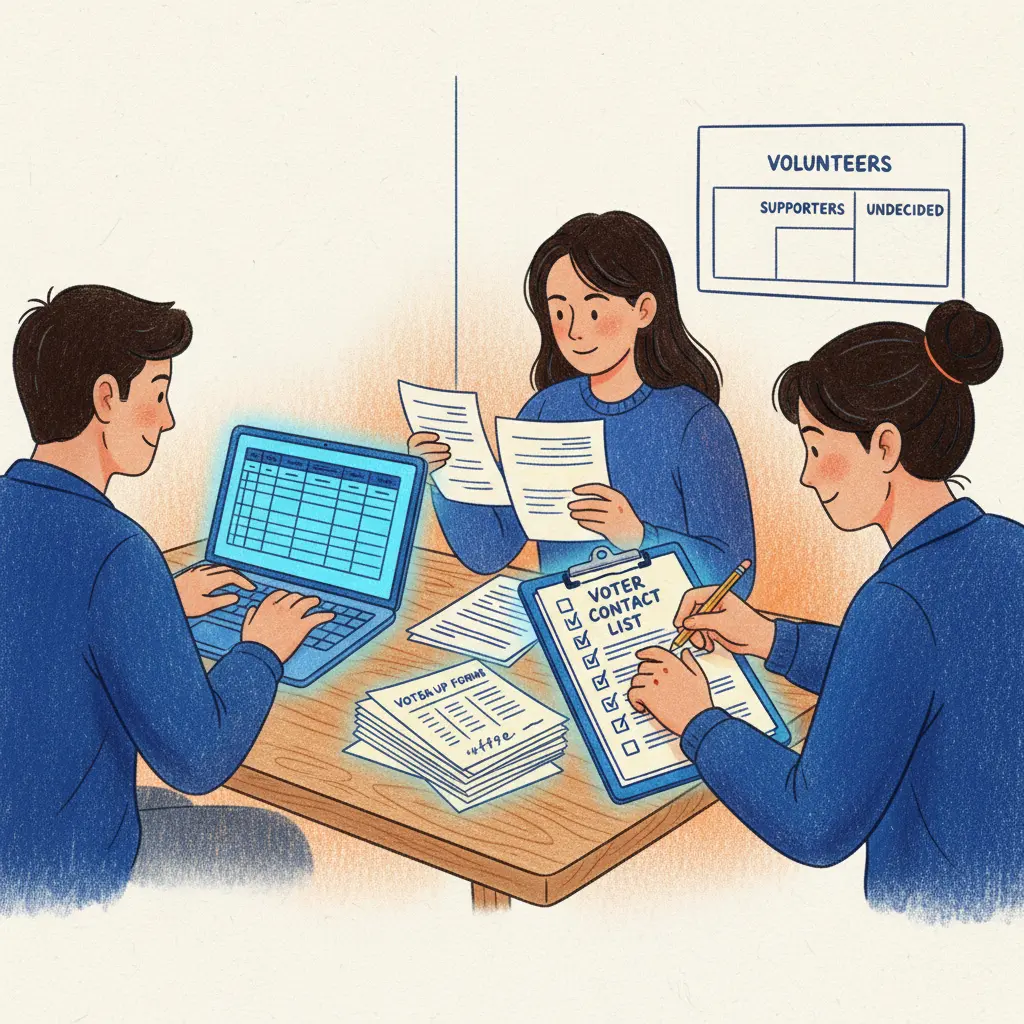
Start by assembling a high‑quality universe of people you can actually contact.
That usually means combining voter files, union or membership lists, and past campaign data, then cleaning and standardizing them so every record has the best available phone/mobile number, email, and address.
Read More: How To Build A Voter List For Your Election Campaign
Typical steps to build this foundation include:
- Acquiring voter or member data from party files, state lists, unions, or commercial vendors. (The cost of acquiring this data and its relevance to your campaign are major considerations.)
- Cleaning and standardizing contact information, then syncing it with your CRM and outreach platforms, such as CallHub.
- Making segmented contact lists to filter by geography, eligibility, and strategic targets (specific demographics, people who have already voted, etc.) before launching your initial outreach.
Voter identification with VoteBuilder Tools like VoteBuilder (VAN) are built for large‑scale voter identification, especially in political campaigns. They allow organizers to pull lists, assign them to volunteers, collect responses, and feed everything back into a central voter record. A typical voter identification workflow with VoteBuilder: Define your target universe (e.g., likely voters in key precincts or segments). Push contact lists to phone banking, texting, or canvassing tools. Record support levels (strong, lean, undecided, opposed) Add tags such as “union member”, “needs language support”, or “ID education needed”. Read more for step‑by‑step usage, screenshots, and best practices: Voter Identification with VoteBuilder: Your Ultimate Guide |
So the first step in your voter identification drive is to set up these lists. The second is the scripts.
Before you start speaking to people, figure out exactly what you will say. (And yes, you need to know this before you speak to anyone. )
Scripts: The real power behind voter drives
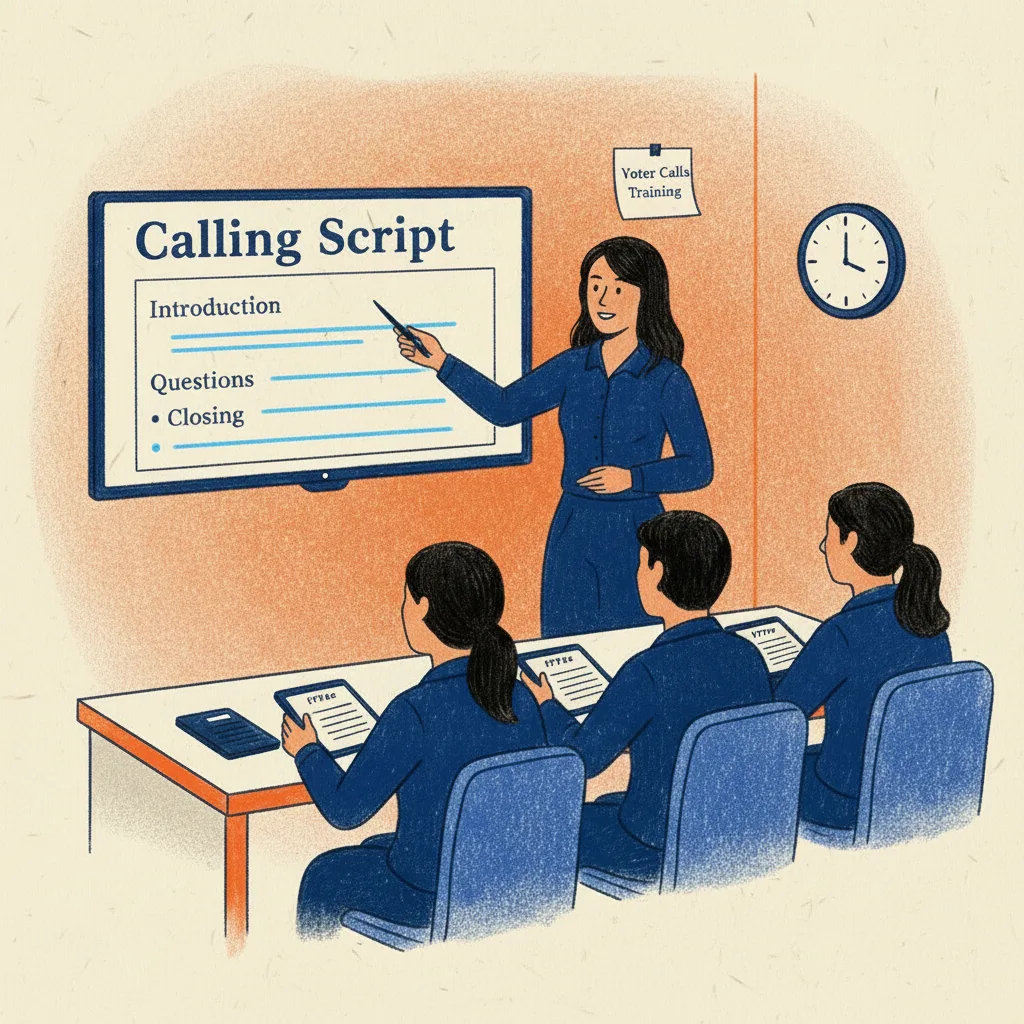
Anonymous data becomes useful only when conversations with people dispel uncertainty about their positions. Phone banking, peer‑to‑peer texting, and other forms of canvassing all serve the same purpose here: Ask a short set of structured questions that establish support level, key issues, and any practical barriers to voting.
Pre-defined scripts keep conversations consistent across hundreds of agents while still leaving room for personal connection and persuasion.
Getting the right answers is the backbone of such illuminating exercises, which can be achieved only through powerful, well-thought-out scripts.
Strong voter identification scripts should:
- Quickly confirm support level (“Who are you planning to support in the upcoming election/union vote?”).
- Capture issue priorities, union concerns, or ballot‑measure interests in a structured way.
- Ask about barriers like confusion over the voting process, the need for translation, or legal ID in strict states.
Interactive Voter Identification Scripts for Your Next Primary Campaign The biggest challenge with the voter identification script is keeping people on the call. The data you receive from your party is not up-to-date, and you need to have meaningful conversations with constituents to understand where they stand. Pages-long introductions and irrelevant information will only make potential supporters tune you out. Worry not; this article provides a ready-to-use voter identification script that covers all possible directions your conversation may take. |
Voter profiling: Turning ID data into insight
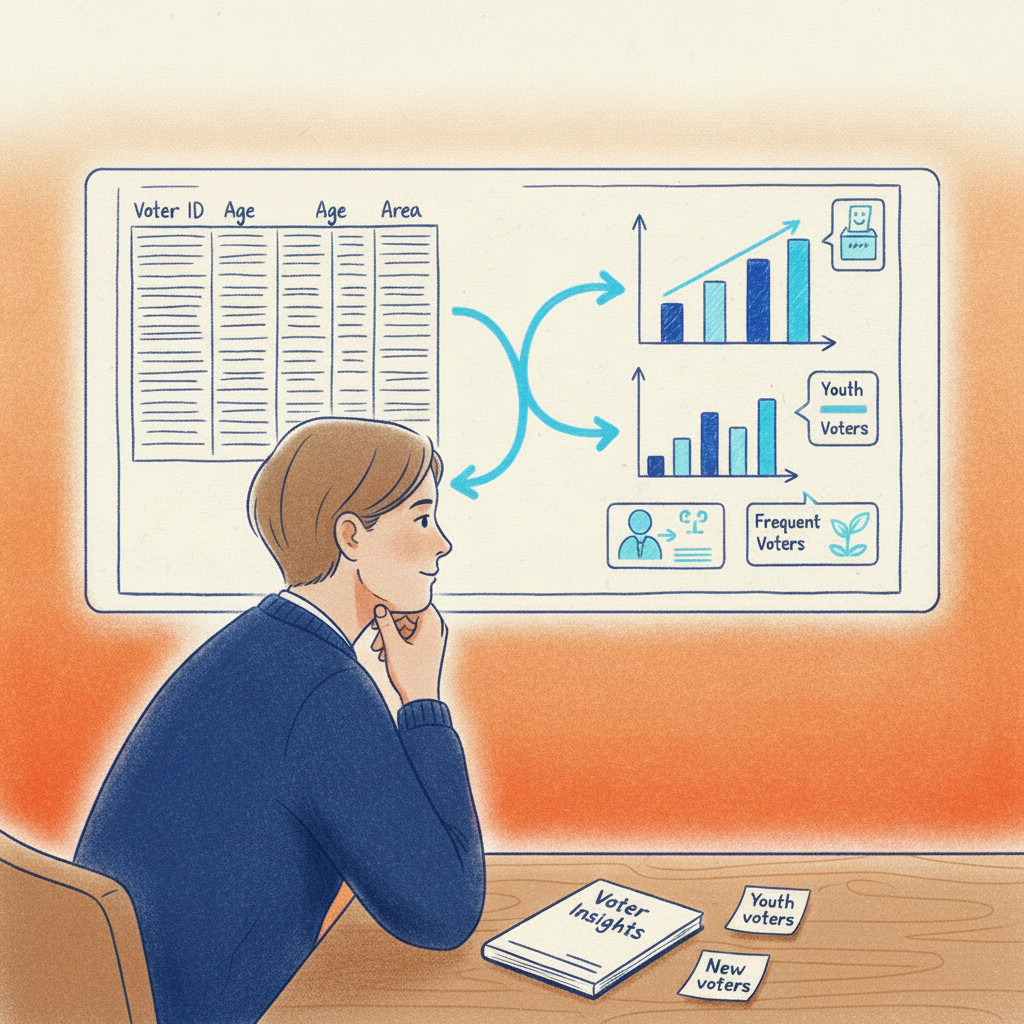
Lists tell you who to call. Your scripts help you identify supporters and undecided voters. But how do you categorize their answers?
The agents on the calls need to tag voters such that you can group them by shared traits – a practice known as voter profiling. Every contact should be coded with a clear support score (strong supporter, lean, undecided, opposed), plus tags for issue priorities, preferred language, and obstacles like transportation or confusion about voter ID laws.
Agents will also have to tag which voters NOT to reach out to again, since those voters will most likely vote for your opponent. This way, you save precious dollars, time, and a lot of flak that you might receive from irrelevant electorates.
Voter profiling is one of the most powerful ways to make every dollar and every outreach touch count in modern campaigns.
Profiling typically uses:
- Demographics (age, language, location, occupation).
- Behavioral data (past turnout, union meeting attendance, responsiveness to channels).
- Issue and identity data (top concerns, affinity groups, union priorities).
The goal is not to stereotype but to design respectful, relevant outreach that resonates with each segment.
Voter Profiling: Learn How To Personalize Your Campaign With strong voter profiles, your campaign can: Know which voter group to target. Design messages and campaign policies that influence them the most. Understand the ideologies, messages, and policies they oppose. Know the platforms through which you can communicate with them. This article explores important data points you can collect while profiling and how to leverage voter profiles to boost your election campaign. |
Voter ID: Discovering barriers during voter identification
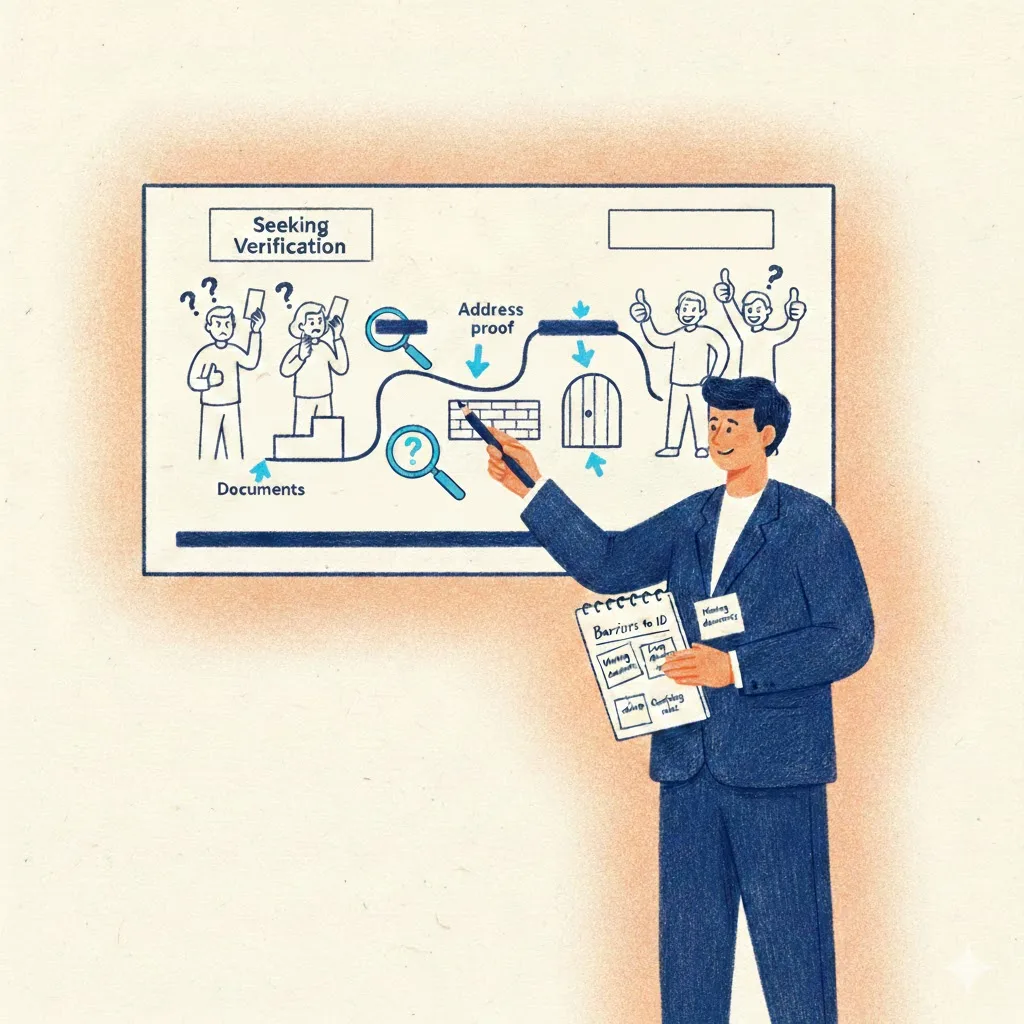
An important part of voter identification is finding out who is even eligible to vote. Since voting requirements (like voter ID) are solvable, voter identification campaigns are crucial for identifying the problems and setting up follow-up campaigns to help supporters overcome such hurdles and then come out to vote for you (hopefully).
So make sure your voting identification scripts clearly ask each contact whether they can vote.
And if they indicate they cannot, add those contacts to a separate segment, and use phone-banking campaigns to explain local voter ID laws by state, walk supporters through accepted IDs, and answer questions ahead of polls.
You should also send follow-up texts that link to official resources where voters can check whether their driver’s license, Real ID, or other documents will work.
Voter Identification Laws in the US: What You Need to Know Get a detailed understanding of voter ID laws in America, which states need special attention, and what tools you can give to your supporters to help them to vote. |
Pro-tips: How to maximize voter identification drives
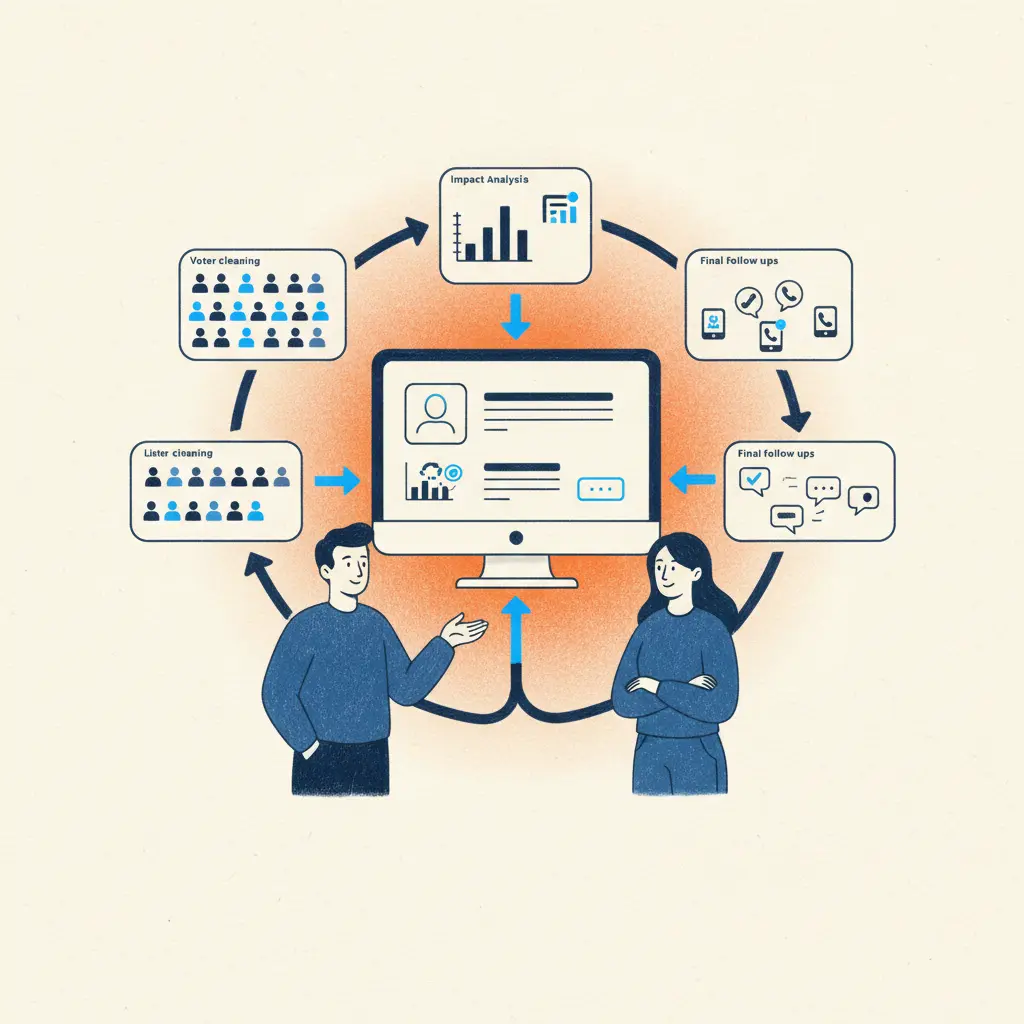
While it sounds simple, voter identification can trip up campaigns when they aim for ‘full coverage’ but keep discovering segments of voters their outreach did not reach. You can avoid that pain by keeping these tips in mind:
Use a unified outreach platform
Voter identification is a machine with many moving parts.
In parallel, the campaign will call some people, send updates to others via mass text, have personal chats with certain segments via P2P texting, and add others for follow-ups at a later time.
There is also the administrative aspects going on in the background – making new lists of tagged contacts, assigning agents to these lists, and measuring the impact of each round of outreach.
Using separate tools to call, text, follow up, manage calling agents, or assign lists is not a good idea.
Transferring data from tool to tool is error-prone and time-consuming, and scanning multiple disconnected tools does not give you an overall picture of how the campaign is doing.
As a campaign, you should use a unified platform, through which the entire voter identification cycle – from list cleaning, to impact analysis, to final follow-ups via automated texts – can be handled.
A unified outreach campaign drives real change CallHub specializes in being such a unified platform and can handle such campaign requirements with ease. |
Use multilingual segments during voter identification
As campaigns become more diverse in the United States, reaching voters in their preferred language is essential. That is where multilingual voter outreach comes into play.
In many communities and unions, English‑only outreach will miss or underserve key blocs. Multilingual voter identification campaigns make it easier for people to understand issues and commit to voting.
Elements of effective multilingual voter identification:
- Scripts and materials in the languages spoken by your target blocs.
- Matching volunteers or agents with voters based on language and cultural familiarity, where possible.
- Tagging language preferences in your CRM so future contacts stay consistent.
Read more: Multilingual Voter Outreach Made Simple with CallHub
Use multiple channels for voter identification
Different voter blocs respond to different channels, so voter identification campaigns must be tailored by channel.
Some may prefer calls, others may prefer speaking over texts. Usually, this is by demographics: older voters are fine with calls, younger voters prefer texts.
Use phone campaigns, text broadcasts, and P2P texting campaigns during outreach.
Warning: Track who is receiving the message more closely. Nothing will annoy your supporters more than answering questions on a call, only to have the same questions sent to them via text.
Read More: How to Make Your Voter Outreach Boost Every Kind of Voter Bloc
Measure and improve your voter identification program
Voter identification is only as strong as the insights you gain and act on. Using Analytics dashboards in tools like CallHub will be indispensable to your campaign. Treat voter identification as an iterative cycle, not a static project.
Campaigns and unions should regularly review:
- Contact rates by channel.
- ID rates (what percentage of contacts told you their support level).
- Conversion rates from undecided (tagged during voter identification) to supporters (after a follow-up campaign).
- Turnout among identified supporters.
Use those metrics to refine your lists, adjust scripts, rebalance channels, and re‑target your resources so each pass through this system produces better, more efficient results than the last.
Know what’s working while your campaign is live CallHub’s AI Smart Insights turn every call into instant sentiment scores, summaries, and segments. So you can tweak scripts, reassign agents, and launch targeted follow‑ups. |
Ready to start a powerful voter identification campaign?
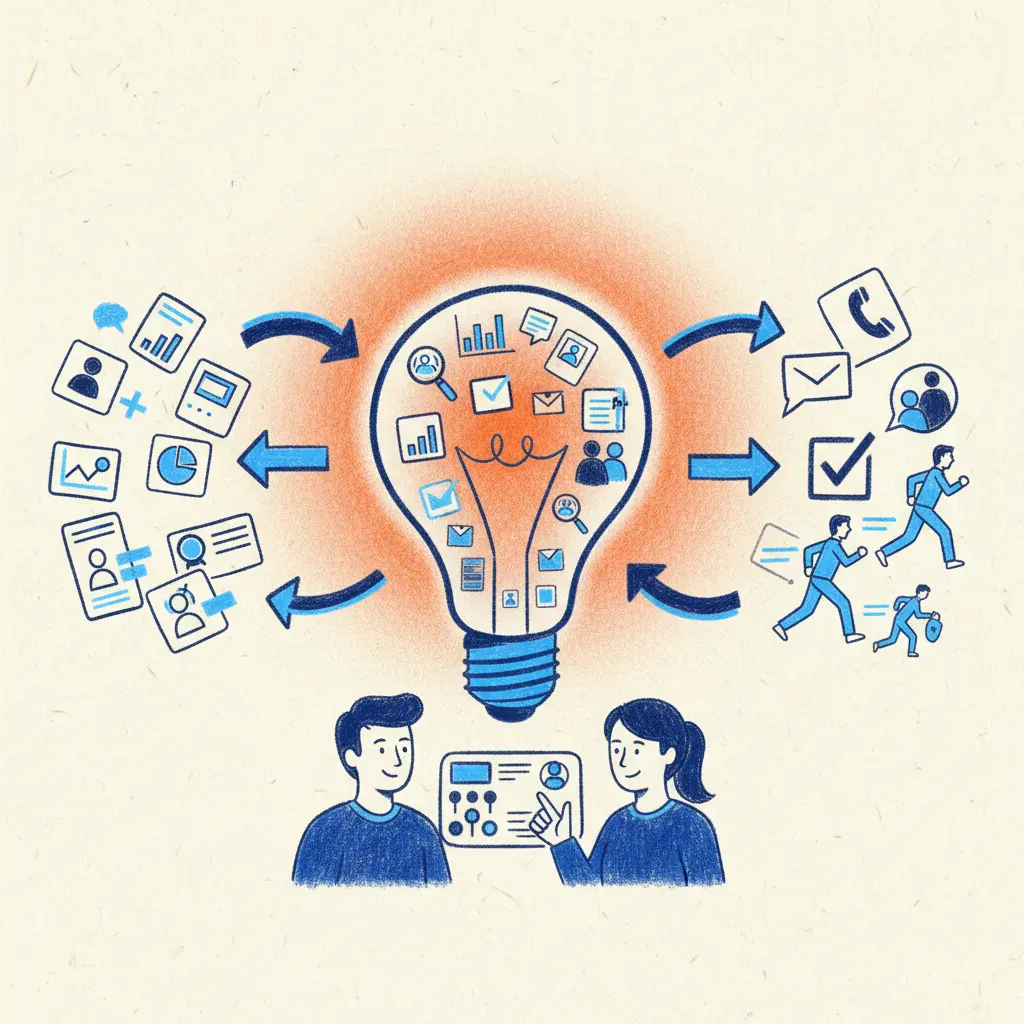
Voter identification is one of the few levers campaigns and unions fully control. When you know exactly who your supporters are, what they care about, and what stands between them and the ballot, every call, text, and door knock becomes more focused and effective.
That’s how you move from chasing numbers to actually shaping outcomes, whether in public elections, union votes, or internal member decisions.
CallHub is built to make that shift possible even for lean teams.
It connects your lists, scripts, and channels so every conversation feeds back into a single, usable picture of your voters.
If you are ready to turn voter identification from a box‑checking exercise into a strategic advantage, set up your first phone or text campaign with CallHub and see how quickly your data (and results) start to improve.