





Table of Contents
Youth volunteering offers teens (typically ages 11-18) opportunities to build skills, gain experience, and support communities through activities like food drives, environmental cleanups, tutoring, and animal shelter assistance. Youth volunteering is on the rise. 61% of Gen-Zers volunteer their time for numerous social, environmental, and economic causes.
These young generations have grown up in the modern technological world and therefore have ample exposure to these issues. They care about them immensely and are willing to contribute efforts for an affirmative, positive change.
Such teenagers and young adults may seem inexperienced, but they can be significant assets for your campaign. They make it more youthful, more dynamic.
Let’s look at how youth volunteering benefits you, how to recruit them, and how to keep them invested in your campaign.
Advantages of youth volunteering
Asking for support and contributions from young people who are not eligible to vote may seem counterintuitive. But youth volunteering can offer a lot to your campaign. Their energy, enthusiasm, and unprecedented exposure make them valuable resources to your cause.
Let’s look at what the youth can bring to the table:
1. The younger generations provide fresh perspectives to various causes by youth volunteering
Signs of political change are visible everywhere now, and youngsters, like teenager Haley Zaker, are active participants in it.
In light of the mass shootings happening in the USA, Haley started a #StudentsDemandAction group in her school. She wants to run for Congress in the future.
Like Haley, such violence is increasingly worrying the young generation. A study showed that
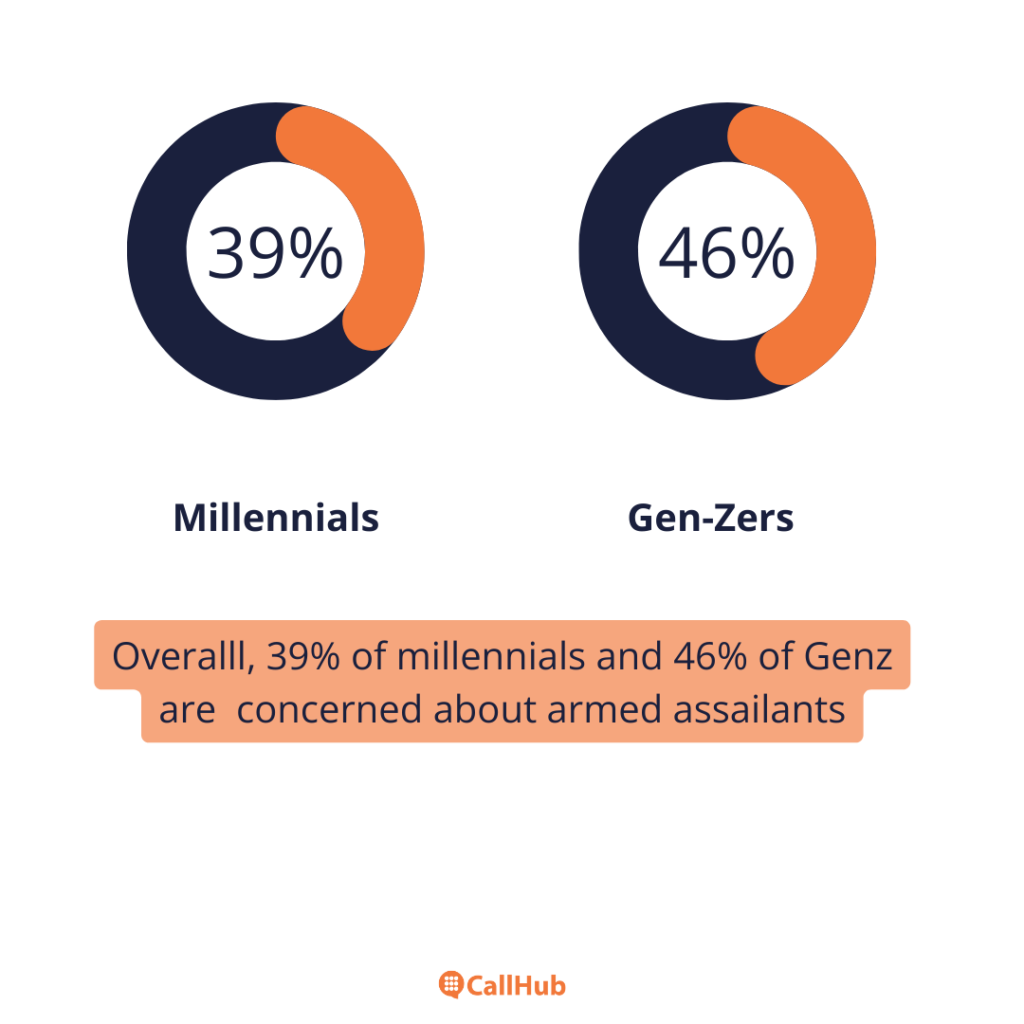
In contrast, only 22% of Baby Boomers are worried about this issue. Naturally, issues like gun control, public safety measures, and faster legal remedies will be crucial topics for such youngsters.
Having people like Haley on the team through youth volunteering can be a guide on what concerns the youth and help you leverage it for your campaign.
2. They are fluent in technology (which helps your social media game)
When targeting young voters, it is crucial to know where they are. For Pete Buttigieg (a millennial himself), the social media strategy wasn’t to go where the majority of the population was; it was to target the niches where his voters were. Such instincts come naturally to the younger generation because:
- Over half of American children own a smartphone by the age of 11
- 91% own a smartphone by the time they are 18
- Nearly half of teens say they are online almost constantly, and 96% go online every single day.
Getting them onboard will open doors for your campaign to reach out to young voters.
3. They are highly motivated and energetic
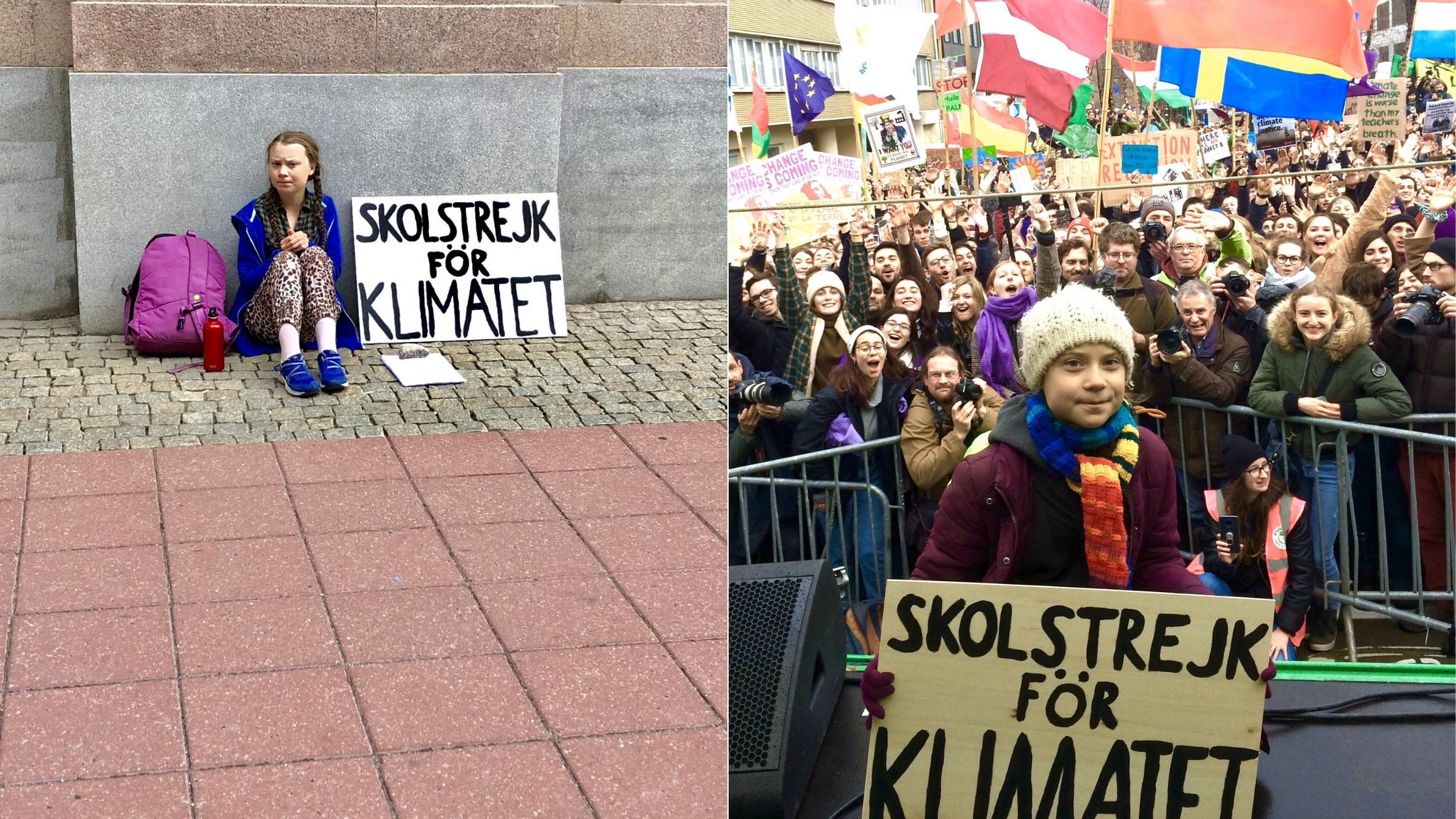
Greta Thunberg, a young teen, went from a lone schoolgirl skipping school to protest climate change to inspiring millions across the globe to follow her
Many, if not all of these protestors were young, just like their leader.
This massive movement, predominantly led by students, teens, and young adults shows,
- Young age groups are highly motivated
- They are super energetic and always ready to take action
- Once they find a worthy cause and a reliable leader, they follow through.
When your campaign speaks to issues young voters genuinely care about—and gives them meaningful ways to participate—you don’t just gain volunteers. You build a committed, enthusiastic force that canvasses neighborhoods, spreads your message online, mobilizes peers, and sustains momentum through Election Day.
4. Youth volunteering can motivate millennial voters to support you
Teens and students in your campaign are likely to relate with young generations eligible to vote. Similar interests of these age groups lead to them agreeing on several causes. But it is not the same with baby boomers, due to the generation gap.
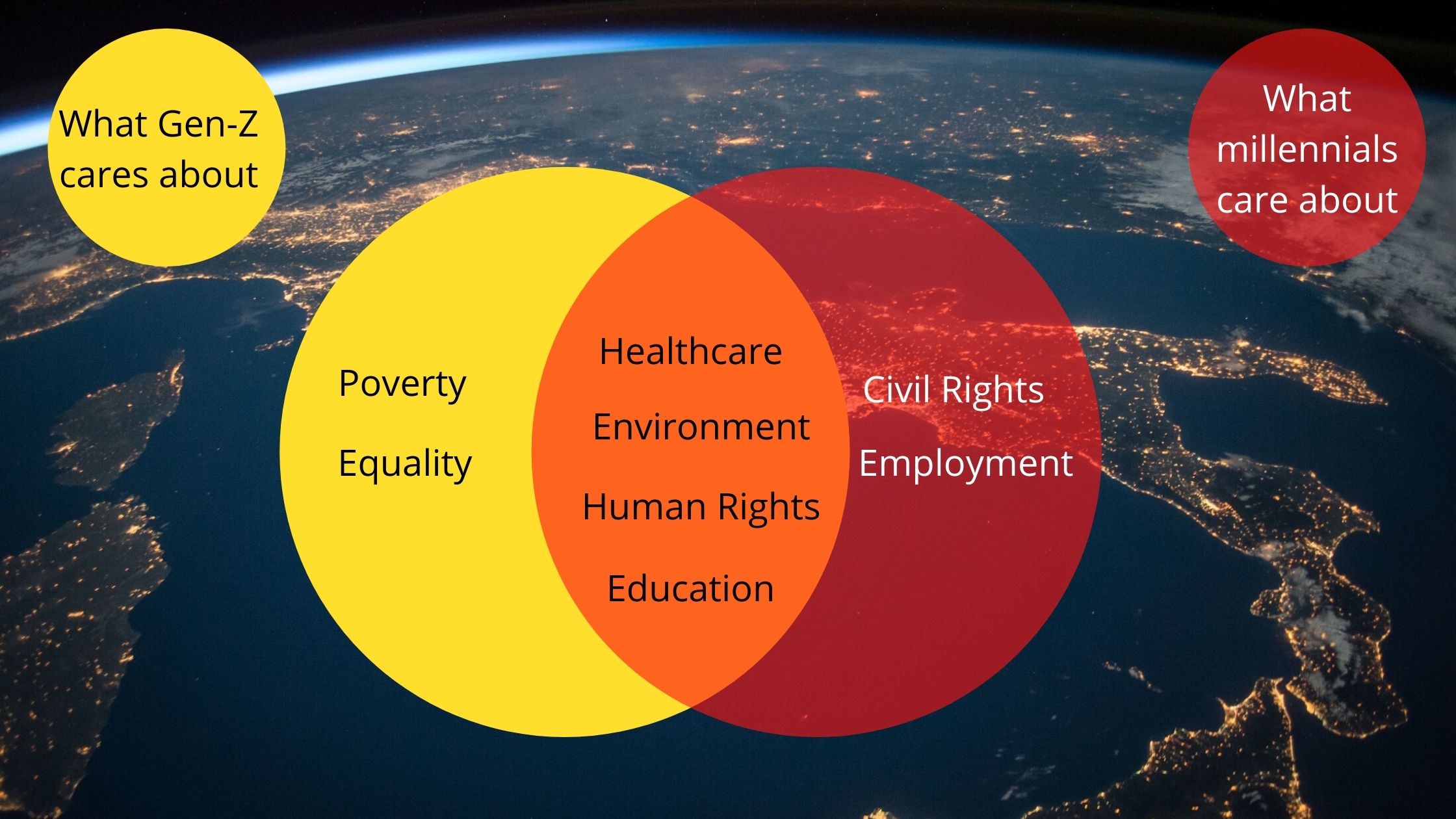
Among the many issues they are invested in, a few are:
- Better healthcare reforms
- Climate change and the contribution of humans in it
- Human rights
- Education prospects, costs, and return of investment
These generations are quick to tweet, snap, or post about these issues, their involvement in reforms, what’s working for them, and what isn’t. You can harness this strong sense of networking and marketing from them to connect with millennial voters, garner their support, and ultimately their vote.
5. Young volunteers can themselves be a potential voter base in the future
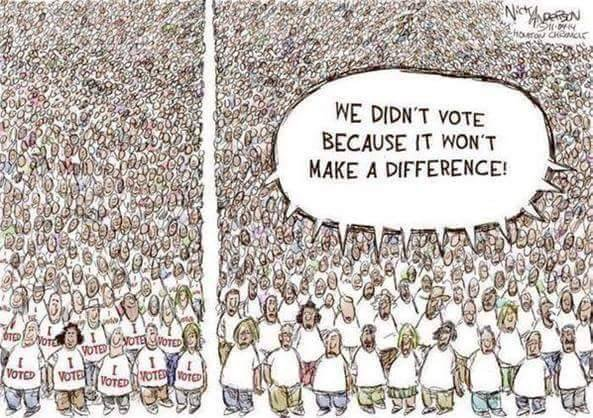
Among the primary reasons young people (ages 18-29) don’t vote are:
- Conflicting work or busy schedules (33.5%)
- No interest (17.2%)
- Forgot to send the ballot (10.2%)
While there’s little to be done about the first reason, the other two can be managed by garnering interest in politics early on. Nearly half of young people (48%) say that having clearer knowledge of volunteer opportunities would inspire them to participate more—highlighting how accessible, well-communicated youth volunteering programs can spark early civic engagement.
In fact, a study showed a positive correlation between young volunteers and whether they vote when eligible.
Instead of a myopic view of success, by engaging future voters today, you help your future campaigns.
Before you jump any futher, see how the talk of the town – New York Mayor’s volunteers help him
Zohran Mamdani’s volunteer power in the 2025 NYC campaign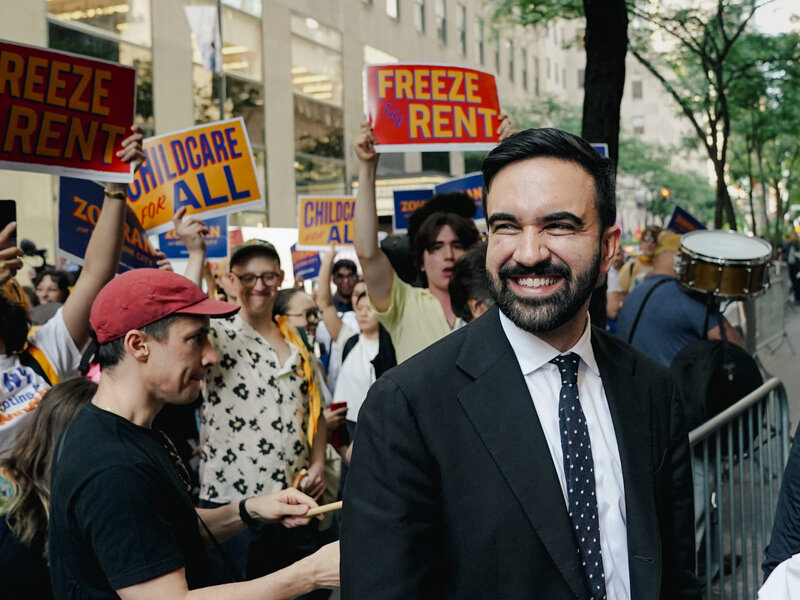 Source: New York Times Zohran Mamdani’s 2025 NYC mayoral campaign built a massive grassroots volunteer network, turning online engagement into real-world action. Impact: -> 50,000+ volunteers signed up, 30,000+ actively canvassed. -> Volunteers knocked on 1.6M+ doors and held hundreds of thousands of voter conversations. -> 400+ field leads trained to guide teams citywide. How It Worked: -> Viral social media drove sign-ups, captured by a volunteer CRM to automate reminders and confirmations. -> Early training and leadership development helped first-time volunteers become effective field leaders. Key Takeaways: -> Convert online attention into action with structured follow-up. -> Train volunteers early to scale efficiently. -> Grassroots volunteers can define a campaign’s ground strategy. |
How to find youngsters for youth volunteering in your campaign?
To improve your chances of being visible and recruiting young people to your campaign, you need to understand where they are located.
Youngsters are online quite often. They are looking for stories that inspire them; they are following social media influencers and want to act for causes close to their heart. If youth volunteering is something you want to explore, these are the characteristics you need to leverage to find them. Here’s how you can do it:
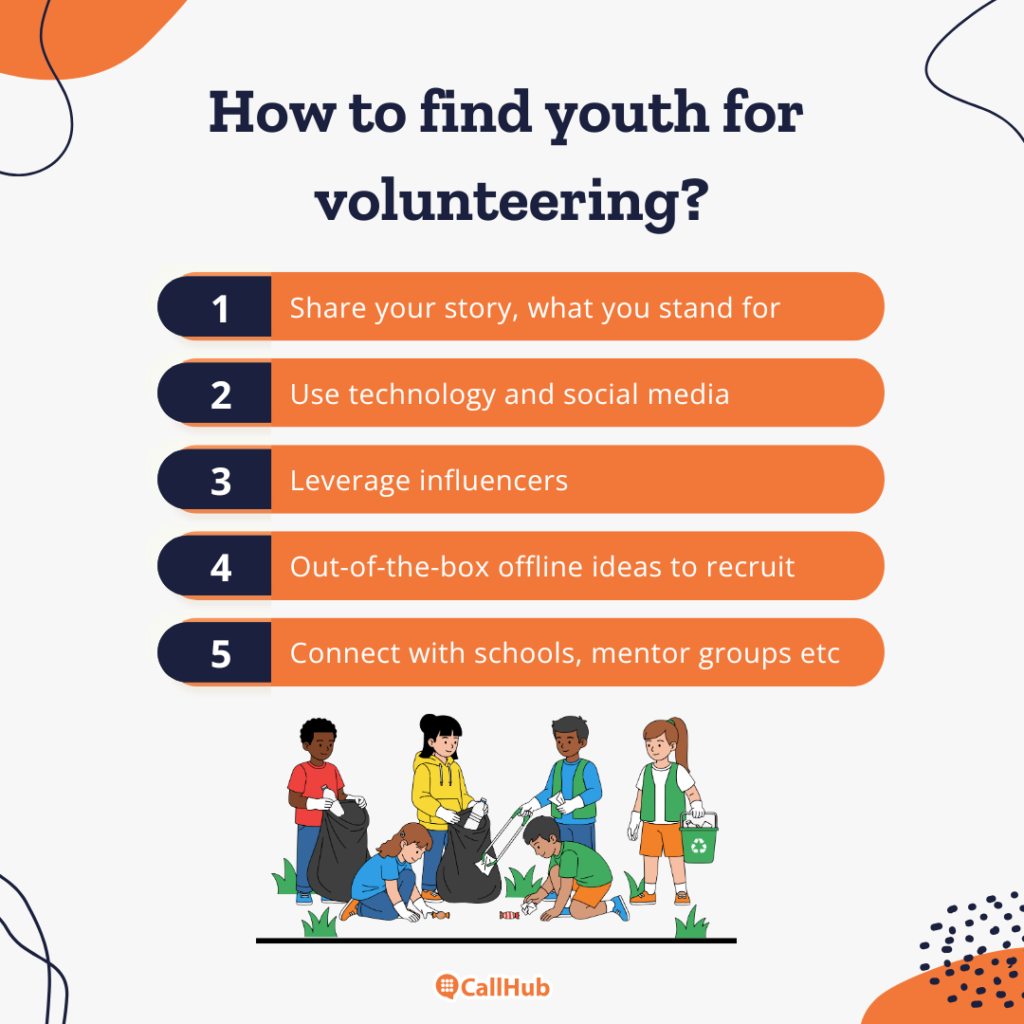
Let’s look at each point in detail:
1. Share your story, what you stand for
Young people care about social change. But they have lost faith in politics, leading to this change.
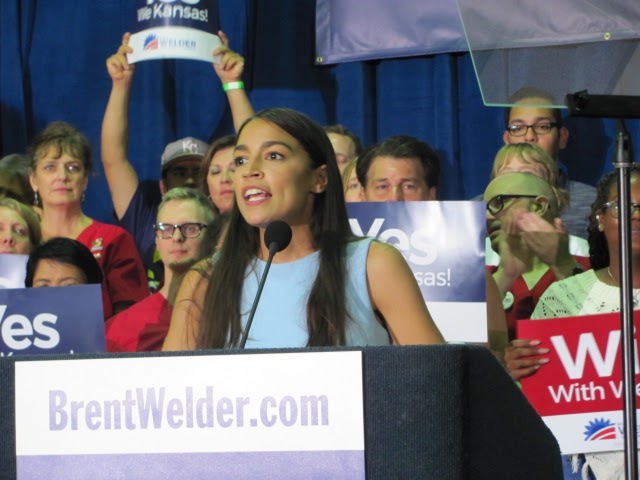
Alexandria Ocasio-Cortez followed this perfectly. She owns the fact that her mother worked as a house cleaner and that she worked as a bartender in college. This way, her story is more relatable to people who come from the same economic background, generation, or social circles. The results are clear as the sky.
- In June 2018, Ocasio-Cortez beat the 10-term incumbent Joe Crowley in the New York Primary Elections
- In the General Election later that year, she won 78% of the vote
- Over time, she has secured endorsements from several progressive and civil rights organizations, including Black Lives Matter, Democracy for America, and politicians like Barack Obama.
- Ocasio-Cortez has also gained a humongous social media following. She has 9 million+ Instagram and 12 million+ Twitter followers.
Ocasio-Cortez is driving change in the political scenario. She may not have been as experienced as other Congresspeople when she started out, but with her story, she won popular imagination and support.
Read also: The SMS Strategy Guide to Improve Young Voter Turnout
2. Use technology and social media to encourage youth volunteering
Consumption patterns of news and information have changed drastically with technology. Young people now consume news mostly on their smartphones and via social media. It is imperative, therefore, to publish information about you on these platforms.
What is trickier than mere presence is visibility. With millions (even over a billion) of people accessing Facebook, Instagram, Pinterest, Twitter, etc., your posts may get drowned. It is crucial to plan a social media strategy that gets you on the screens of your target audience. For instance,
- Facebook gives heavy weightage to video posts. (However, they change their algorithms often so keep yourself updated)
- Instagram and Pinterest are designed to post and promote images.
- Twitter posts are more eye-catching when you have quotes, stats, or polls.
By understanding these nuances, you can target youth volunteers on each channel.
Don’t forget to invest in Search Engine Optimization tools, so you appear in searches of young people. For instance, “youth volunteering,” followed by the city’s name, is quite a popular keyword. By making your pages and posts be the answer to this query, you can get more individuals to join.
| Use groundwork.com as a tool to sign up as a volunteer or find volunteers, especially young ones, who align with your cause. |
Read also: The Most Effective Volunteer Recruitment Methods and Tools for Your Cause
3. Leverage influencers so youngsters apply for youth volunteering
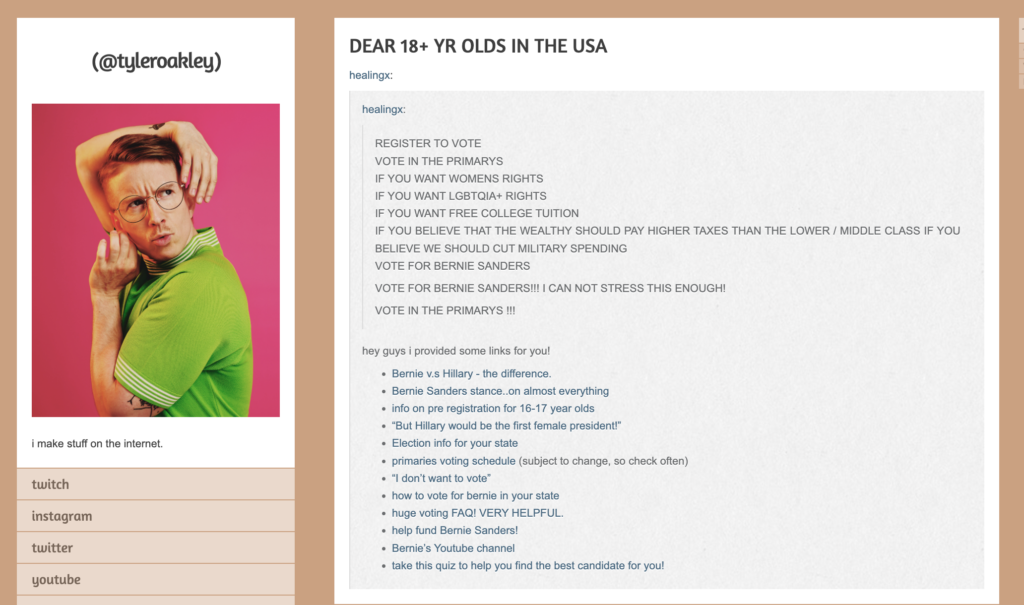
Source: Tyler Oakley
Social media influencers hold a lot of power today. They have thousands of followers and the potential to mobilize this following in the digital space.
As the name suggests, these people operate to influence followers to join a cause, work for social welfare (among other things). Get in touch with influencers who believe in the causes that you stand for and use their following to recruit youth volunteers.
In 2019 and early 2020, Bernie Sanders got several influencers to speak about his campaign and inspire people to join or vote. Among them were
- Joe Rogan, a comedian, and podcaster. He has 20 million+ YouTube subscribers and 15 million+ Twitter followers
- Tyler Oakley, an LGBTQ+ activist and actor (and millennial) who has 6 million YouTube subscribers and 4 million and 6 Twitter and Instagram followers repectively.
- Anthony Fantano, a music critic with 3 million YouTube subscribers, 900,000+ Twitter followers, and 1 million+ Instagram followers
Read also: 23 Best Volunteer Management Software For 2026
4. Out-of-the-box offline ideas to attract youth volunteering

What’s fascinating about this ad is that it’s not visually appealing or detail-oriented. That’s what makes it brilliant. Most of us are familiar with MS Paint- a very basic tool for graphic design. The advertiser has used it to convey their need for a professional in their team.
Such unique ideas will always pique interest in your campaign. Youngsters are creative, and they are looking for valuable experiences to explore this creativity. With outstanding ads such as this one, you show that:
- Your team is more than grunt work
- Volunteers will be encouraged to be creative
- A healthy sense of humor is welcome in the organization (if it gets the job done)
5. Connect with schools, mentor groups, etc
Like Haley Zaker, many teens are ambitious to run for Presidentship someday. Their schools, colleges, and mentorship programs are taking active steps to nurture this ambition and groom them for the future.
Approach such programs and tie up with them to inspire young teens and students to get involved in youth volunteering for your campaign. Working with them could be mutually beneficial. Aspiring politicians could benefit from experienced teams such as yours, and you could harness their energy to further your campaign.
Some mentorship programs that you can partner with are:
How do you engage young adults in youth volunteering?
It’s essential to have young volunteers be part of the team, yes. But even more important is to keep them invested and engaged in the work they do. If the work is rewarding, you will have less volunteer attrition. For this, one must understand why the youth opts for volunteering and give them opportunities that resonate with these reasons.
Here’s how to keep them engaged:
1. Allow them to explore and refine their skills
What they want: Youth want volunteering opportunities to add experience to their resume. They also want a job that is meaningful and adds value to their time and effort.
What you can do: Make space for the young volunteers to explore their intellect and creativity. Perfect the balance between assigning menial tasks and jobs that challenge them.
- Get them to interact with voters and on-the-edge supporters. This will help them learn more about you and polish social skills
- Organize discussions and open platforms for the volunteers to voice their concerns- political, social, and about your work environment.
- Bring teenage volunteers on the field occasionally. Many youngsters don’t vote because they don’t understand how the election or government works. Such activities will make them familiar with it.
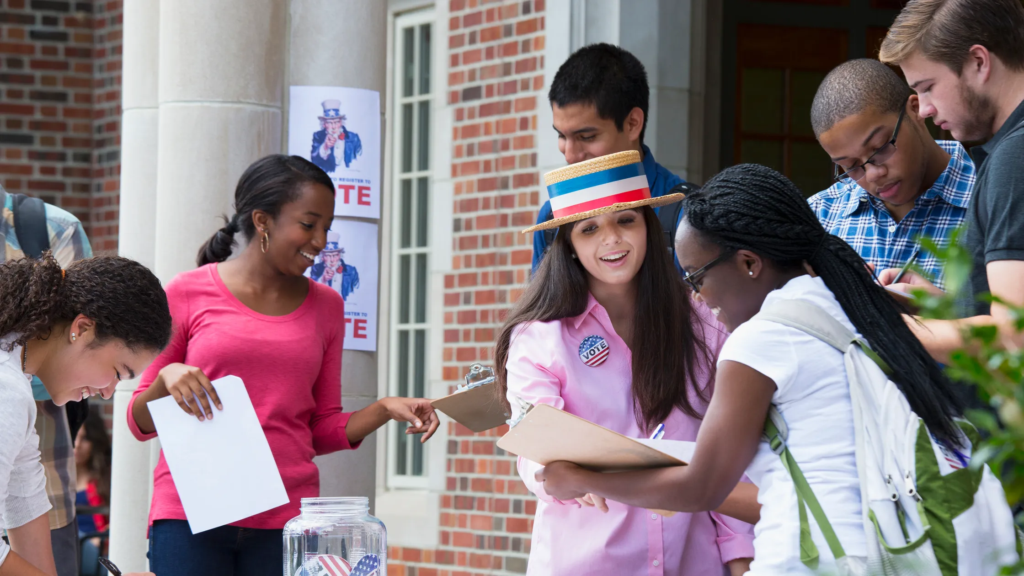
Source: Teen Vogue
Here is Linzy Rosen, an 18-year-old volunteer, who joined political campaigns to gain experience and make an impact. She developed confidence, social skills, and a deeper understanding of the political process through canvassing and community events
Read also: How to train your campaign volunteers
2. Shed traditional working methods for modern policies
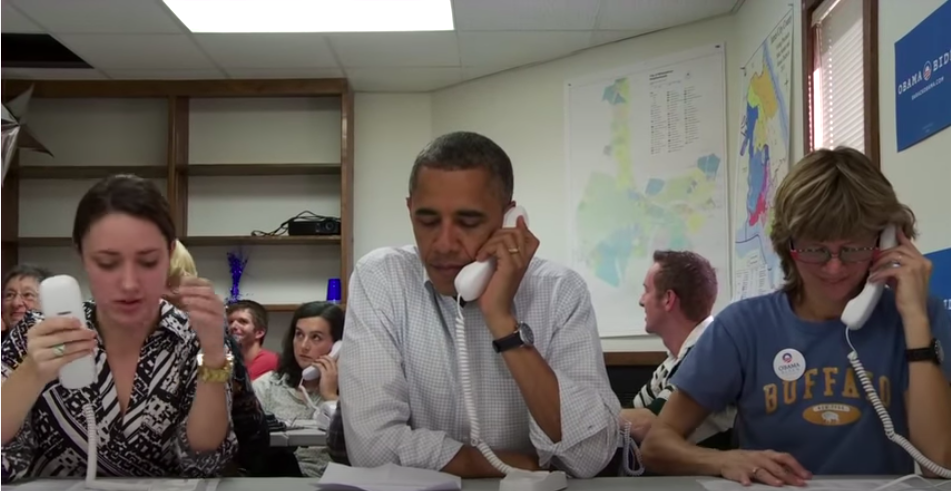
What the youth want: A place where they can fit in, feel comfortable, and uplift their skills. Working spaces are evolving to be more inclusive, and the young are happier to work in such modern places rather than traditional ones.
What you can do: In 2012, incumbent President Obama called up supporters, asking them to cast their ballot on election day. GOTV efforts were not only the volunteers’ job- they were the candidate’s too!
Such initiatives are motivating to the youngsters who get to experience your style of working first-hand.
- Go for an open-door policy to be approachable to the young volunteers
- Round-table discussions where volunteers are free to critique, debate, and suggest can make the operations vibrant. Youngsters have a lot of exposure nowadays, and they may have some valuable insights to boost your campaigns. Never mistake them for naive or underinformed.
- Google’s office does away with conventional desks arranged in cubicles. Instead, the staff is encouraged to be as comfortable as possible for maximum productivity. Why not take inspiration for your office too?
3. Overcome restrictions and milk capabilities to reach common goals using youth volunteering
What they want: Physical, mental, emotional, and creative development can peak in adolescent ages. Teenage volunteers and students thus want a job that lets them explore these capabilities.
What you can do: While the energy levels are unmatched, young people volunteering for you are likely to have restrictions like unavailability of transportation, small allowances, and tight class schedules. For such youth, you want to reserve jobs accordingly.
- Hand over the calling outreach tasks that can be done from home to young volunteers. For this, you’ll need a call center software solution that allows you to seamlessly run distributed phone banking campaigns.
CallHub lets several individuals operate from various locations and updates interaction history and survey responses in your CRM in real-time, all using CallHub’s mobile app, available both on Android and iOS. Know more about it here.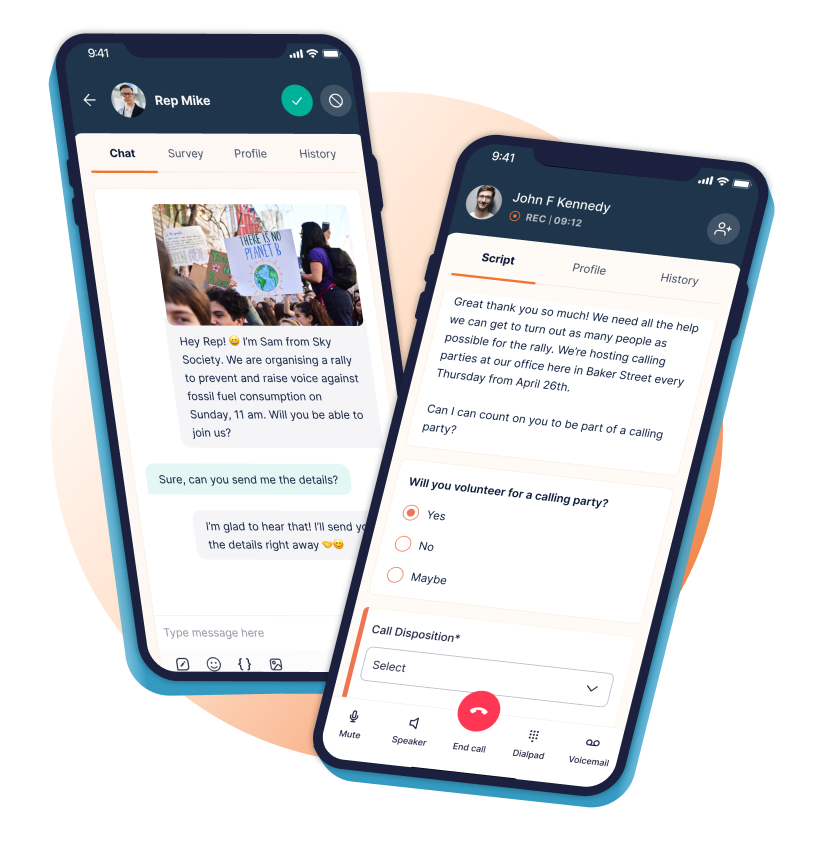 |
Phone banking can be carried out for most of the day from home. Assign calling outreach tasks to young volunteers so that their involvement is not hindered by these restrictions.
- For youngsters, texting comes almost instinctively. So all your SMS campaigns for event invitations, fundraising appeals, GOTV, and others can be handled by your teenage volunteers.
- Youth volunteers will bring in a casual tone while talking over a call. This can make the conversation more human and meaningful. To understand how it can lead to customer or support satisfaction, read here.
- Partner volunteers who have their own transport with those who don’t. Send them for door-to-door canvassing campaigns.
- Students and teenage volunteers can design or replicate posters, flyers, and other creatives- this can be done from home or the office.
4. Make the experience mutually beneficial
What they want: 60% of GenZers wish to work to make a difference. So it is not just about dazzling their resume anymore. It is about utilizing their time, efforts, and skills for the bigger picture for a cause.
What you can do: Be transparent about how the tasks assigned to volunteers play in the bigger picture, what needs they serve, and how these tasks will help the youngsters. When you do this diligently, even chores like arranging chairs or sorting merchandise become meaningful.
- Give titles to every position so:
- Organizing becomes easy for you and
- It helps volunteers be specific in their resumes
- Help volunteers with reference letters, job recommendations, admission letters, and other professional fronts
- Let the young volunteers decide which department they want to work in but rotate schedules so that every individual takes up miscellaneous tasks too.
5. Offer tangible rewards and incentives during youth volunteering
What they want: Young people look for volunteering opportunities for their resume, experience, and self- development. But incentives can go a long way in attracting them to your campaign.
What you can do: The first step is to understand what incentives will be appealing to students and young people for volunteering activities. Such incentives must
- Solve small problems
- Help them identify with your cause
- Provide instant reinforcement for their work
6. Play a part in their overall development
Such incentives can be small, but when personalized, they feel more rewarding. A good example is Bernie Sanders’ “donor wall.” The team printed the names of all their one million donors in their office.
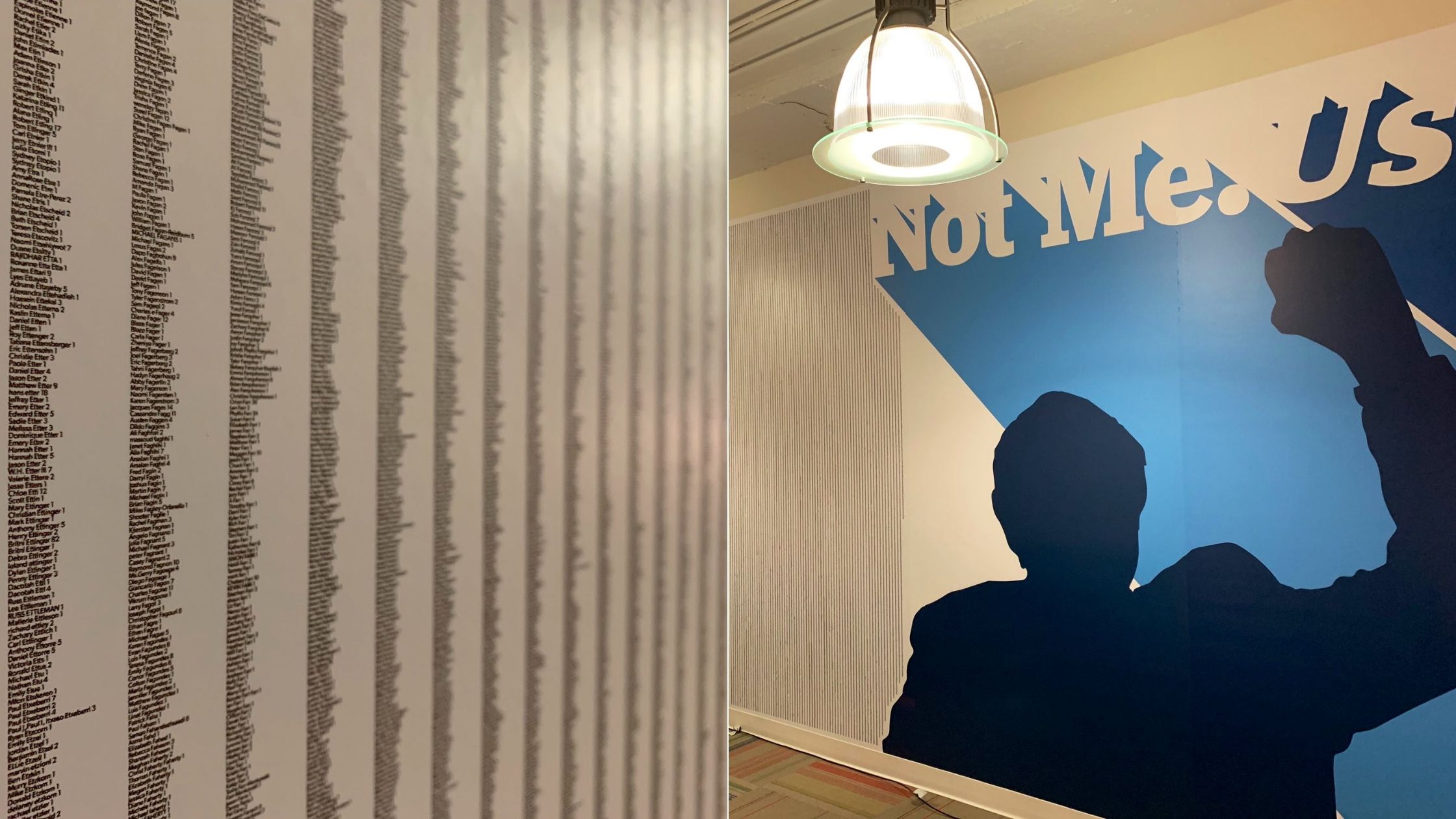
Here are some things you can provide as incentives:
- Petty allowances
- Branded merchandise
- Identification of the volunteers (on social media, in the office, in campaign appreciation)
- Refreshments
- Certificates for their work
- Recommendation letters
- Help in admission processes
- References to jobs or colleges
To conclude
Youth volunteering isn’t just inspiring — it delivers real, measurable impact. Today’s young volunteers (ages 16–24) contribute roughly 1.2 billion hours of service annually, a level of commitment valued at an estimated $34 billion to communities across the country. Showing just how meaningful their contributions are for civic life and social change.
By engaging in service, young people build critical skills, expand their networks, and help solve real community challenges. Whether it’s mobilizing around causes they care about, supporting fellow citizens, or gaining experience that benefits future goals, youth volunteering is a powerful force for good.
👉 Check out the blog on most effective volunteer recruitment methods and tools to choose. This is where we dive into practical ways to attract and retain volunteers using proven methods and tools.
Hope it helps!
FAQs on youth volunteering
1. What places can a 13‑year-old volunteer?
13‑year-olds can volunteer at libraries, animal shelters, parks, food drives, and family-friendly nonprofit projects, often with a parent or guardian.
2. What is the youngest you can volunteer?
Minimum age varies by organization. Some accept children as young as 5–12 with an adult, while independent volunteering usually starts at 14–16.
3. Can a 13‑year-old volunteer at the YMCA?
Yes, many YMCA branches allow 13‑year-olds to volunteer with adult supervision or parent consent, though some roles may have a 14–16 age minimum.
4. What are some of the youth volunteering organizations?
Organizations like:
- Youth Volunteer Corps (YVC)
- Lion’s Heart,
- Junior Achievement, and
- Local nonprofits or community centers offer structured volunteering opportunities for teens.
Feature Image Source: PxHere