


Table of Contents
Shortcode texting continues to be one of the most direct, effective ways for brands and organizations to engage with audiences. But as technology evolves and carriers tighten standards around messaging, the tools and channels marketers use have evolved too.
One such evolution is shortcode texting — a high-throughput method for sending SMS that was once widely available in both shared and dedicated formats. In 2025, the landscape has shifted significantly: shared shortcodes have been phased out for general messaging, and marketers must understand how shortcode texting works now, how it compares to newer channels like A2P 10DLC or toll-free SMS, and when (and if) it’s the best choice for your campaigns.
This guide breaks it all down, helping you choose the right approach for your SMS strategy today.
What is shortcode texting?
Shortcodes are specialized short phone numbers, typically 5–6 digits long, used to send and receive text and multimedia messages at high volume. Unlike standard 10-digit numbers, shortcodes are built for speed and scale, making them ideal for:
- Marketing promotions and alerts
- Time-sensitive campaigns (e.g., flash sales)
- High-volume broadcast messaging
Shortcodes are easier to remember than long numbers, and because they’re centralized and vetted through messaging registries, carriers can route high message volumes quickly.
Dedicated vs shared numbers: the end of shared shortcodes — what happened & why
Whenever the question of dedicated vs shared numbers comes up, it really comes down to one thing: whether anyone else is sending messages from the number your audience texts. The rules governing both models sit with the carriers and the industry body that writes their messaging standards — the CTIA, whose Messaging Principles and Best Practices is the primary source on how short codes may be provisioned and used. Until recently, there were two main types of shortcodes:
- Dedicated shortcodes — used by one brand
- Shared shortcodes — used by multiple brands via keywords
In the shared model, many organizations could share a single shortcode and differentiate campaigns using keywords (e.g., TEXT FOOD to 12345). But carriers gradually phased out this model — and in some contexts completely sunsetted shared shortcodes — for reasons that directly impact how brands think about shortcode texting in 2025.
Why were shared shortcodes sunsetted?
Shared shortcodes introduced several major problems:
🔹 Poor consent and opt-out management. When one person replied “STOP,” they could inadvertently opt out of all brands using that shared shortcode, causing customer frustration and compliance risk.
🔹 Compliance issues. One brand’s non-compliant campaign could lead carriers to block the entire shared shortcode, impacting many legitimate senders.
🔹 Spam and reputation problems. Shared shortcodes became targets for spam and abusive traffic, degrading trust in messaging overall.
Carrier policies around shared shortcodes
Today, shared shortcodes are no longer issued or supported for general marketing messaging. Most major U.S. carriers prohibit shared shortcodes except in very limited cases (authentication messages like OTP/2FA only).
Some legacy shared codes may still operate temporarily, but long-term support is being phased out. Providers are encouraging migration to:
- Dedicated shortcodes
- A2P 10DLC numbers
- Toll-free SMS numbers
This change is part of a broader industry shift toward more transparent, accountable messaging systems that improve deliverability and protect recipients.
Dedicated shortcode texting in 2026: What they are & when to use them
Even after the sunset of shared shortcodes, dedicated shortcodes remain a strong option for certain high-volume use cases.
Benefits of dedicated shortcodes
- High throughput: Shortcodes can send messages in bursts far faster than standard phone numbers, ideal for campaigns with millions of recipients.
- Brand recognition: Short, memorable numbers reinforce brand identity.
- Reliable delivery: Because carriers treat registered shortcodes as trusted channels, they typically deliver with high reliability.
Tradeoffs & limitations
- Cost: Leasing and provisioning a shortcode is more expensive than other options.
- Timeline: Carrier approval can take upto few weeks.
- Less conversational: They’re optimized for one-to-many broadcasts, not ongoing two-way conversations.
Dedicated shortcodes still make sense when very high volumes and fast delivery are needed — for example, nationwide awareness campaigns or time-sensitive promotions.
A well-known example: the 30330 short code
If you have ever wondered why one particular five-digit number keeps coming up, 30330 is the short code the Biden campaign asked supporters to text during the 2020 U.S. presidential race — which is why most of the coverage you will find about it is election reporting rather than an explanation of how shortcodes work.
It is a useful illustration of the point above: a dedicated short code is leased by a single sender for the length of its campaign, so the number itself becomes part of the brand’s recall. Numbers like this are not permanently owned or listed in a public directory — once a lease ends, the code returns to the pool and can be reassigned to a different, fully vetted sender.
Alternatives to shortcode texting in 2026
For many organizations, shortcode texting isn’t the best or most cost-effective option anymore — and that’s where newer channels like A2P 10DLC and toll-free SMS shine.
1. A2P 10DLC (10-Digit Long Code)
A2P 10DLC uses standard 10-digit phone numbers registered and vetted for business messaging. Its key strengths include:
- Lower cost than dedicated shortcodes
- Supports two-way messaging and conversational use cases
- Carrier-backed delivery when properly registered
You must register your brand and campaign with The Campaign Registry (TCR) to send application-to-person SMS via 10DLC. This ensures transparency, prevents spam, and improves deliverability.
Read also: 10DLC Registration: 2025 SMS Outreach Rules You Must Know
| CallHub is now an official TCR partner, so we can complete this registration for you. Sign up today to get started. |
2. Toll-Free SMS for shortcode texting
Toll-free numbers (e.g., 800/888) combine voice and text capabilities and are often used for customer support, notifications, or multi-channel engagement.
Compared to dedicated shortcodes, toll-free SMS typically:
- Costs less
- Supports two-way communication
- Offers decent throughput
But it may not match shortcode speeds for the absolute highest throughput needs.
3. Dedicated shortcode texting
A dedicated shortcode gives your business exclusive access to a short number — no other brand shares it. This means you can choose any keyword you like, giving your campaigns more flexibility and stronger brand recognition.
There are two main types:
- Random Short Codes: The number is assigned randomly. With CallHub, this typically costs around $500/month.
- Vanity Short Codes: You can pick a number that’s easy to remember, like repetitive digits or one that spells your brand name on a keypad. CallHub can help you secure one for approximately $1000/month.
Getting started is simple: create a free CallHub account, submit a request for a dedicated shortcode, and expect the approval process to take about 6–8 weeks. This gives you a reliable, high-throughput messaging channel for large-scale campaigns.
Read also: Ultimate Secrets of Shortcode Texting You Must Know
Comparing Messaging Channels (At-A-Glance)
| Feature | Dedicated Shortcode | A2P 10DLC | Toll-Free SMS |
|---|---|---|---|
| Number Format | 5–6 digits | 10 digits | 10 digits |
| Throughput | Very high | Moderate | Moderate |
| Conversational | Limited | Yes | Yes |
| Cost | High | Low–Moderate | Low–Moderate |
| Carrier Support | Excellent | Excellent | Excellent |
Notice what is missing from that table: a shared column. Because general marketing traffic can no longer run on a code that several brands send from, the practical decision is no longer dedicated vs shared numbers at all — it is which kind of dedicated number fits your volume and your budget. Whichever of the three you pick, the number is registered to your organization alone, which means your consent records, your keywords and your opt-out list stay yours and cannot be affected by another sender’s campaign.
Compliance & best practices
No matter which messaging channel you choose, compliance is essential:
1. Opt-in is mandatory: You must receive clear consent before sending SMS communications.
2. Manage opt-outs smoothly: Ensure messages include unsubscribe options and respect opt-out requests promptly.
3. Register where required: Channels like A2P 10DLC require you to register brands and campaigns before sending high-volume messaging.
Following best practices protects your reputation and ensures messages get delivered to the inbox — not filtered as spam.
When should you use shortcode texting?
Shortcodes still have a place in modern messaging strategies when you:
✅ Need extremely high throughput
✅ Are running large-scale, broadcast-heavy campaigns
✅ Value brand recognition and number memorability
However, for many businesses — especially those focused on conversational messaging, two-way interaction, or lower message volumes — A2P 10DLC or toll-free SMS may be more practical and cost-effective.
Interested in renting a shortcode/10DLC/Toll-free number and keyword from CallHub?
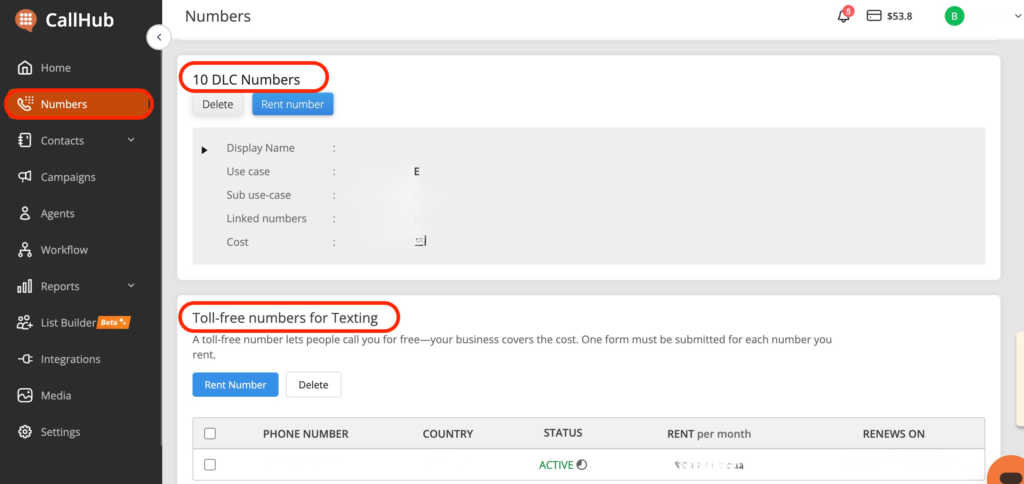
Navigate to “Numbers” on the CallHub dashboard and click the “10DLC numbers” or “Toll free numbers for texting” button. Click on “rent number” and enter the required details and wait for your number to get approved and reach you.
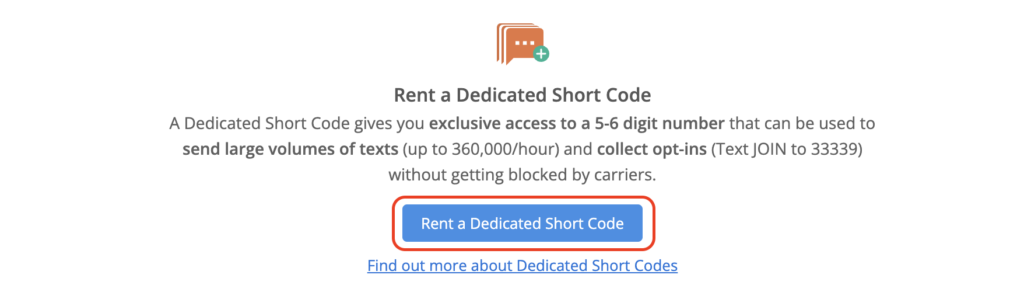
Similarly for a dedicated shortcode, scroll down and click on ” Rent a dedicated shortcode” . Fill in the other required details on the page.
Once approved, you can start using your shortcode or 10DLC/Roll-free numbers in no time.
If you don’t have an account with CallHub yet, get one here.
FAQs on shared shortcodes
FAQs on Shortcode Texting
1. What are short codes for texting?
Shortcodes are 5‑ or 6‑digit phone numbers used to send and receive SMS messages at high volume. They are designed for fast delivery, easy recall, and broadcast messaging for marketing campaigns, alerts, or notifications.
2. Why would someone use a short code to text?
Businesses use shortcodes for:
- High‑volume messaging campaigns
- National promotions or alerts
- Easy-to-remember numbers for keywords
- Strong brand recognition and consistent messaging
3. How to find who owns a shortcode?
You can check the owner of a shortcode through:
- Carrier lookup services or SMS registries
- Platforms like CallHub or Twilio that provide shortcode directories
- Requesting information from the shortcode provider or messaging registry
4. How to get short codes for text messaging?
To get a shortcode:
- Choose between a dedicated or vanity shortcode
- Register your brand and campaign through a provider like CallHub
- Complete carrier approval and compliance checks (approval usually takes 6–8 weeks)
- Once approved, start sending messages through your dedicated number