



Table of Contents
Door canvassing is a proven way to get out the vote (GOTV), with research showing it can generate roughly one vote for every 14 houses visited. Yet it still takes many door knocks to secure a single vote because:
- The person may have already decided to support your opponent,
- They weren’t nurtured enough by your campaign,
- Or they simply weren’t home or were too busy when you knocked.
This post focuses on that third challenge and explains why your door canvassing campaign shouldn’t be your last contact with voters—and how combining it with text messaging can help you reach more supporters and keep them engaged through election day.
Combining text messages with door canvassing in politics
A study published on ResearchGate found that sending a text message reminder can increase the likelihood of voting by 3%. Political campaigns across the spectrum have recognized the power of text messaging for voter mobilization and now use it to persuade supporters to vote.
Still, canvassing door to door remains the most effective GOTV method, with phone canvassing coming next. So why combine text messages with a door-knocking campaign?
The answer is simple:
- Reach those you missed while canvassing door to door: If you miss someone during your canvassing efforts, a follow-up text can help you connect.
- Nurture interest until election day: Research shows that the impact of political canvassing is strongest when it happens well before election day, but the effect fades over time. Text message nurturing helps keep your campaign top of mind, whether it’s a thank you for a conversation or a timely reminder to vote.
With political campaign texting, the journey of canvassing becomes more organized and effective.
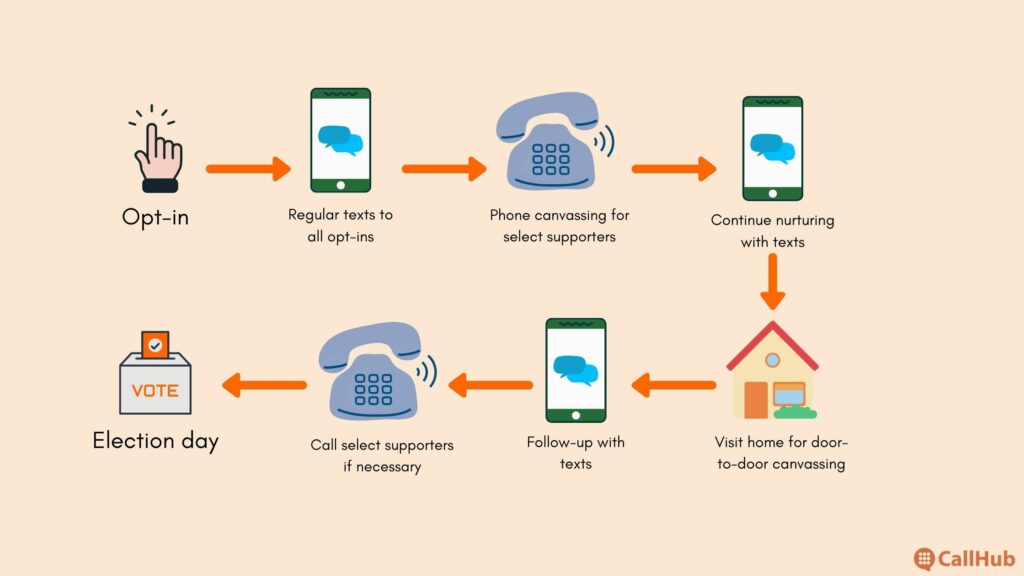
The journey of canvassing via texts, calls, and house visits
The journey of canvassing via texts, calls, and house visits can maximize your campaign’s reach. Each method has its strengths, but together, they create a system that ensures no supporter slips through the cracks. After canvassing door to door, following up with a text or call helps reinforce your message and keeps voters engaged.
Let’s look at best practices for using text messages alongside door canvassing to make your outreach more effective.
Best practices to use texts while door canvassing
Text messaging is popular across all age groups, but if your timing or content is off, your messages might be ignored or marked as spam. Here are some unwritten rules and best practices to ensure your text marketing for political campaigns delivers value:
Note outcomes and segment supporters accordingly
When canvassing door-to-door, it’s important to record the outcomes of each interaction in your canvassing software. Volunteers should record whether they had a meaningful conversation, found the supporter absent, or needed to collect more information. Providing a list of outcomes (with an “other” option for details) helps volunteers capture accurate data.
After each canvassing shift, segment your contacts based on these outcomes. Draft follow-up text templates for each group, such as “Sorry we missed you when we visited. What’s a better time to talk?” for those who weren’t home.
This approach ensures your messages are relevant and more likely to be read. It also gives your campaign a clearer picture of likely voters on election day.
Personalize messages
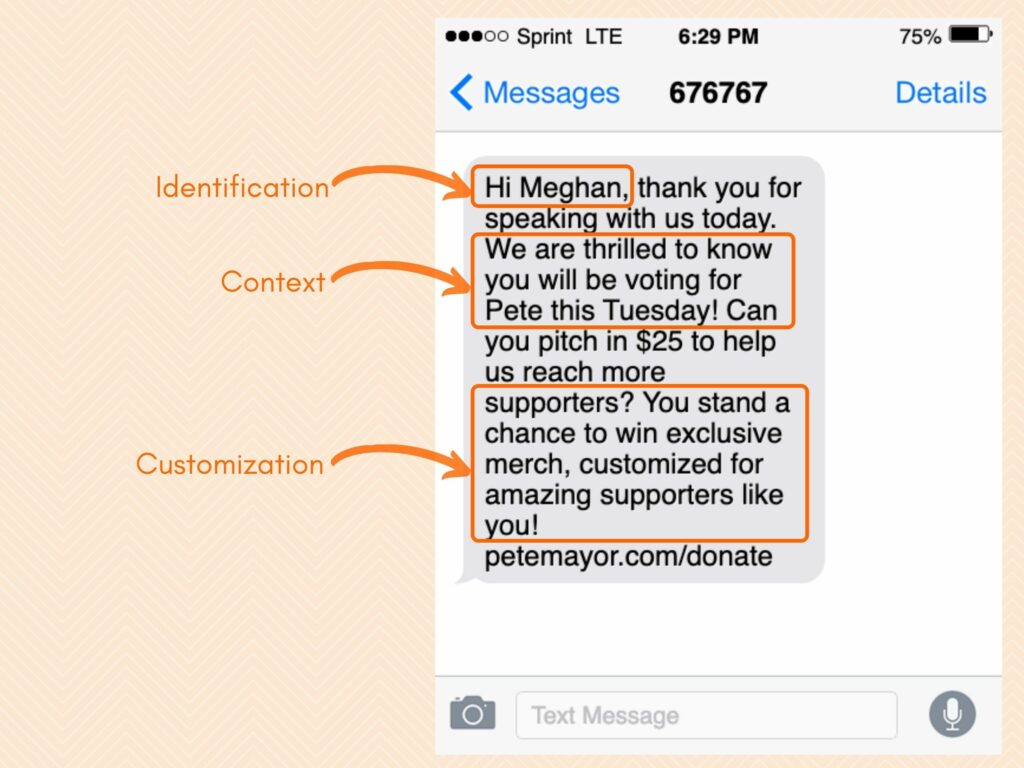
Personalization is key to successful canvassing and text outreach. It goes beyond just using the recipient’s name.
It is a three-fold strategy involving:
- Identification: Use personal details like name, neighborhood, or age.
- Customization: Tailor the message to the recipient’s history or needs, such as “especially for a long-term supporter like you.”
- Contextualization: Add context unique to the recipient, like mentioning their profession or previous support.
For example:
“Hi Maria, thanks for chatting with us in Oakwood last week. As a nurse and longtime supporter, your vote on November 8th is especially important to our campaign.”
Here’s an example of a personalized message that ticks all three essentials:
Send messages the same day as you visit
After door canvassing, prompt follow-up is essential. Sending a thank you or reminder text days later can feel impersonal or like an afterthought. Ideally, send your text the same day you visit, as long as it’s within the allowed hours for political text messaging (typically 8 am to 9 pm). If you finish canvassing late, schedule your texts to go out the next morning.
Include relevant and important details in your texts
Effective door canvassing is supported by clear, actionable follow-up texts. Keep your messages concise and focused on the goal. Include:
- Election date and time
- Ballot location (tip: ask them to reply with their zip code to send the precise location)
- Strong CTA
- How to opt-out
- A helpline number they can reach out to if they need help on election day.
This ensures supporters have all the information they need to vote.
Text messaging software for your GOTV efforts
An intelligent text messaging software will help you follow these best practices with its features. The tool must automate responses, personalization, schedules, and do more to ensure your campaign is smooth-flowing and requires minimal human intervention.
For a text messaging campaign that accompanies door canvassing, here are the features you must look out for:
Merge tags
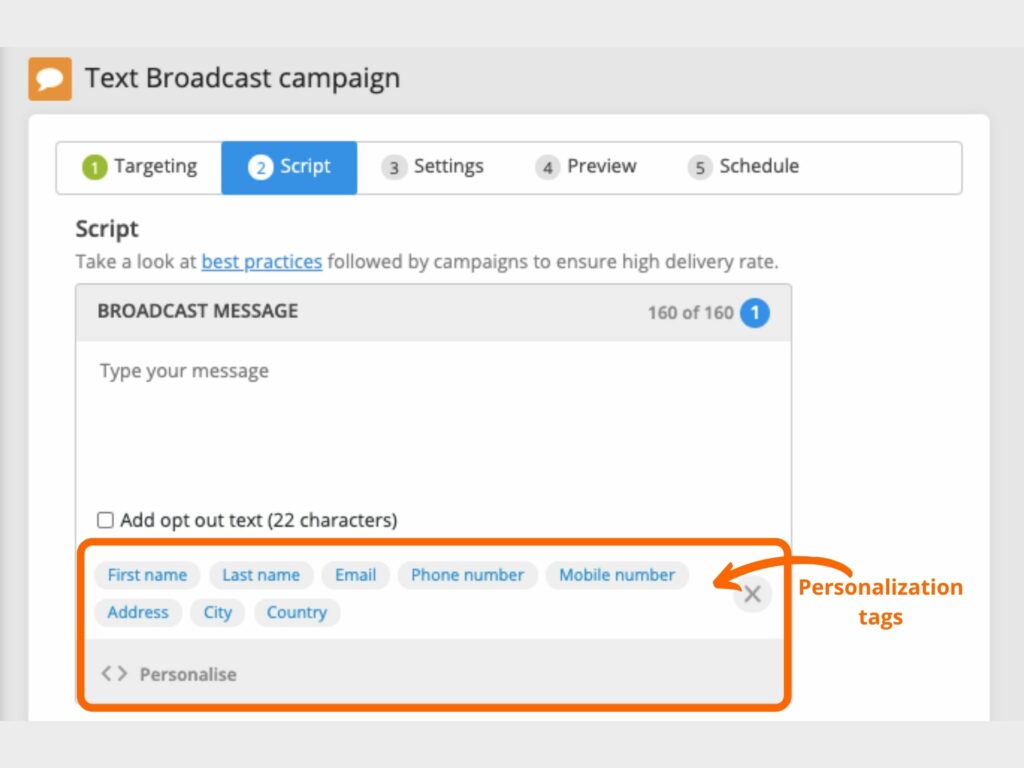
Merge tags streamline canvassing follow-up by automating personalization. Add tags like name, neighborhood, or agent name to your message drafts, and the software will fill in the details for each recipient. This makes your texts feel personal without extra manual work.
The algorithm will sync the relevant details with tags and make your text sound tailored to the individual.
Integration with CRMs
CRM integration ensures your door canvassing data is always up to date. Choose a texting tool that syncs with your CRM or connects through platforms like Zapier. This allows volunteers to update supporter information in real time after canvassing, so your follow-up texts are always relevant.
Check out CallHub’s app integration directory here.
Saved Responses
Saved responses are especially helpful during high-volume canvassing campaigns. When sending peer-to-peer (P2P) texts, volunteers can use pre-written replies for common questions, saving time and keeping conversations flowing. Campaign managers can create templates for FAQs, which volunteers can tweak as needed.
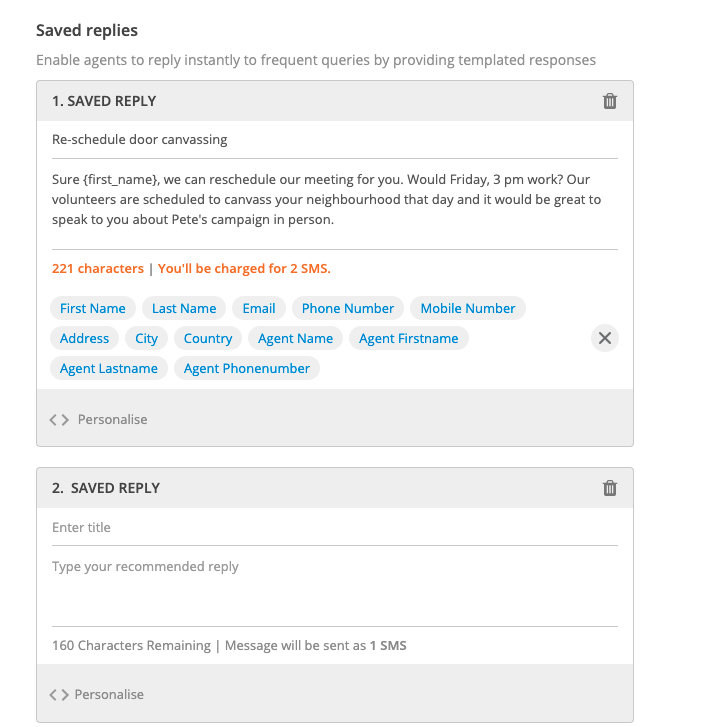
CallHub allows multiple saved responses for FAQs or repeating queries or requests during P2P campaigns. This way, the campaign manager can save several answers for volunteers to use. Volunteers can tweak them (e.g., change the date in the above example) or use them as is.
Options to send broadcasts or P2P
As a political campaign, you often choose between broadcasts (and in it, SMS or MMS) and P2P messages. During canvassing efforts, you will use:
- Broadcasts to send updates, reminders, and follow-ups when there’s no room for open-ended conversations.
- P2P texts when you are nurturing a supporter and require an open conversation flow.
Of course, both these texting methods are applicable only after a supporter has consented to receiving your texts (which I assume you would have gotten before or during canvassing). Go for a tool that lets you choose between SMS or MMS broadcast and P2P texting campaigns as you need. Of course, you must still create separate campaigns for each. But if your lists are segmented, it wouldn’t be a hassle to create different campaigns targeting each list.
Here’s a complete guide on volunteer recruitment scripts: The Only Volunteer Recruitment Script Sample You Need (And How To Use It)
Rented and validated numbers
Campaigns can rent their very own country-wise numbers for P2P texts (and choose between rented shortcodes or validated numbers for broadcasts). Dedicated numbers for campaigns help with:
- Creating a campaign identity (people are more likely to open and respond if they know who is texting).
- Receiving incoming messages through 10-digit longcodes (or 10DLC numbers).
Related Reading: Last Minute Tips For GOTV (Phone Canvassing Script Included!)
Timezone-based scheduling
Timezone-based scheduling ensures your door canvassing follow-ups are always timely and compliant. Set your texting tool to send messages only during allowed hours in each time zone. This reduces the risk of your texts being marked as spam and keeps your campaign within legal guidelines.
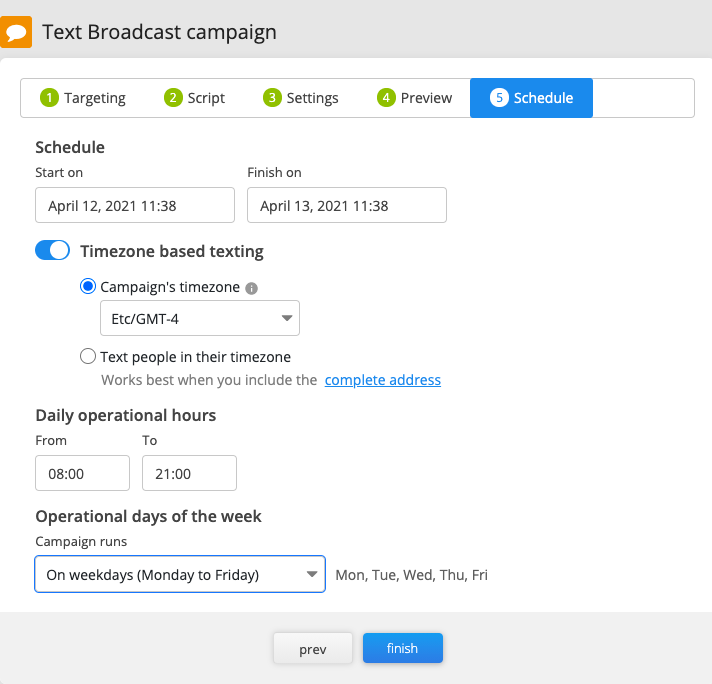
Scheduling the hours and days for outbound messages helps you stay compliant with political text messaging laws and decreases opt-out or spam rates.
Combining text messaging with canvassing door-to-door is a powerful way to boost your GOTV strategy. Door canvassing remains the gold standard for voter contact, but following up with timely, personalized texts ensures you reach more supporters and keep them engaged until election day. With the right software and best practices, your campaign can maximize its impact, nurture relationships, and drive turnout when it matters most.
CallHub is a political texting tool that contains all the above features and more. Try it out for free here.
Feature image source: The Irish Labour Party/Flickr.
FAQ on door canvassing
What is door canvassing in political campaigns?
Door canvassing is the process of campaign volunteers or staff visiting voters at their homes to discuss issues, persuade them to support a candidate or cause, and encourage voter turnout. It’s considered one of the most effective forms of direct voter contact.
How can text messaging enhance door-to-door canvassing efforts?
Text messaging allows campaigns to follow up with voters who were not home, reinforce conversations, and send reminders or thank-yous. This multi-channel approach increases engagement and helps nurture relationships until election day.
What are some tips for effective door-to-door canvassing?
- Train volunteers with clear scripts and FAQs
- Personalize conversations and listen actively
- Record outcomes immediately in your canvassing app
- Follow up with texts or calls
- Respect privacy and local regulations
How do I automate person-to-person text outreach for elections?
Use peer-to-peer (P2P) texting platform of CallHub that allow volunteers to send personalized messages at scale. Automation features like saved responses, merge tags, and scheduling help maintain a personal touch while increasing efficiency.
What is a sample script for door canvassing?
“Hi, I’m [Name] with [Campaign/Organization]. We’re reaching out to talk about the upcoming election and hear what issues matter most to you. Do you have a moment to chat?”
[Listen, answer questions, record responses, and thank them for their time.]