

Table of Contents
How effective is political canvassing?
Ask Georgia Senator Jon Ossoff, who will tell you that door-to-door canvassing proved decisive in his 2021 Senate runoff victory. Ossoff’s campaign mobilized a network of 160,000 voters through door-to-door canvassing and helped increase turnout by 3.8 percentage points, contributing to his narrow win over incumbent David Perdue with 50.61% of the vote – a margin of just 55,000 votes.
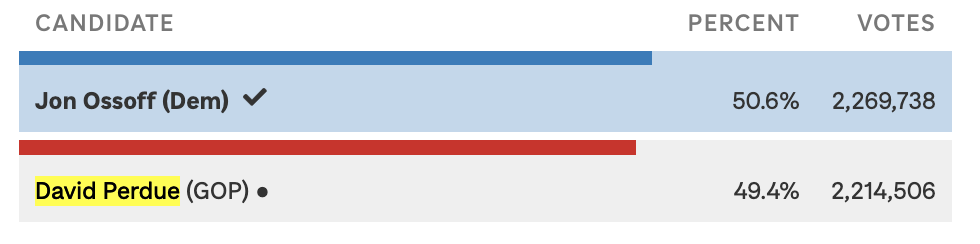
Source: NPR
Also the new talk of town Zohran Mamdani’s, campaign. Mamdani defeated former Governor Andrew Cuomo through a massive ground game. This campaign saw over 50,000 volunteers knock on approximately 1 million doors across New York City, helping flip neighborhoods that had voted solidly for Trump in 2024.
Such examples remind us that personal conversations between voters and campaign members can improve voter turnout and your chances of winning.
However, recent research suggests that certain political campaign canvassing methods, such as mass emails or calls, do not yield significant results.
So the question is:
- Is political canvassing really effective?
- Does canvassing work?
We’ll explore it in this post and answer your burning questions about political canvassing.
P.S. If you’re looking for what door knocking or canvassing actually means, our canvassing guide covers the basics. This post builds on that and looks at whether it works.
Key Takeaways
Recent high-profile campaigns and academic research together suggest that political canvassing can meaningfully boost turnout and vote share, but its impact depends heavily on method, timing, and target audience.
Real-world campaign examples
- Jon Ossoff’s 2021 Georgia Senate runoff campaign mobilized 160,000 voters through door-to-door canvassing, lifting turnout by 3.8 percentage points and contributing to his 50.61% win over David Perdue by a margin of 55,000 votes, according to NPR.
- Zohran Mamdani’s campaign deployed over 50,000 volunteers to knock on roughly 1 million doors across New York City, helping flip neighborhoods that had voted for Trump in 2024 and defeat Andrew Cuomo.
- Mass-contact tactics like emails or calls, by contrast, fail to produce significant results according to recent research.
Supporting research
- Experiments conducted by Eldersveld and Dodge found that canvassing and mailings were highly influential on voter behavior.
- A PNAS study found that door-to-door canvassing increases voter turnout by 6%.
When canvassing works best
- A 2017 study by Stanford’s David Broockman and UC Berkeley’s Joshua Kalla, based on 49 field experiments, found canvassing has little effect on general elections but is effective in primaries and ballot-initiative campaigns, where it reinforces turnout among those who have already decided on a candidate.
- Direct outreach conversations lasting three to ten minutes are shown to positively influence voters to register, cast a ballot, and support the candidate whose team did the canvassing.
- A 2017 vote.org study during Alabama’s Senate special election found that combining social-pressure emails with informational text messages was the most effective approach for GOTV efforts among African American voters.
- Canvassing efforts serve four distinct objectives: identifying supporters, gathering voter information for targeting and segmentation, mobilizing confirmed supporters through GOTV, and persuading undecided voters.
Does canvassing really work?
That’s the question on everyone’s mind. And there’s no straight answer to it.
So, let’s look at the effectiveness of canvassing through past experiments and statistics.
- Experiments conducted by Eldersveld and Dodge showed that canvassing and mailings have been very influential.
- A study by PNAS shows that door-to-door canvassing increased voter turnout by 6%.
That answers our question, “Does canvassing work?”
Luck plays a part in determining success, but a solid political canvassing strategy can ensure that every other obstacle is cleared out of your path.
Here, we list the impact and challenges of political canvassing to help you understand its effectiveness.
- Usually has more impact during primaries than general elections
- Is most effective with direct outreach
- Has more effectiveness as a GOTV effort than a persuasion method
- Is more impactful when you target specific audiences
Let’s discuss each point further.
Political canvassing works better in primaries than general elections
A 2017 study by Stanford professor David Broockman and UC Berkeley political scientist Joshua Kalla concluded that political canvassing does not significantly impact general elections.
The researchers conducted 49 field experiments during US election campaigns to understand the impact of persuasion techniques.
However, the study clarifies that this doesn’t mean you shouldn’t canvas for votes altogether.
They discovered that:
- Political canvassing is effective during primaries and ballot-initiative campaigns.
- When a person has decided on a candidate, such efforts encourage them to vote.
- Voters may (and do) change their opinions about a candidate when prompted by a politician they support.
- During general election canvassing, candidates can still persuade voters by varying their stand on issues to suit popular demand.
| But there’s a lesson here, even in places where political canvassing is expected (like the USA). The lesson is to innovate your canvassing efforts and offer supporters something unique. |
Read also: Our Complete A-Z Guide To Boost Your Electioneering Efforts
Direct outreach has the most impact: How effective is political canvassing
A conversation that lasts at least three minutes (and up to 10 minutes) is seen to impact voters to positively
- Register to vote
- Cast their vote
- Vote for a candidate whose team canvassed them
Traditionally, this was done only by knocking on doors.
Even today, direct outreach is studied for its maximum impact on voters. However, door-to-door canvassing is not always appreciated in a changing, hybrid world. Canvassing politics needs alternatives.
So, while phone banking or phone canvassing usually took second place in canvassing efforts, it now comes to the forefront of your canvassing efforts.
Peer-to-peer texting is another way to canvass politics, involving contacting supporters and canvassing for votes.
| For more on how to increase voter turnout with text messages, download our guide: Get Out The Vote with Text Messages |
While such canvassing methods can work separately, combining them throughout your campaign has stronger results.
Consider the following study:
In 2017, vote.org researched how text messages and emails could affect GOTV efforts and voter turnout. The experiment was undertaken during the Senate special election in Alabama, targeting African American voters with an available cell number.
They concluded that combining social-pressure emails with informational text messages (logistical voting details) was most effective for GOTV efforts.
Similarly, combining GOTV, persuasion, and political canvassing efforts could positively affect voter turnout and vote share in your campaign.
| Find out how to use phone calls, text messages, and a combination of both to run effective political outreach campaigns: How Political Campaigns Use Calling and Texting for Supporter Outreach |

How effective is political canvassing with GOTV vs voter persuasion?
Political canvassing efforts are undertaken with four main objectives:
- Identifying supporters: To understand who is likely to vote for you
- Voter identification: To get more information on voters in your lists for better targeting and segmentation
- GOTV: When you are sure of a voter’s support for you, you mobilize them to vote for you.
- Persuasion efforts: When the voter is on the fence and you want to swing their vote.
The initial stages of canvassing involve identifying supporters and gathering their information. The latter two objectives are more challenging and complex.
So, how effective is political canvassing with GOTV efforts vs. persuasion efforts?
| A study conducted in the UK showed that political canvassing is more effective in increasing voter turnout than increasing vote share. It concluded that: – People who haven’t decided are more likely to vote when contacted by a party – People who have decided about a party and are approached by them reinforce their motive to vote – Canvassers are rarely successful in swinging votes if a person has made up their mind |
Political canvassing is more effective when targeted to specific audience segments
Jon Ossoff’s campaign is an excellent example for those who understand canvassing’s effectiveness. The campaign did not select people to reach out to randomly; instead, it focused on specific groups that were less likely to vote or harder to reach, including students, Asian-Americans, and rural residents.
Vincent Pons tells Public Radio International, “They were chosen to target a specific type of voter that we wanted to reach out to left-wing, non-voters, or undecided voters that we knew were hesitating between voting for the left or the right.”
From this campaign, we can take lessons on audience segmentation and targeting. Target voters who:
- Identify your campaign’s ideology (for GOTV efforts)
- Are fence-sitters and whose support you can swing towards you (for persuasion efforts)
- Are yet to register as a voter (for voter registration)
Read Also: Political Canvassing Tips for your Door-to-Door Campaign
3 tips for successful political canvassing
This section details a few tips and tricks to get the most out of your political canvassing efforts through different channels.
1. Determine a timeline so you are neither too soon nor too late in the canvassing efforts
Broockman and Kalla’s 2017 research found that:
- Only 1 in 800 voters change their preferences if canvassing (door-knocking or phone call) happens within two months of election day.
- If the persuasion campaign is carried out well before election day, the efforts are much more impactful. They tend to lose effectiveness the closer they get to election day.
The researcher duo thus concludes that nonpartisan efforts could help boost turnout late in the campaign.
On the other hand, political campaigns need to start early and keep the momentum going until Election Day. Another way to ensure your new supporters vote for you is to encourage early voting. In this case, GOTV efforts need to start even earlier.
| See how to mobilize voters and get them to vote with Absentee ballots: Ballot Chasing – Voter Mobilization Tactics For Absentee Ballots |
2. Dedicate more efforts to political canvassing during primary elections and ballot initiatives
As we have already seen, it works well for candidates to start their canvassing campaigns early. So, it is wise to dedicate resources and volunteers to canvass voters during primaries and ballot initiatives. Broockman and Kalla’s research also suggests the same about canvassing politics.
To ensure that your campaign doesn’t fade away from voters’ minds:
- Use a multi-channel approach with text messages, phone calls, and door-to-door canvassing.
- Spread these efforts out so you get an early start and refresh voters’ memories of your campaign periodically.
| Here is a tip: Start by sending text blasts three months before election day. A month later, follow up with a phone call. Visit the homes of voters who prefer detailed, personal discussions in the weeks leading up to election day. |
Read Also: The Only Political Campaign Checklist You Need to Organize Your Efforts
3. Invest in a variety of political canvassing channels: How effective is political canvassing
Every communication medium serves a different purpose, from building awareness to sparking longer conversations about issues. Your campaign must invest in multiple tools to avoid missing potential voters.
After all, every vote counts.
Mass media: Posters, social media posts, and advertisements on television, radio, etc., help reach a broad audience and serve as the first point of contact for GOTV efforts.
Although there’s very little research done on the effectiveness of mass media canvassing, available studies show the following methods as highly effective:
- Nonpartisan public radio announcements
- Nonpartisan public service announcements on television
- Half or full newspaper ads
- Social media political campaigns
Texting campaigns: Reach out to people who have opted in to your SMS list using mass texting and those who have engaged with you before using P2P texts. Both are great channels for GOTV efforts.
| Remember, your texts must have: Informational messages: Conveying logistical details for Election Day Rationalization messages: Prompting reasons to vote. |
Phone banking: Phone calls let you have in-depth, personal conversations with voters. A 3-10 minute conversation is likely to persuade people to vote (and vote for you!)
Investing in phone banking software will:
- Make at least 3x more calls than manual dialers
- Integrate with CRMs to centralize data
- Allow unlimited volunteer accounts
- Enable you to record caller history and responses.
Door-to-door canvassing: This traditional canvassing method still hasn’t lost its charm and remains the most effective way to canvass politically. Although it requires more effort, resources, and time, ignoring door-to-door canvassing could be a fatal flaw in your campaign.
Read Also: The Most Common Dos and Don’ts of Canvassing for Political Campaigns- A Last-minute Checklist
Does door-to-door canvassing work?
Door-to-door canvassing, or door-knocking, is one of the first methods people used to ask for votes. The PNAS study cited above found it increased voter turnout by 6%, and Broockman and Kalla’s field experiments found the effect holds for door-to-door campaigning specifically, not just canvassing in general, provided the conversation runs long enough to matter. A quick knock with a flyer doesn’t move votes. A three-to-ten-minute conversation does.
What’s the verdict? How effective is political canvassing?
To conclude, how effective political canvassing is depends on four crucial factors:
- The channels you adopt
- The timeline you create to utilize them
- The message you convey
- And the audience you share it with.
To begin your political canvassing journey with phone banking or texting campaigns, check out CallHub’s guides:
FAQs on how effective is political canvassing
Is door-to-door canvassing illegal?
No, door-to-door canvassing is generally legal in most countries, including the United States, where the First Amendment protects it as a form of free speech and political participation. However, local laws may impose restrictions such as requiring permits, limiting hours, or prohibiting canvassing in certain private communities.
Why is canvassing important?
Canvassing is one of the most effective forms of voter engagement because it allows campaigns to build personal connections. Talking face-to-face helps campaigns:
- Identify supporters
- Persuade undecided voters
- Share information about candidates, policies, and voting logistics
- Motivate people to actually turn out on election day
This personal outreach often leads to higher voter turnout compared to less direct methods, such as ads or emails.
Is political canvassing considered soliciting?
Not usually. Unlike commercial solicitation, which asks for money or sales, political canvassing spreads information, persuades voters, and encourages turnout. Some local rules may classify it as soliciting, which is why “No Soliciting” signs can sometimes apply.
Does door-to-door canvassing actually work?
Yes. Field experiments, including the PNAS study above, found door-to-door canvassing increased voter turnout by about 6%, making it one of the most effective forms of direct voter contact when the conversation is substantial rather than a quick knock-and-leaflet.