






Table of Contents
SMS is one of the most effective ways to reach supporters, donors, voters, and customers – but with great reach comes strict regulation. To text legally in the United States, you must follow SMS compliance TCPA requirements set by the Telephone Consumer Protection Act (TCPA).
These rules govern how organizations collect consent, send messages, manage opt-outs, and maintain documentation. Violations can cost $500 to $1,500 per text, making TCPA compliance essential, not optional.
This guide covers everything you need to run compliant SMS campaigns, including opt-ins, CTAs, content restrictions, and opt-out management.
Before diving in, ask yourself:
- Do you have prior express written consent for every contact you text?
- Do your CTAs clearly explain purpose, frequency, and data rates?
- Are STOP requests processed immediately and logged?
- Do you follow CTIA (Cellular Telecommunications Industry Association) + carrier rules?
- Is your number 10DLC registered?
If you hesitated on any point, this SMS compliance TCPA guide will clarify what you need to fix.
Staying compliant with SMS is not hard. But it’s important that you know the specifics when it comes to making sure your campaigns aren’t liable to any legal issues.
| TCPA, or the Telephone Consumer Protection Act, regulates the use of text messages, robo-dialers, prerecorded voice messages, and fax machines. What happens if someone violates TCPA? It means the person who receives the unlawful text message can file a suit in local or state court for damages up to $500 for every violation. That means a fine for every text message that was sent out. |
Are nonprofits exempt from TCPA?
The TCPA provides limited exemptions for tax-exempt nonprofits, especially around the National Do Not Call Registry.
However:
- Carriers and CTIA rules still apply to everyone
- Subscribers exempt transparency and trust
- Opt-outs must always be honored
So nonprofits should still follow full SMS compliance TCPA best practices to avoid deliverability issues and supporter complaints.
How to stay TCPA compliant with SMS – Step-by-step
Before we get into the details, let’s see an overview of what the steps are:
- Get prior written consent
- Create a clear, compliant SMS CTA
- Send a confirmation message (Double opt-in)
- Re-permission existing contacts
- Ensure your content meets TCPA + CTIA rules
- Honor opt-out requests immediately
Now that we are aware of the steps, below is the structured flow created to be scannable, interactive, and easy to follow.
Step 1: Get prior written consent
This is the foundation of all SMS compliance TCPA.
Prior express written consent means the user knowingly, voluntarily, and clearly agrees to receive your texts.
You can collect written consent through:
- A web form with a checkbox + disclosure
- Keyword opt-ins (“Text JOIN to 12345”)
- A recorded verbal agreement
- Call-center interactions where the contact explicitly says yes
- In-person sign-ups
What to store: Mini checklist for SMS compliance TCPA:
Keep records of:
- Contact’s phone number
- Date and time of consent
- method/source (webform, call, SMS keyword)
- The exact language they saw or heard
- Purpose and type of messaging they agreed to receive
| Example scenario: A donor signs up through a form and checks a box agreeing to donation reminders. This counts as documented, valid written consent. In platforms like CallHub, these details can be logged directly in the contact record, so you are never guessing later about how or when someone opted in. Read Also: Here’s How To Use Opt-In Text Messaging For Your Advantage |
Step 2: Create a clear, compliant SMS CTA
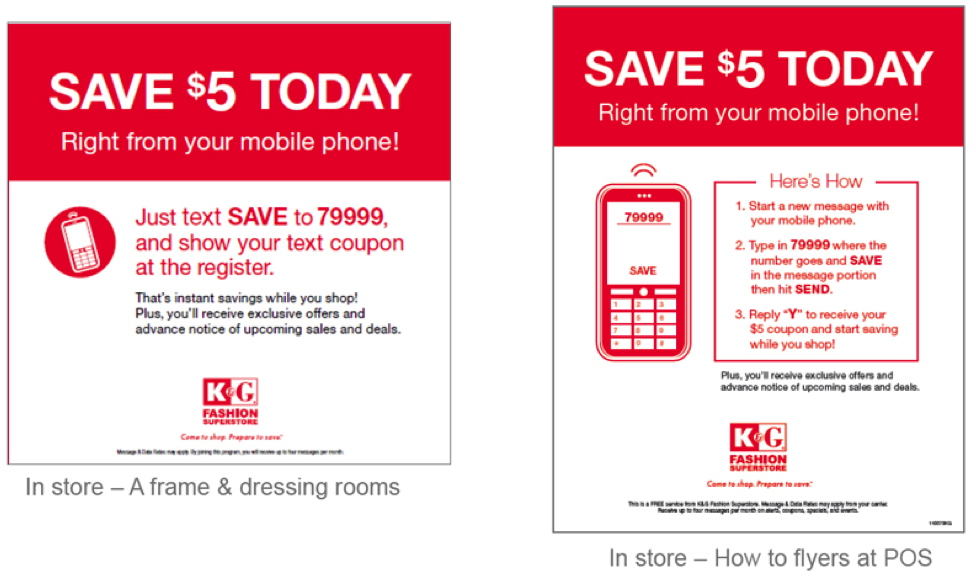
Your call to action is where expectations are set, and it’s one of the most visible parts of SMS compliance TCPA for your subscribers. If someone reads it once, they should know exactly what they’re signing up for.
Every CTA must include:
- Your organization or program name
- Purpose of the SMS program
- Estimated message frequency
- “Message & data rates may apply.”
- Link to terms & conditions
- Link to privacy policy
- A note stating that consent isn’t required for purchase
Read Also: How to create an effective call to action? (with examples)
Here’s an example of a CTA for a business:
Step 3: Send a confirmation message (Double opt-in)
Once someone opts in, your first message should confirm it.
Take the example of the recent presidential campaigns
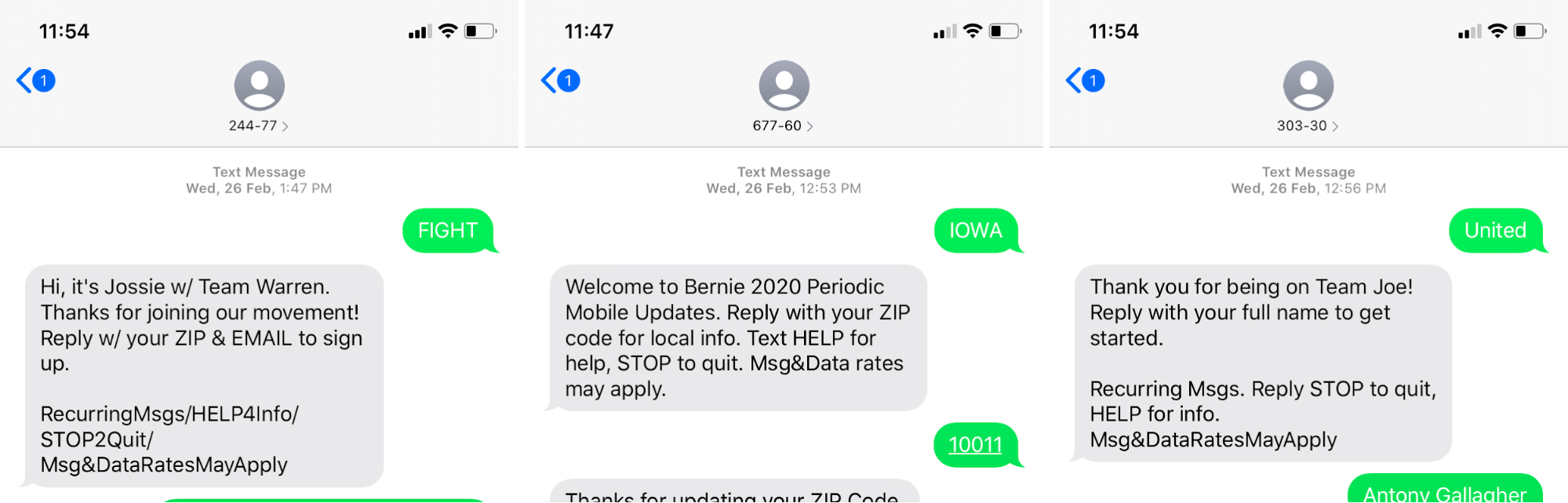
Your confirmation message must include:
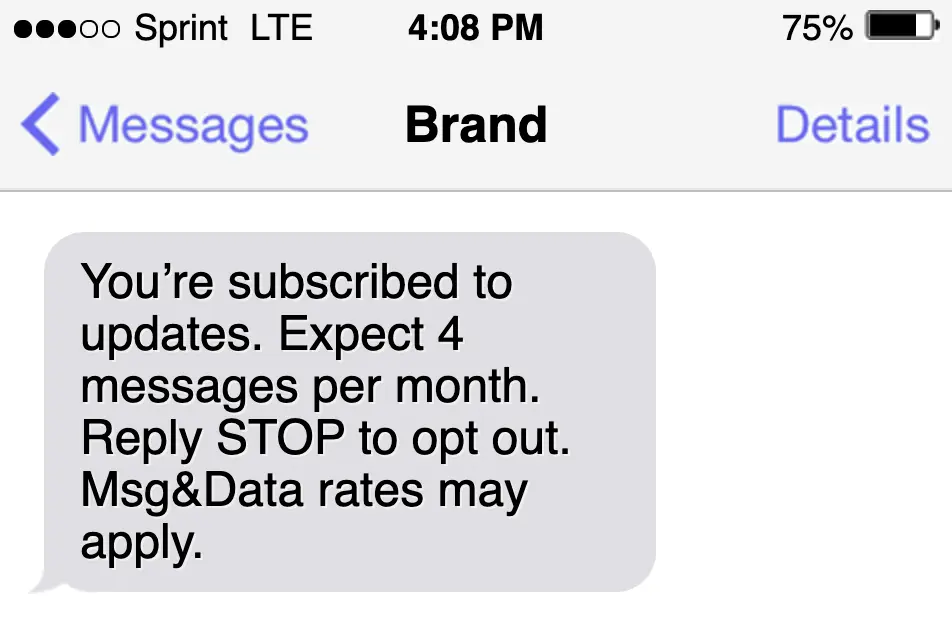
- Organization name
- program/purpose
- Frequency
- STOP instructions
- Data rate disclosure
This message becomes part of your SMS compliance TCPA proof.
Here’s an example of a CTA for a business.
| Pro Tip: With CallHub, you can set this as an automated welcome or keyword response, so every opt-in gets a consistent, compliant confirmation without extra manual work. |
Step 4: Re-permission existing contacts
Importing contacts from your CRM? Purchased a list? Used a sign-in sheet?
You still need documented permission before texting them.
Re-Permission Process:
- Audit your database
- Identify contacts without clear opt-in records
- Send re-opt-in request texts (“Reply YES to keep receiving messages”)
- Update your CRM based on replies
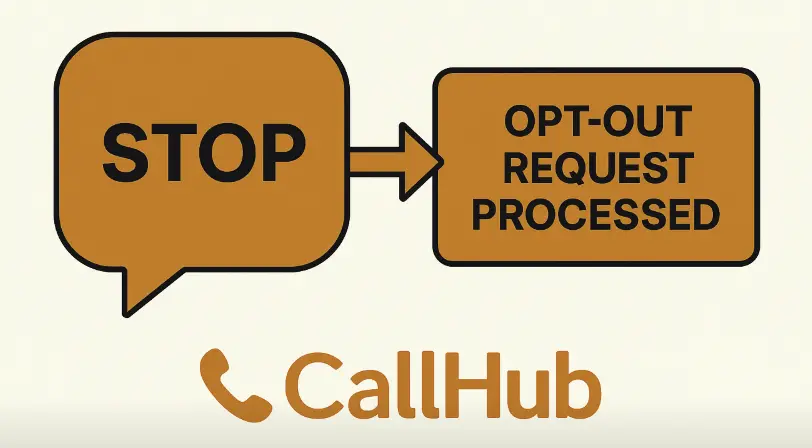
Many organizations handle this by using platforms that automate compliance workflows. For example, CallHub automatically processes STOP responses, maintains opt-out logs, and supports 10DLC registration, helping reduce manual effort and ensuring your texting remains aligned with TCPA and CTIA guidelines.
Read Also: How You Can Make the Best Use of Automatic Call Software.
Step 5: Ensure your content meets TCPA + CTIA rules
Even with perfect consent, the content you send still matters. Certain categories can trigger filtering, require age gating, or be outright prohibited under evolving SMS platform TCPA CTIA compliance 2025 expectations.
Restricted SHAFT categories:
- Sexual content
- Hate or harassment
- Alcohol
- Firearms
- Tobocco
The message must also reflect the purpose disclosed during opt-in. If someone opted in for volunteer updates, you shouldn’t suddenly start sending donation-only pitches without setting that expectation.
Carrier and CTIA restrictions continue to tighten, so staying current with updates from your provider is essential.
CallHub keeps pace with carrier rules and provides controls that help you avoid prohibited or high-risk message types on specific routes.
Read Also: The Ultimate TCPA Compliance Checklist to Avoid Massive Fines
Step 6: Honor opt-out requests immediately in SMS compliance TCPA
When a subscriber texts STOP (or END, CANCEL, UNSUBSCRIBE, QUIT), you must:
- Immediately stop sending texts
- Send a confirmation message
- Add them to your internal DNC list
- Sync opt-outs across all campaigns
- Store opt-out timestamps for future audits
Ignoring an opt-out, even once, can result in steep fines.
This is where platform automation makes a real difference. A good SMS system automatically detects common opt-out keywords, sends a confirmation, updates the contact’s status, and blocks future sends to that number, so compliance doesn’t depend on someone remembering to update a spreadsheet.
Read Also: Maximize Engagement: The Power of Automated Text Messaging
SMS compliance TCPA checklist
Here is your simple, quick compliance checklist. As you read, tick each box for your current setup:
☐ Prior express written consent collected
☐ CTA includes purpose, frequency, and disclosures
☐ Confirmation (welcome) message sent
☐ Consent records stored and easily retrievable
☐ STOP keywords automatically processed
☐ Internal DNC list maintained and synced
☐ Content complies with CTIA & carrier rules
☐ 10DLC registration complete and up to date
☐ Messages match opt-in expectations (no surprise topics)
☐ Opt-out logs stored securely for audits
A TCPA compliant SMS platform like CallHub makes many of these items easier to maintain over time, especially as your volume grows.
Moving forward with SMS compliance TCPA
Choosing a TCPA-compliant SMS platform and using clear CTAs will help you reach people respectfully and legally, which is exactly why CallHub is a great choice for organizations that want compliance built into their SMS campaigns. Try CallHub today to stay compliant!
DISCLAIMER: This article is for educational purposes only and is not intended as a substitute for legal advice. Consult your legal counsel to determine how FCC regulations apply to your situation.
FAQs on SMS compliance TCPA
What are the key requirements for SMS compliance under TCPA?
Key requirements for SMS compliance under TCPA include obtaining prior express written consent from contacts, creating clear and compliant calls to action, sending confirmation messages (double opt-in), re-permissioning existing contacts, ensuring all content meets TCPA and CTIA rules, honoring opt-out requests immediately, and maintaining proper documentation.
What penalties can organizations face for violating TCPA regulations?
Violations of TCPA regulations can result in legal actions where recipients may sue for damages of up to $500 per violation, with fines potentially reaching $1,500 for each unlawful text message sent.
Are nonprofits exempt from TCPA regulations?
Nonprofits have limited exemptions under TCPA, particularly concerning the National Do Not Call Registry, but they still must follow full SMS compliance practices, including adhering to carrier and CTIA rules, and honoring opt-outs to avoid issues with deliverability and supporter trust.
What are the essential steps to ensure SMS compliance under TCPA?
Ensure SMS compliance by obtaining prior written consent, creating clear and compliant CTAs, conducting double opt-in confirmation, re-permissioning existing contacts, adhering to content restrictions, honoring opt-out requests immediately, and maintaining comprehensive records.
How should organizations handle opt-out requests to remain compliant with TCPA?
Organizations must immediately stop sending messages when a subscriber opts out, send a confirmation message, update their internal do-not-contact list, sync opt-outs across campaigns, and store opt-out timestamps for future audits, preferably automating this process.