

“The plant is closed tomorrow because of the storm!”
“The ratification vote moved to Thursday.”
“The membership meeting starts an hour early.”
Every local has news like this, and every member needs to hear it before the next shift, not after.
Voice broadcasting for unions solves that. One recorded message from your leadership reaches every member’s phone at the same time. No phone tree, no stewards calling hundreds of people one by one, and no guessing whether the update got through.
Here’s why locals use it:
- It lets you reach thousands of members quickly.
- Immediately gathers responses through Press-1 campaigns.
- It dispenses information quickly during emergencies.
The results depend on how you use it. Below, you’ll find which member updates suit a voice broadcast, the dos and don’ts that keep members listening, the rules that apply, and a step-by-step setup guide.
What member updates work best as a voice broadcast?
Voice broadcasts work best for short, one-way updates that every member needs to hear at the same time: Meeting and vote reminders, urgent safety alerts, bargaining news, and deadlines. If the message needs a conversation or a link, a call or a text does the job better.
- Meeting reminders. General membership and unit meetings, with a Press-1 option so members can confirm they’re coming.
- Ratification and strike-authorization votes. When and where to vote, plus a Press-1 transfer so members with questions can talk to a steward.
- Safety and site-closure alerts. Weather closures, evacuations, or a hazard on the job. Urgent safety information is also where the law gives you the most room, covered in the compliance section below.
- Bargaining and contract updates. A 30-second update from the bargaining committee after each session keeps rumors from filling the silence.
- Dues, benefits, and enrollment deadlines. Open enrollment windows, dues changes, or paperwork due by a specific date.
- Officer elections. Nomination deadlines and election days.
A voice broadcast is a megaphone, not a conversation. When you need members to talk back, ask questions, or commit to something specific, one-to-one calling for unions works better. When the update needs a link, a document, or a detail members will want to look up later, send it with mass texting for unions. Most locals use all three, and our guide to union communication strategies covers how they fit together.
Once you know what to send, the next step is sending it well.
Voice broadcasting for unions: What to do
Voice broadcast software calls every member on your list and plays a pre-recorded message. Members get a lot of automated calls, so yours has to sound like it’s from their union within the first few seconds. Here are the best practices for a successful campaign.
Know the rules before you send
Federal rules cover any call that plays a recorded or artificial voice, including your union’s own member updates. The Federal Communications Commission (FCC) calls these robocalls. The Telephone Consumer Protection Act (TCPA) rules at 47 CFR 64.1200 apply no matter what the message is about. For a member update, that comes down to three habits:
- Get consent for mobile numbers: A recorded call to a cell phone needs the member’s prior consent, even when the message is purely informational. Collect opt-in consent on the membership form and keep the record.
- Say who’s calling: Every recorded message has to name the union at the start and give a number members can call back.
- Make it easy to opt out: Members who ask to stop getting calls should stop getting them, and your list should remember that.
Calls about a genuine emergency, like a site closure or a safety hazard, are exempt from the consent requirement under the TCPA regulations. Landlines, calling hours, and the Do Not Call registry each have their own rules, covered in the compliance section below.
| Pro Tip: When your members sign up for the union, also have them opt to receive messages. |
Read also: TCPA Compliance Checklist: The Do’s, Don’ts and Tools That Help You With Compliance
Create a contact list
Your contact list can include all union members, or you can run campaigns only for specific segments. Depending on the type of campaign you want to run or its target audience, you can segment and create contact lists.
For example, if you only want to reach out to younger factory workers for a particular cause, you can use segmentation features on your calling software to reach out only to them. Prepare your list segments and reach out accordingly.
Another good practice is to keep contact lists clean. What do we mean by that? We mean contact lists that do not have:
- Numbers of members who have asked not to be called.
- Numbers of members who have left the union.
- Invalid numbers.
Read our article Marie Kondo-ing Your Contact List: How to Clean an Existing Contact List to learn more about maintaining clean lists for union organizing.
Segment based on communication preferences
If you have run campaigns before, you likely know your members’ communication preferences. Some members prefer a voice update; others would rather get a text or an email.
A great way to do this is to segment your audience by communication preferences and spend your money where it will have the most impact. For example, if you want to reach factory workers who work only from 5 am to 3 pm, CallHub helps you segment your contact list to reach only them.
Read also: A practical guide to list segmentation for your organization
Decide on the agenda
Before starting an automated calling campaign, it helps to decide on its agenda. Here are a few questions to ask yourself before you start:
- What does this message intend to communicate?
- What should the recipient do after listening to this message?
- Why is the message relevant at this point in time?
- Who needs to hear this message?
Once you have the answers to these questions, it will automatically enhance how you design your voice broadcast message.
Pick the right time
Timing matters. There is a suitable time to send out a voice broadcast. And yes, it is not Monday morning at 9 am – unless it is an emergency.
Scheduling your voice broadcast campaign revolves around identifying the timings that guarantee:
- High answer and response rate
- Low opt-out rates
- Increased chances of engagement.
Send when members are off shift and before evening plans: For most locals, that’s late afternoon or early evening on a weekday. Check your past campaign reports for the answer-rate peak in your own membership.
These best practices will help you achieve the results your union expects from the voice broadcast campaign. There are also certain things to avoid when setting up such a campaign that are equally important to know. Let’s explore.
Voice broadcasting for unions: What not to do
Wisdom lies in knowing what to do and what not to do. You could implement all your best practices and still go terribly wrong if you are still doing some of what we’re about to list below. Pay attention and avoid these common mistakes during an automated voice message campaign.
Sending without permission
Calling members’ mobile numbers with a recorded message requires their prior consent, and calls without it put the union at legal and reputational risk. Therefore, you need to implement an opt-in system that allows union members to receive communications from the union.
Here are ways in which you can encourage members to opt in:
- Add a communication consent form along with their membership application form. The earlier they opt in, the better. What better time than when you are onboarding members?
- Use CallHub’s text messaging opt-in service to save contacts directly to your CRM system. You can text members a keyword to opt in from a dedicated short code or a registered 10-digit long code (10DLC) number. Write and schedule automated messages for each short code, then share the short codes with union members.
Sharing a really long message
When you hear a pre-recorded message, your first instinct is to hang up. Imagine making it worse by adding a really long message?
Your message needs to be short, crisp, and lead with the best points as soon as possible. The optimal duration for a voice broadcast message is around 30 seconds. Sticking to this duration helps you keep only the relevant points and increases the likelihood that members will listen to your whole message.
Not designing your message effectively
A few essential pointers to keep in mind while crafting a voice broadcast message are:
- The timing and length of the introduction: Name the union in the first sentence and give a callback number. Members decide to listen or hang up in the first few seconds, and federal rules require recorded messages to identify the caller.
- The key points to cover and the core message: Key points ensure you don’t miss crucial information while staying relevant to the call’s intention.
- The call-to-action: Place the most important takeaway carefully so people hear it, even if they don’t hear your entire message. A call-to-action is the intended result of the call. How you want to organize and mobilize the union depends on the effectiveness of your call-to-action message.
Focusing on these factors will help you craft a message that delivers results.
Not paying attention to the pace
Yes, we did recommend that the ideal length for a voice broadcast message is 30 seconds. But if you have more points to cover, that doesn’t mean you should speed up until it becomes incoherent, nor will speaking too slowly keep your audience engaged.
Maintaining a regular, steady, easy-to-understand pace is key to a successful pre-recorded message. We want union members to understand what we have to say, don’t we?
Launching a campaign without testing
Ever carefully write an important email, only to find a glaring typo after you hit send? Yes, that, but for voice broadcast campaigns.
Testing matters even more for a voice broadcast because it reaches hundreds of members at once, with a single click. Once you launch the campaign, you can’t go back.
Test your campaign with a small group to ensure you’ve got all the details right, pronounced everything perfectly, and not missed out on any information.
An unclear call to action
If a voice broadcast is a race, your call to action is the finish line. We cannot arbitrarily mark where a finish line in a race will be – it is measured, marked, and made abundantly clear.
That is precisely what needs to happen with your call to action.
Are you organizing a strike? Do you want members to attend a meeting? Are memberships declining, and do you want each member to invite one person to the next meeting? Whatever you may want as the result of a voice broadcast campaign – make it crystal clear!
Your time, investment, and labor on a calling campaign are worth it only if you achieve the desired results.
Not checking time differences
This point applies to unions conducting a calling campaign from a location different from the target recipient’s.
If you’re creating a union automated call campaign for members in a different state or country, double-check the time difference. Also, check local compliance laws on legal voice broadcast timing.
Use CallHub’s Timezone calling feature to dial calls based on your recipient’s time zone.
Avoid these common oversights, and you’ll be ready to run a successful voice broadcast campaign! Once you know these basics, setting up a campaign isn’t difficult. Let’s look at how you can set up a voice broadcast campaign for your union.
How to set up a union voice broadcast on CallHub
Setting up a voice broadcast campaign on CallHub is super easy. Follow these steps to set up a voice broadcast campaign in no time.
1. Set up your account
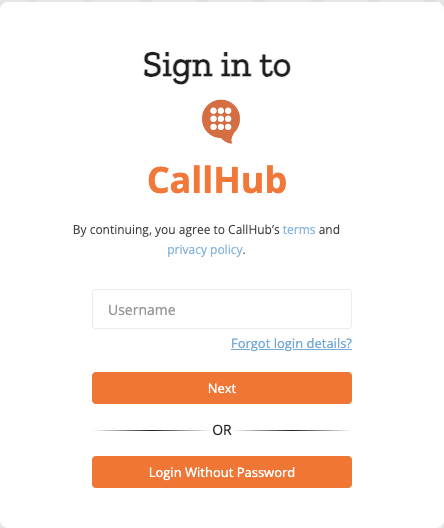
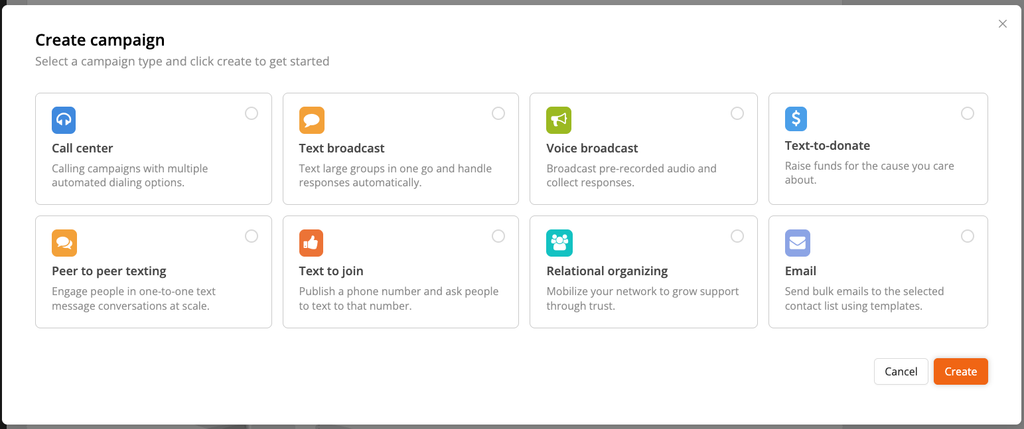
Sign up with your registered email address to start setting up your campaign. Next, log in and click on ‘New Campaign’ on the left hand column, select the voice broadcast option from the blocks.
2. Upload your recorded message
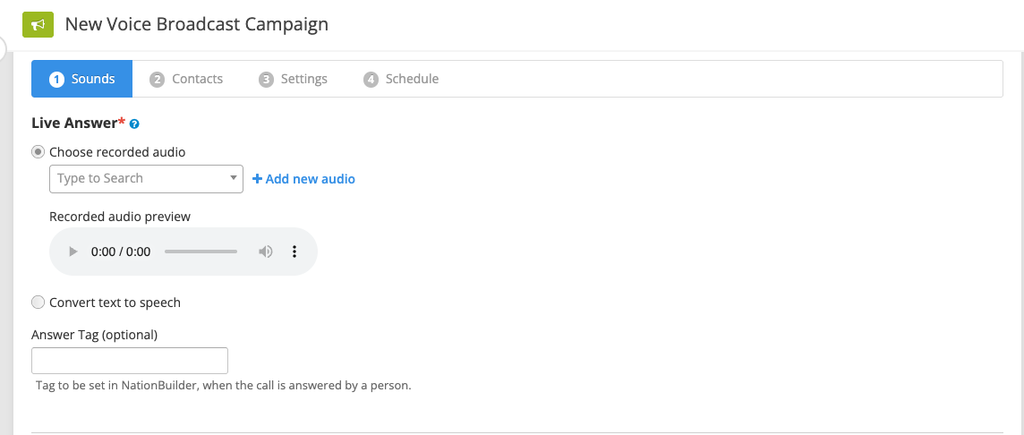
You can do this in two ways. You could upload a pre-recorded audio under the ‘Play Audio’ section. Alternatively, you can add text in the text-to-speech box, which will automatically convert it to audio.
3. Add a transfer
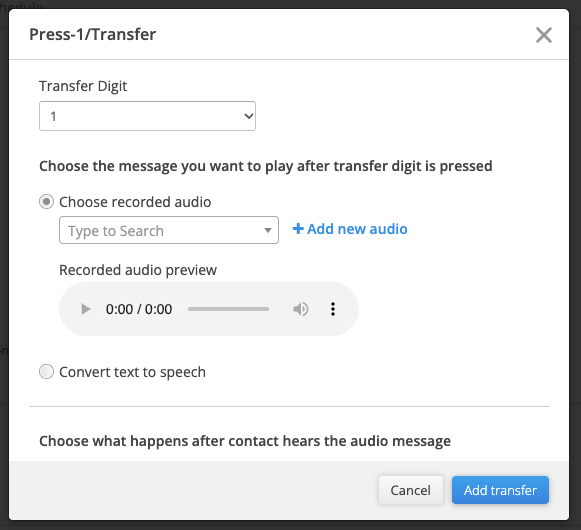
The transfer button lets you record members’ responses. They can indicate their attendance for an event, vote, etc., using the transfer or press-1 functionality. Members can also connect with agents through the same feature if you enable it. You can then add an audio or text-to-speech option, or simply hang up once they click the button. You can even trigger emails using the press-1 functionality if needed.
4. Enable answering machine and do not call detection
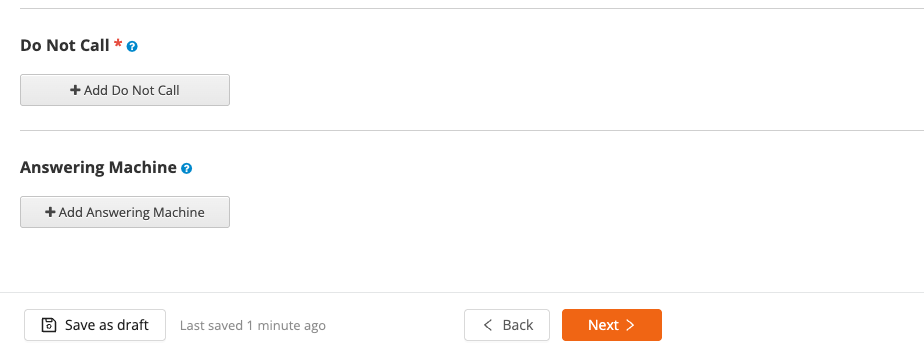
Enabling answering machine detection and Do Not Call helps you identify and remove contacts you can’t reach. You can reschedule calls for contacts with an answering machine, play a pre-recorded message, or remove DND contacts from your contact book if you cannot reach them.
5. Upload your contact list
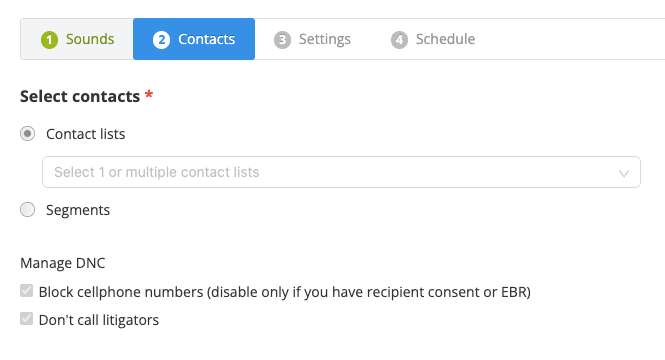
This is the list of members your voice broadcast will go out to. Select the contacts from your CRM or .csv contact list and upload them to the campaign.
6. Choose your caller ID and speed
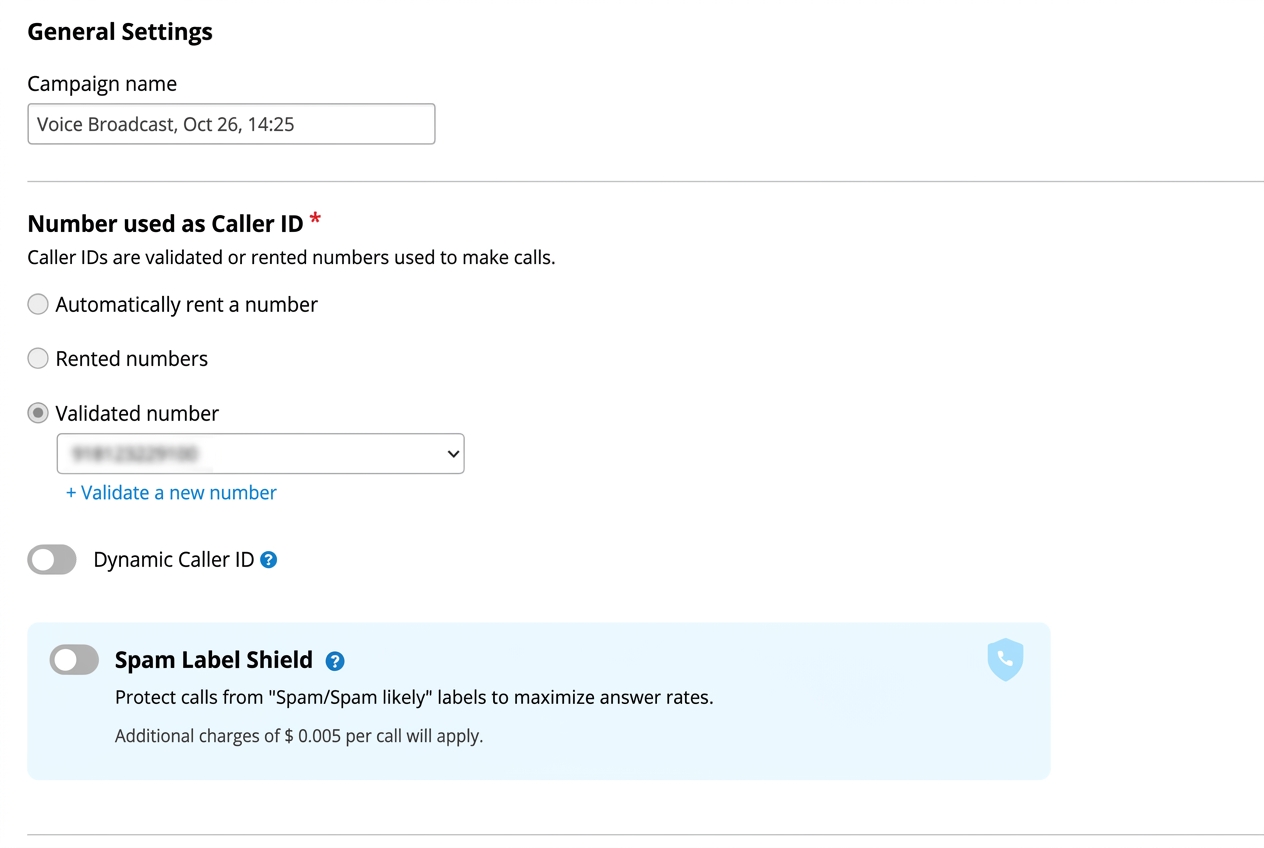
You can choose to display your registered mobile number as your caller ID. You can also purchase the ‘Dynamic ID’ feature, which displays a local number when you begin your campaign. For example, if your voice broadcast targets people living in Texas, your caller ID will display a Texas caller ID.
You can also select the call frequency and the interval between retries. Depending on how you want your follow-up to look, you can schedule a retry a few hours from now or a couple of days later.
7. Schedule your voice broadcast
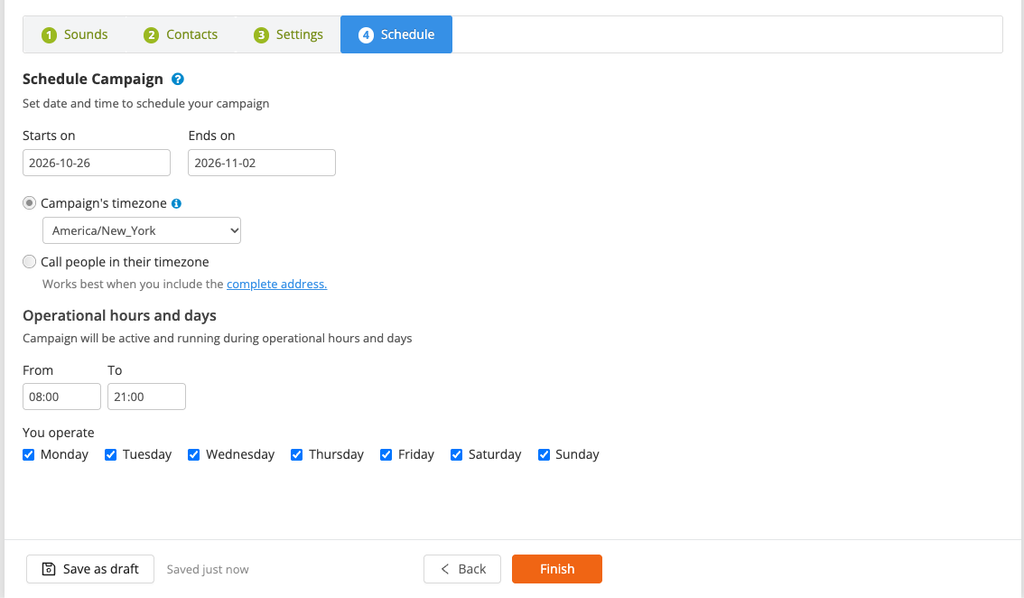
Here’s the last step! Schedule your campaign according to the date and time you want it to go out, and et voilà! You’re all done
Is voice broadcasting legal for unions? What the TCPA requires
Yes, voice broadcasting is legal for unions. The same federal rules apply to it as to any other recorded call. Under the TCPA, the FCC regulates every call that plays a prerecorded or artificial voice as a robocall, no matter what the caller calls it. Calling it a member update doesn’t change the rules, so build them into every campaign. Here’s what 47 CFR 64.1200 means for a local:
| Situation | What the rule requires | What to do |
|---|---|---|
| Recorded call to a member’s cell phone | Prior express consent, even for a purely informational update | Add a consent line to the membership form and keep the record |
| Recorded call to a landline, without consent | No more than three calls in any 30-day period, plus a key-press opt-out within two seconds of the caller ID | Count landline sends per member and add a “press a key to stop these calls” option, or collect consent to go past three |
| Every recorded message | Name the union at the start, then give a callback number | Open each script with “This is [Local name]” and end with your number |
| Genuine emergencies | Exempt from the consent requirement | Reserve the label for real safety or closure alerts |
The three-call landline limit is the newest rule. It took effect July 20, 2023, under the FCC’s TRACED Act order. It applies to calls from tax-exempt nonprofits, which includes most unions. Consent, oral or written, lifts the limit.
Two more points trip locals up:
- The National Do Not Call Registry is for telemarketing. It governs sales calls, not informational updates to your own members. You still have to honor every individual opt-out request.
- State laws can be stricter. Some states set their own calling hours or consent rules, so check the rules where your members live.
For a deeper walk-through of the federal rules, read our guide to voice broadcast compliance. This section isn’t legal advice, so check your plan with your union’s counsel before a large send.
Conclusion
A carefully designed voice broadcast campaign can help your union engage members, alert them in emergencies, and serve as an important tool in union organizing. CallHub’s tools help you schedule campaigns compliant with TCPA guidelines, maintain up-to-date lists, and more.
Get started with CallHub’s voice broadcasting software today, or start a free trial and send your first member update.
FAQs: Voice broadcasting for unions
1. What’s the difference between a voice broadcast and a robocall?
Legally, there isn’t one. Federal rules treat any call that plays a prerecorded or artificial voice the same way, and the TCPA applies regardless of what you call it. The difference is who’s calling and why. A union voice broadcast goes to members who agreed to hear from their union, says up front who it’s from, and carries an update they need.
2. Is voice broadcasting legal for union communications?
Yes, as long as you follow the TCPA. Get members’ prior consent before sending recorded calls to their cell phones, name the union and give a callback number at the start of every message, and honor opt-out requests. Recorded calls to landlines without consent are limited to three in any 30-day period, so collect consent on the membership form and follow state calling-hour rules.
3. How can unions make voice broadcasts effective?
To maximize effectiveness, keep messages short (around 30 seconds), clear, and relevant. Personalize the introduction, state the purpose, and include a clear call to action. Segment your contact list to target the right audience and schedule calls at optimal times for a higher response rate.
4. What should unions look for in a voice broadcasting provider?
Look for a provider that offers compliance tools (like Do Not Call list management), easy contact list uploads, message personalization, scheduling options, and analytics. Features like local caller ID and press-1 functionality can further enhance campaign effectiveness.
5. How can unions measure the success of a voice broadcast?
Unions can measure success by tracking answer rates, response rates to calls to action, opt-out rates, and member feedback. Most voice broadcasting platforms provide analytics dashboards to help unions assess campaign performance and make improvements.
Feature Image Credit: RODNAE Productions