


Table of Contents
Voter profiling is one of the most powerful ways to make every dollar and every outreach touch count in modern campaigns. By combining voter files, demographic data, and behavioral insights, campaigns in the US and around the world can build accurate voter personas and target the right people with the right messages on the right channels.
With strong voter profiles, your campaign can:
- Know which voter group to target.
- Design messages and campaign policies that influence them the most.
- Understand the ideologies, messages, and policies they do not support.
- Know the platforms through which you can communicate with them.
- Identify which voters to not reach out to because they are very likely to support your opponent, saving precious dollars, time, and unnecessary flak from irrelevant electorates
You will also know which voters to NOT reach out to since they will most likely vote for your opponent. This way, you save precious dollars, time, and a lot of flak that you might receive from irrelevant electorates.
This article explores important data points you can collect while profiling and how to leverage voter profiles to boost your election campaign.
What is voter profiling?
Voter profiling means bringing together data like demographics, turnout history, and behavioral or consumer information to build rich pictures of individual voters and broader voter segments. These profiles show you who is most likely to back your campaign, who might be persuaded, and who is very unlikely to ever support you, so you can prioritize your time and budget.
Rather than pushing one generic message to everyone, you adjust policies, scripts, and creative for groups such as young renters in cities, older habitual voters in competitive precincts, or small business owners in suburban areas. In US races, campaigns usually begin with state voter files, then layer on modeled scores and consumer or interest data from vendors and from their own calls, texts, and canvassing programs.
How voter profiling works in modern campaigns
Over the last decade and a half, data-driven campaigns like Obama’s presidential runs, Brexit campaigns, and the 2016 US presidential race brought voter profiling and microtargeting into the mainstream. Campaigns used predictive models, psychographic profiling (often referencing the OCEAN personality model), and digital behavior to segment voters and serve highly tailored messages.
Today, most serious campaigns – local, state, and federal – use some mix of:
- Voter files from state election offices or national committees
- Demographic and consumer data from data brokers
- Engagement data from calls, texts, emails, and websites
- Digital behavior for ad microtargeting on platforms like Meta and Google
The goal is the same whether you are running for city council or Congress: prioritize resources, talk about issues that matter to each group, and avoid wasting time on voters who are firmly opposed to you
Voter profiling in recent years
You’ve probably heard of voter profiling in the Obama campaigns of 2008 and 2012. The Obama campaign was the first campaign to boast about its success with voter data, with Dan Wagner as their data lead. Even Brexit and the general election of the UK followed Obama’s suit, and the Trump and Clinton campaigns were all heavily backed by voter data analysis.
Cambridge Analytica, a private company, was involved in many large-scale campaigns. The company used behavioral microtargeting to identify personality traits based on the OCEAN model (Openness, Conscientiousness, Extroversion, Agreeableness, and Neuroticism) developed by Michal Kosinski. For the 2016 US Presidential campaign, they identified 32 personality types in the population of the United States. The Trump campaign used the information in 17 states.
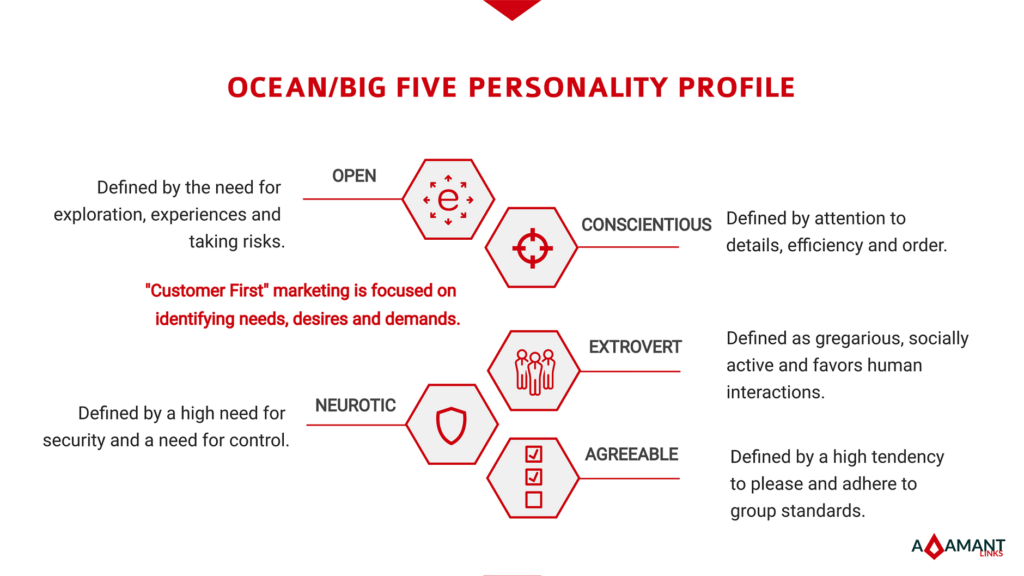
Their voter profiling system used online behavior such as Facebook likes and smartphone data to segment the public. Indicators like a person’s preference for cars were used to find potential Trump supporters and hit them with personalized messages. They could distinguish which message worked best and with which type of audience. The decision to shift the campaign’s focus to Michigan and Wisconsin during the final weeks was made through predictions using voter data.
Seemingly irrelevant data points can be the difference between winning and losing an election. Let’s find out how you can begin voter profiling through data collection.
What data to collected for voter profiling?
To start voter profiling, you need to know which data points will be relevant to your campaign. Grouping data points that complement each other will help you create complete voter personas. You then target individuals falling under each voter profile with campaign messaging and policies specially curated to intrigue them about your campaign.
Read Also: How to Collect Supporter Data with SMS Data Collection
There are three types of data you need to collect to develop a holistic voter profile, which we will discuss in detail:
- Demographic details
- Past voting history
- Consumer data
Summary table: key voter data types and uses
Here’s a quick overview of the main voter data types, how campaigns in the US usually collect them, and the most common ways they put each one to work:
| Data type | Examples | How to collect (US) | How campaigns use it |
|---|---|---|---|
| Demographic data | Name, address, age, gender, race, language | State voter files, national voter databases, CRM enrichment | Geo-targeting, language targeting, high-level segmentation |
| Past voting history | Turnout record, party registration, vote-by-mail | State voter files, party/national committees, data vendors | Turnout modeling, GOTV targeting, persuadable voter identification |
| Consumer/behavioral | Purchases, interests, subscriptions, digital activity | Data brokers, surveys, opt-in forms, engagement analytics | Message personalization, ad microtargeting, donor prospecting |
Let’s dive into each one of them to know more:
Demographic voter data
Demographic data describes who a voter is and where they live, and it is the foundation of almost every targeting decision. Examples include:
- Full name and postal address
- Phone number and email address
- Age and gender
- Race or ethnicity (where available and lawful)
- Language preference
- Education level and household or inferred income band
With demographic details, you can:
- Segment lists by precinct, district, or ZIP code
- Separate young voters from seniors or families with school-age children
- Identify groups who may prefer communication in another language
How to collect demographic data (US context)
- Start with your state voter file or a national voter database, which usually includes name, address, gender, age or birth year, and basic voting history.
- Use your CRM and tools like CallHub to append phone numbers and email addresses, then confirm and update them via phone calls and SMS campaigns.
- Run opt-in surveys by phone, SMS, or forms to gather extra demographic fields such as language, household size, or preferred issues
Past voting history
Past voting history tells you how likely someone is to vote and, in many US states, which party they are registered with. Common fields include:
- Turnout history (which elections they have voted in)
- Primary vs general participation
- Party registration (where applicable and permitted)
- Vote-by-mail or early voting usage in past cycles
Campaigns use this information to:
- Identify reliable voters who almost always turn out
- Flag low-propensity supporters who need extra GOTV nudges
- Find persuadable voters based on mixed turnout or registration patterns
How to collect and use past voting history
Combine turnout history with your own survey data (“support level,” “issue priorities”) to create profiles like “strong supporter, low turnout” or “swing-voters, medium turnout.”
Obtain voter files from state election offices, political parties, or reputable voter file vendors.
Import the file into your CRM or voter database and assign simple turnout scores or tags such as “high turnout,” “occasional voter,” or “infrequent voter.”
Consumer data
CConsumer and behavioral data shows what voters do in their daily lives – what they buy, read, and care about, which can signal policy preferences and lifestyle. This might include:
- Purchase categories and brand affinities
- Subscriptions and memberships
- Interests inferred from online behavior and content engagement
- Device type and preferred digital platforms
- Financial behaviors such as frequent donations or small-dollar giving
Campaigns use these signals to:
- Infer purchasing power and attitudes toward taxes or economic policy
- Understand cultural touchpoints (sports, entertainment, faith, etc.) that shape message framing
- Build tailored creative for digital ads that resonates with specific lifestyles
How to gather consumer and behavioral data ethically
Track engagement within your own programs – who responds to texts, completes surveys, donates, or signs up to volunteer, and treat this as first-party behavioral data for profiling
Work with compliant data brokers who provide modeled segments and interest categories for voter files, subject to applicable law.
Use SMS opt-in, online petitions, and surveys to collect self-reported interests and issue priorities, then sync that information to your CRM. All of which is offered by platforms like Callhub.
Read Also: Powerful Political Donor Lookup Tools to Grow Your Campaign
Step-by-step voter profiling workflow for US campaigns
Whether you are running a city council race or a statewide campaign, a clear workflow keeps your data useful and actionable.
- Acquire your base voter file
- Obtain the latest voter file from your state election office, party committee, or a trusted voter file vendor.
- Ensure you understand what fields are included (demographics, party registration, turnout history) and any usage restrictions.
- Clean and standardize data in your CRM
- Import the voter file into your CRM or voter database, deduplicate records, and normalize formats for addresses and phone numbers.
- Tag records by geography (precinct, district, county) and election relevance for your race.
- Enrich with additional demographic and consumer data
- Append phone numbers, emails, and additional demographic fields through vendors where permitted.
- Integrate compliant consumer or interest segments to better understand lifestyle and media preferences.
- Collect first-party data via outreach
- Use calling, SMS, and canvassing programs to ask about support level, top issues, and likelihood to vote, then store responses as tags or custom fields.
- Encourage supporters to opt in to SMS or email lists for ongoing communication and profiling.
- Build segments and voter personas
- Group voters into segments such as “strong supporters,” “leaning supporters,” “undecided,” and “opposed,” layered with turnout likelihood.
- Create personas that combine demographics, issues, and behaviors—for example, “young renters who care about climate and cost of living.”
- Map segments to channels and tactics
- Decide which segments get phone calls, P2P texts, mail, or digital ads based on cost and expected impact.
- Prioritize high-value targets like low-turnout supporters, persuadables in battleground precincts, and strong supporters who can become volunteers or small-dollar donors.
- Test, measure, and refine
- Run A/B tests on messages, creative, and scripts for each segment, watching response, persuasion, and turnout effects where possible.
- Feed new engagement data back into your profiles so your segmentation improves throughout the cycle rather than remaining static
How to leverage voter profiling?
Voter personas help political campaigns in more ways than one. While reaching out to voters and asking them to vote for you may be one of the primary reasons for voter profiling, here are more ways to leverage data:
- Donor prospect research
- GOTV activities
- Persuasion targeting
- Negative campaigning
- Microtargeting for ads.
Let’s look at each use case.
Donor prospect research
Political campaigns need funds, and the best source of funds is long-term supporters of a political campaign or party. With voter profiles, you will have a better idea about:
- The best people to contact for your campaigns.
- People who are most likely to donate.
- The amount they can contribute.
- The frequency with which they can donate to your campaign.
Read Also: Powerful Political Donor Lookup Tools to Grow Your Campaign
GOTV activities
Voter profiles can be leveraged for GOTV activities in the following ways:
- Persuading swing voters to vote for your campaign.
- Ensuring new voters are registered and ready to vote.
- Registering your supporters to vote in the election cycle and applying for mail-in ballots, etc.
- Nudging individuals who are less likely to vote to register themselves.
If you want to know more about planning and implementing GOTV strategies, you must read our article Get Out The Vote: Proven Strategies to Motivate Voters
Persuasion targeting
Through data on your voter profiles, your outreach team can design campaign messages and campaign literature for different voter groups. Don’t share completely different or opposing messages to different groups, but target your messages to make them more meaningful to your audience and persuade them to vote.
For example, if one of your policies is about infrastructure, you can speak about the new transport infrastructure in your constituency to business people who will benefit from it and speak about better parks, etc, to parents.
Negative campaigning
Negative campaigning might sound harsh to begin with, but it is an effective political campaigning method. Understanding behavioral patterns, policy preferences, and ideologies can help you pursue negative campaigning more effectively.
One of the best ways in which negative campaigning was used was by the Trump campaign in 2016. 35% of paid ads run by the campaign were negative ads targeted against Hillary Clinton, which were effective in swinging voters towards his side.
Read Also: How To Leverage Negative Campaigning (And Ways To Fight It)
Microtargeting for ads
Political advertisements are expensive but effective in reaching out to a large audience. You can share your customized campaign messaging to different groups through microtargeted ads on social media platforms, Google, etc.
With voter profiles, you will know exactly which gender, age group, income level, education level, location, and other variables to target for different ad campaigns. Microtargeting in this manner is highly effective in producing the results you aim for.
For example, if you want to share your women-centric policies and have identified that white women are primarily considered a swing voter base. You can target messages about these policies toward white women to persuade them to vote for you.
You can add these different metrics while segmenting your audience on your ad platform, and voila, you’re ready for some great results!
Legal, ethical, and privacy basics for voter profiling
Voter profiling in the US operates within a patchwork of election, privacy, and communications laws. While voter files are widely used, campaigns need to respect:
- Limits on which fields can be shared or used commercially, especially sensitive data like full birthdates or identification numbers.
- State-specific rules on access to voter data and restrictions on redistribution.
For outreach channels, consent rules matter:
- Telephone and SMS outreach is subject to federal and state rules, including consent requirements for automated calls and texts.
- Data brokers face increasing scrutiny over how they collect and share consumer data used in political profiling.
Read Also: SMS Compliance TCPA: How to Stay Fully Compliant in 2025
Ethically, campaigns should:
- Be transparent when possible about how they use data and provide clear ways for people to opt out of communications.
- Avoid targeting that exploits sensitive attributes (such as health status) in ways that could be discriminatory or manipulative
The way forward with voter profiling
Voter profiling has received both flak and praise over the years since it has been increasingly used in election campaigns. However, there is no denying that voter profiling has allowed campaigns to reach out to their supporters and engage with them in a more meaningful way than before.
To help you in your campaigning process, you can refer to our article Beginner’s Guide to Micro-targeting for Political Campaigns.
Featured Image Credit: Tim Mossholder
Frequently asked questions on voter profiling
What is voter profiling in political campaigns, and how is it different from basic voter targeting?
Voter profiling means building detailed pictures of voters by combining demographic information, turnout history, and behavioral or consumer data to understand their likely views and priorities.
Basic targeting might only use geography or party registration, while profiling uses many more data points and models to create segments like “low-turnout young renters who care about climate” or “suburban small business owners worried about taxes.
Is voter profiling legal in US elections, and what kinds of voter data are campaigns allowed to use?
In the US, campaigns are generally allowed to use voter registration files and other legally obtained data to target their outreach, subject to state and federal rules on how those records are accessed, shared, and protected.
Many campaigns also work with data vendors and brokers to append demographic or consumer information, but they must still comply with election law, privacy rules, and communications regulations (for example, around robocalls and texts).
How do political campaigns in the US collect voter data and build voter profiles in practice?
Campaigns typically start with state voter files or national voter databases, which include basics like name, address, age or birth year, party registration (where available), and turnout history.
They then enrich these records with phone numbers, emails, modeled scores, and sometimes consumer or interest segments, plus first-party data from canvassing, calls, texts, online forms, and donations, and use all of this to create voter segments and personas for outreach
How do campaigns use voter profiling and microtargeting to decide which ads, emails, texts, or mailers each voter sees?
Using voter profiles, campaigns group people into segments and assign each segment specific messages, creative, and channels – for example, sending climate-focused messages to environmentally engaged young voters or tax-focused appeals to small business owners.
These segments are then matched to email lists, phone and SMS programs, and custom or lookalike audiences on ad platforms so that voters see content aligned with their likely interests and concerns
What are the privacy and ethical concerns around voter profiling, and can I opt out of being profiled or targeted?
Critics worry that voter profiling and microtargeting can feel opaque, exploit sensitive data, or contribute to manipulation and polarization when people see highly personalized political content that others never see.
While you generally can’t stop campaigns from accessing publicly available voter registration data, you can often opt out of particular channels (such as email lists or SMS programs) and exercise rights under state privacy laws where they apply, and regulators are increasingly scrutinizing how political actors and data brokers collect and handle personal data.