

If your campaign uses a robodialer, a single mistake — calling a cell phone without consent, using an AI voice, or missing one opt-out — exposes you to $500 to $1,500 per violation under the TCPA (Telephone Consumer Protection Act). With state laws piling on additional penalties, the compliance risk is real and growing.
This article covers the federal rules that govern political robocall laws under the FCC and TCPA, the 2026 state law changes affecting campaigns, how to document consent, what penalties campaigns face for violations, and best practices for staying compliant while still running effective outreach.
Key Takeaways
Political campaigns can legally use robodialers for voter outreach, but cell phone calls require prior express consent while landline calls have looser rules, and TCPA violations carry $500 to $1,500 in penalties per violation.
Calling Rules by Phone Type
- Landlines can be called without prior consent as long as campaigns follow time-of-day restrictions and identification requirements, while cell phones cannot receive an automated or prerecorded voice message without prior express consent.
- Text messages to cell phones follow the same consent rules as calls, and valid consent includes a voter opting in through a web form, event signup, or a checkbox for campaign updates.
- Every robocall must identify the candidate or committee at the start of the message and end with a callback number that connects to a live person.
FCC vs TCPA
- The FCC sets technical rules such as time restrictions, identification requirements, opt-out obligations, and STIR/SHAKEN authentication, and enforces them through fines and license revocations.
- The TCPA (47 U.S.C. § 227) creates the private right of action that lets voters sue for $500 to $1,500 per violation, and both laws apply to campaign calls simultaneously.
- The Supreme Court’s 2020 ruling in Barr v. American Association of Political Consultants confirmed political speech gets no TCPA exemption, since content-neutral restrictions on technology, timing, and phone numbers survive First Amendment scrutiny.
2026 Federal Compliance Requirements
- AI-generated or cloned voices in robocalls are illegal under the TCPA per the FCC’s February 8, 2024 Declaratory Ruling, a decision prompted by an AI-cloned Biden voice robocall in the 2024 New Hampshire primary, and campaigns must use human-recorded audio with no exceptions.
- Campaigns must stop all automated calls and texts to a number once a voter opts out, and while the FCC extended a waiver on January 6, 2026 for its 2024 ‘revoke all’ rule while reconsidering its scope, the underlying obligation to honor opt-outs has not changed.
- Landline calls to registered voters are capped at three calls per 30 days and restricted to between 8 a.m. and 9 p.m. local time.
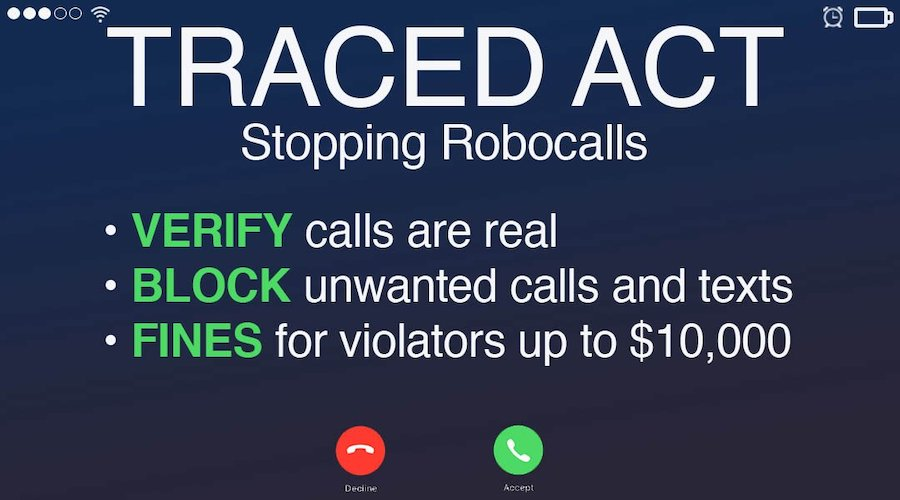
- Carriers must implement STIR/SHAKEN caller ID authentication under the TRACED Act, fully in place since mid-2021, meaning calls from unverified or spoofed numbers may be blocked or flagged regardless of content compliance.
State Rules
- States are layering ‘mini-TCPA’ laws on top of federal requirements, including Virginia’s SB 1339, effective January 1, 2026, which adds consent and identification requirements for automated political calls.
Is it still legal to use robocallers for political campaigns?
Yes. You can legally use robodialers for voter outreach, but the rules differ sharply depending on whether you’re calling a landline or a cell phone.
- You may call any registered voter’s home landline without prior consent, as long as you comply with time-of-day restrictions and identification requirements.
- You cannot call cell phones with an automated or prerecorded voice message unless the voter has provided prior express consent. Cell phones require consent — full stop.
- Text messages follow the same rules as calls to cell phones. Valid consent includes a voter opting in via a web form, event signup, or a checkbox for campaign updates.
Every robocall must also:
- Identify the candidate or committee at the very start of the prerecorded message.
- End with a callback telephone number and contact information that connect to a live person.
Read also: Maintaining TCPA compliance during political calls.
FCC vs TCPA: Which law governs your robocalls?
Campaign managers often ask whether the FCC or the TCPA is the one they need to worry about. The answer is both, but they do different things.
| FCC | TCPA | |
|---|---|---|
| What it is | Federal Communications Commission | Telephone Consumer Protection Act (47 U.S.C. § 227) |
| Role | Sets the technical rules and regulations — time restrictions, identification requirements, opt-out obligations, STIR/SHAKEN requirements | Creates the private right of action — voters and consumers can sue for violations |
| Enforced by | FCC (and state attorneys general) | Private lawsuits plus FCC and FTC enforcement |
| Penalties | Fines and license revocations | $500 to $1,500 per violation |
The practical takeaway: the FCC tells you what the rules are. The TCPA is what makes breaking those rules expensive. Both apply to your campaign simultaneously.
The FCC’s implementing regulations are codified at 47 C.F.R. § 64.1200. The TCPA statute itself is at 47 U.S.C. § 227.
Robocall laws in 2026: what federal rules say
Here’s what your campaign needs to know about current federal requirements under the FCC’s political calls rules.
AI-generated voice ban
The FCC issued a Declaratory Ruling on February 8, 2024, confirming that AI-generated or cloned voices in robocalls are illegal under the TCPA. This covers voice cloning, deepfakes, and any synthetic voice technology. The New Hampshire primary in 2024 — where a robocall used an AI-cloned voice of President Biden urging Democrats not to vote — was a direct catalyst for the ruling.
Use human-recorded audio for all campaign robocalls. There are no exceptions for political campaigns.
Opt-out revocation rules
If a voter opts out, you must stop all future automated calls and texts to that number. The FCC’s 2024 Report and Order introduced a “revoke all” rule requiring campaigns to honor opt-outs across all automated message types, not just the specific type the voter originally received.
On January 6, 2026, the FCC extended a waiver on the “revoke all” provision while it reconsiders the rule’s scope. Campaigns should still honor opt-outs promptly — the risk of future enforcement remains, and the underlying TCPA obligation to stop calling after a revocation has not changed.
CallHub’s phone banking software automatically processes STOP replies and updates your Do Not Contact list in real time, so opt-out compliance happens without manual intervention.
Landline calling rules
Under FCC rules for political calls, campaigns may call registered voter landlines without prior consent, but must stay within the 3-call-per-30-days limit and must not call before 8 a.m. or after 9 p.m. local time.
STIR/SHAKEN authentication
Under the TRACED Act (Pub. L. 116-105), carriers are required to implement STIR/SHAKEN caller ID authentication. Fully implemented by mid-2021, it means carriers automatically flag or block calls with unverified or spoofed caller IDs.
If your campaign number is not properly verified, your calls may never reach voters — regardless of how compliant your content is. CallHub’s Spam Label Shield keeps your numbers authenticated and clean.
Read also: STIR/SHAKEN compliance guide.
Do political campaigns have to follow the TCPA?
Yes. A common misconception is that political speech receives a TCPA exemption because of First Amendment protections. It does not. The Supreme Court’s 2020 decision in Barr v. American Association of Political Consultants struck down the government-debt exception but left TCPA restrictions on automated calls intact. The government can regulate the technology, timing, and telephone numbers used — content-neutral restrictions survive First Amendment scrutiny.
Can you robocall cell phones for political campaigns?
No, not without prior express consent. Calling a cell phone with a prerecorded or artificial voice without consent violates the TCPA, regardless of whether the message is political. The TCPA does not carve out an exception for campaign speech.
State robocall laws that affect political campaigns
Federal law sets the floor. Many states have passed their own rules — sometimes called “mini-TCPA” laws — that add restrictions on top of federal requirements. The table below covers the states with the most significant rules for campaigns.
| State | Key restriction | Effective |
|---|---|---|
| Virginia | SB 1339 adds consent and identification requirements for automated political calls | January 1, 2026 |
| Texas | SB 140 expands TCPA-style consent requirements for political robocalls to cell phones | September 1, 2025 |
| Maryland | Written consent required for automated calls; broad auto-dialer restrictions | 2021 |
| Oklahoma | Restricts automated calls without consent; specific exemption criteria for political calls | 2021 |
| New York | Strengthened restrictions on automated telemarketing; limits on frequency and methods | 2021 |
| Florida | Florida Telephone Solicitation Act: prior express written consent required for automated calls, including political | 2021 |
| Washington | Bans use of certain dialer technologies; written consent requirements | 2021 |
| Michigan | Restricts automatic dialers without consumer consent | 2022 |
Virginia SB 1339 and Texas SB 140 are the most recent additions. If your campaign operates in either state, audit your consent collection and documentation processes before your next call program.
The Alliance for Justice publishes an annual guide to state-by-state robocalling rules for advocacy and political callers — the 2025 edition is available at afj.org.
TCPA violation penalties: what campaigns can face
Compliance failures are not just a reputational risk. Here’s the actual financial exposure per violation.
| Violation type | Penalty | Source |
|---|---|---|
| Standard TCPA violation | $500 per call | 47 U.S.C. § 227(b)(3) |
| Willful or knowing TCPA violation | $1,500 per call | 47 U.S.C. § 227(b)(3) |
| TRACED Act violation | Up to $10,000 per call | Pub. L. 116-105 |
| State-level violations | $500 to tens of thousands per violation | Varies by state |
These are per-call penalties. A campaign that sends 10,000 non-compliant robocalls faces $5 million in standard TCPA liability — or $15 million if the violations are found to be willful.
Consumers can sue directly under the TCPA’s private right of action. They can also file complaints with the FCC Consumer Complaints Center and the FTC.
Penalties from state laws stack on top of federal exposure. A campaign violating both TCPA and Virginia SB 1339 in the same call faces liability under both frameworks simultaneously.
How to document consent for political robocalls
Consent documentation is what protects your campaign if someone files a TCPA complaint. Under 47 C.F.R. § 64.1200, prior express written consent must be documented and retrievable.
What consent documentation looks like
Valid consent for cell phone robocalls must be:
- In writing (this includes digital forms and checkboxes)
- Given to the specific campaign making the calls — consent given to one campaign does not transfer to another organization
- Clear about what the voter is consenting to (automated calls, texts, or both)
- Timestamped and tied to the voter’s contact information
Verbal consent during a live call does not satisfy the written consent requirement for future automated calls.
How to collect it
Common methods campaigns use to collect documented consent:
- Web forms on the campaign website with an explicit opt-in checkbox
- Event registration forms with a clear automated communications disclosure
- Canvassing or phone bank interactions where the voter verbally agrees and the agent records the consent in the CRM
How to store it
Every consent record should include the voter’s name, phone number, the date and time of consent, and the specific method used to obtain it. Your CRM should be able to pull a consent record for any phone number in your list on request.
What to do when someone opts out
Process opt-outs immediately. Under the TCPA, a voter’s revocation of consent is effective upon receipt. Delayed processing is not a defense.
CallHub syncs opt-out records across your campaigns in real time. When a voter texts STOP or requests removal during a call, they are removed from all future automated outreach before the next campaign sends.
Robocall laws and the First Amendment
Automated calling is generally protected under the First Amendment as a method of speech. However, content-neutral restrictions on the technology, timing, and telephone numbers used are constitutional.
The Supreme Court confirmed this framework in Barr v. American Association of Political Consultants (2020), striking down the government-debt exception as unconstitutional content discrimination while leaving the broader TCPA restrictions intact.
The practical implication: your campaign’s message is protected speech. The automated method you use to deliver it is regulated.
Robodialer use cases for political campaigns
Even with strict political robocall laws, campaigns can use robodialers effectively within a compliant framework.
1. Boosting event turnout
Robodialers make it easy to broadcast event invitations quickly and at scale. For landline outreach, campaigns can reach registered voters without prior consent as long as they stay within calling frequency and time-of-day limits. Interactive Press 1 campaigns let you collect RSVPs at scale.
Best practices:
- Target landlines for broad invitations. For cell phones, use documented opt-in lists.
- Every prerecorded message must identify the campaign at the start and end with a callback number.
- Pair robocalls with compliant SMS follow-ups for better response rates.
2. Faster supporter communication
For supporters who have already opted in, robodialers let you move people to action quickly — prompting volunteers to confirm shifts, nudging donors, or confirming whether someone has voted.
CallHub lets you segment contacts by consent type, so mobile opt-ins and landlines are managed in separate lists automatically.
3. Reacting quickly to events
When news shifts public sentiment overnight, campaigns need to respond immediately. Robodialers make fast, high-volume outreach possible — as long as you’re calling within your compliant contact lists.
Read also: The complete guide to creating an effective robocall campaign.
When do robocalls backfire?
Automated calls can spread messages quickly, but overuse alienates voters. Many campaigns have learned that high volume irritates potential supporters, especially when a voter is being reached by multiple campaigns simultaneously.
The STIR/SHAKEN framework adds a technical dimension: if your caller ID is flagged as suspicious, carriers may block or label your calls before they reach the voter. The message is irrelevant if it never lands.
To avoid these problems:
- Limit volume and frequency. Use robocalls for GOTV reminders, event notifications, and urgent announcements — not as your primary outreach channel.
- Mix robocalls with personal outreach. Pair automated calls with phone banking or peer-to-peer texting for follow-ups that add a human touch.
- Verify caller IDs. Register and verify your numbers so calls are not flagged or blocked. CallHub’s Spam Label Shield protects your campaign numbers.
- Keep scripts tight. Short, clear, action-driven messages perform better than long prerecorded appeals. Save nuanced conversations for live agents.
Robocall laws best practices
- Separate your lists by consent type. Landline contacts without opt-ins and cell phone contacts with documented consent must be managed in separate call programs. Do not mix them.
- Document every opt-in with a timestamp. The burden of proving consent in a TCPA dispute is on the campaign, not the voter.
- Audit for state law changes before each campaign cycle. Virginia SB 1339 (January 2026) and Texas SB 140 (September 2025) both took effect within the last cycle. Check for updates in every state where you operate.
- Process opt-outs immediately. Delays in DNC list updates create TCPA exposure even if the original consent was valid.
- Verify your numbers under STIR/SHAKEN. An unverified number that gets flagged means your compliance work is wasted — the message never arrives.
- Use a platform that automates compliance. The volume and speed of modern campaigns make manual compliance management unreliable. CallHub’s phone banking software handles opt-out syncing, list segmentation, and caller ID verification as part of the infrastructure.
Five-point compliance checklist before your next robocall campaign
- Check your list. Cell phone numbers must have documented prior express written consent. Landlines are free to call within FCC frequency and time-of-day rules.
- Confirm your script. The candidate or committee must be identified at the start of the message. A callback number must be included at the end.
- Verify your caller ID. Your campaign number must be registered and authenticated under STIR/SHAKEN.
- Confirm your DNC list is current. All opt-outs from prior campaigns must be suppressed before the new campaign launches.
- Check state laws for every state on your list. Federal rules are the floor, not the ceiling.
Frequently asked questions about robocall laws
What is the new law on robocalls?
Two major updates took effect in 2025 and 2026. The FCC’s February 2024 Declaratory Ruling made AI-generated or cloned voices in robocalls explicitly illegal. Virginia SB 1339 (January 1, 2026) and Texas SB 140 (September 1, 2025) added new state-level consent and identification requirements. The FCC also extended a waiver on its “revoke all” opt-out rule on January 6, 2026, while it reconsiders the rule’s scope.
What makes a political robocall illegal?
A political robocall is illegal if it: calls a cell phone without prior express written consent, uses an AI-generated or cloned voice, fails to identify the candidate or sponsoring committee at the start of the call, omits a callback number, calls before 8 a.m. or after 9 p.m. local time, exceeds three calls per 30 days on a landline, or continues calling a number after an opt-out has been received.
Can you robocall cell phones for political campaigns?
No, not without documented prior express written consent. There is no political speech exemption to the cell phone consent requirement under the TCPA.
What states have the strictest robocall laws for campaigns?
Florida, Maryland, Virginia, and Texas have particularly strict requirements, with Virginia SB 1339 and Texas SB 140 being the most recent additions. Washington, Oklahoma, New York, and Michigan also have enforcement-active mini-TCPA laws. Check the Alliance for Justice’s annual guide for current state-by-state rules.
What is the penalty for illegal political robocalls?
$500 per call for standard TCPA violations, $1,500 per call if the violation is found willful or knowing under 47 U.S.C. § 227(b)(3), and up to $10,000 per call under the TRACED Act. State penalties stack on top of federal exposure.
How do I get consent for political robocalls?
Consent must be in writing, explicitly tied to your campaign, and timestamped. Collect it via web forms, event registration, or canvassing with documented records. Do not rely on verbal consent or assumed consent based on prior political engagement.
Are AI voice robocalls illegal for campaigns?
Yes. The FCC’s February 8, 2024 Declaratory Ruling established that AI-generated voices, including voice cloning and deepfake audio, qualify as “artificial” voices under the TCPA and are therefore illegal in robocalls without prior express consent. No political campaign exception exists.
What is the difference between a robocall and a ringless voicemail for campaigns?
A robocall delivers a prerecorded message during a live call connection. A ringless voicemail (also called a “direct-to-voicemail” message) deposits audio directly into a voicemail inbox without triggering a ring. The FCC has treated ringless voicemails as calls under the TCPA, which means the same consent rules apply — you cannot drop ringless voicemails to cell phones without prior express written consent.
Do I need to register with the FCC to make political robocalls?
There is no separate FCC registration requirement specific to political robocalls. However, your carrier number must be authenticated under STIR/SHAKEN to avoid being flagged or blocked, and you must comply with all FCC identification and disclosure requirements on each call.
How many robocalls can a campaign make per day?
The FCC sets a 3-call-per-30-day limit for landline calls, not a per-day cap. There is no separate daily limit under federal rules, but state laws may impose additional restrictions. Calling volumes that constitute harassment may also create legal exposure under state harassment statutes regardless of per-call consent status.
For campaigns building out a broader voter contact program alongside robocalls, the complete guide to political phone banking covers how to structure live-agent calling, volunteer management, and multi-channel follow-up.