


If your phone bankers are making fewer contacts than expected, check your caller ID. Carriers identified or blocked over 50 billion calls between 2023 and 2025 (Armor HQ). Legitimate campaign numbers get caught in those filters every cycle, and when they do, your call shows up on the voter’s screen as “Spam Likely” or “Scam Likely” before it ever rings.
Spam likely on political campaign calls is not just an annoyance. It is a direct hit to your contact rate, your volunteer morale, and ultimately your GOTV numbers. The fix involves two things working together: STIR/SHAKEN authentication and number reputation management. This article covers both, plus a step-by-step walkthrough for removing a spam label from your campaign numbers.
Read also: Political robocall laws: what campaigns must know in 2026 | Complete guide to political phone banking.
Key Takeaways
Spam Likely and Scam Likely labels on campaign calling numbers directly cut contact rates, volunteer morale, and GOTV performance, and fixing them requires STIR/SHAKEN authentication paired with active number reputation management.
Why campaign calls get flagged
- Carriers identified or blocked more than 50 billion calls between 2023 and 2025, according to Armor HQ, and legitimate campaign numbers get caught in the same filters.
- High call volume from a small pool of numbers is the most common trigger, since analytics engines like First Orion (T-Mobile), Hiya (AT&T), and TNS (Verizon) track call velocity per number and a busy phone bank can look identical to a robocall operation.
- Unregistered numbers carry no reputation history and get treated with more suspicion, and only 44% of the 9,242 voice service providers tracked by the U.S. PIRG Education Fund had proper caller ID authentication in place in 2025.
- Recycled number pools, clusters of consumer spam complaints against a number, and calls arriving without full STIR/SHAKEN attestation all add further scrutiny from carrier filtering systems.
STIR/SHAKEN authentication
- STIR/SHAKEN is the caller ID authentication standard mandated by the FCC under the TRACED Act, and understanding it is the foundation of fixing spam likely labels.
- STIR creates a digital certificate confirming that the phone number shown on caller ID is actually linked to the caller, while SHAKEN defines how that certificate is created, attached as a token, and validated across real-world carrier networks.
- The calling carrier attaches a token to each call, the recipient’s carrier validates it against its database, and a valid token lets the call display as Verified or Caller Verified, a process that happens in seconds with no noticeable delay.
Attestation levels
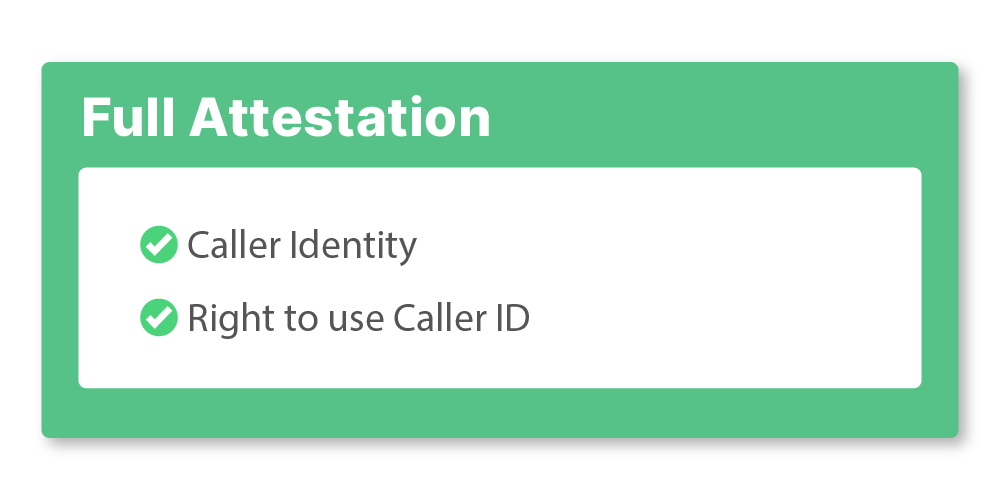
- Full attestation (Level A) means the carrier confirms the caller is an authorized customer for the specific number being used, giving calls the best chance of reaching voters without a spam flag.
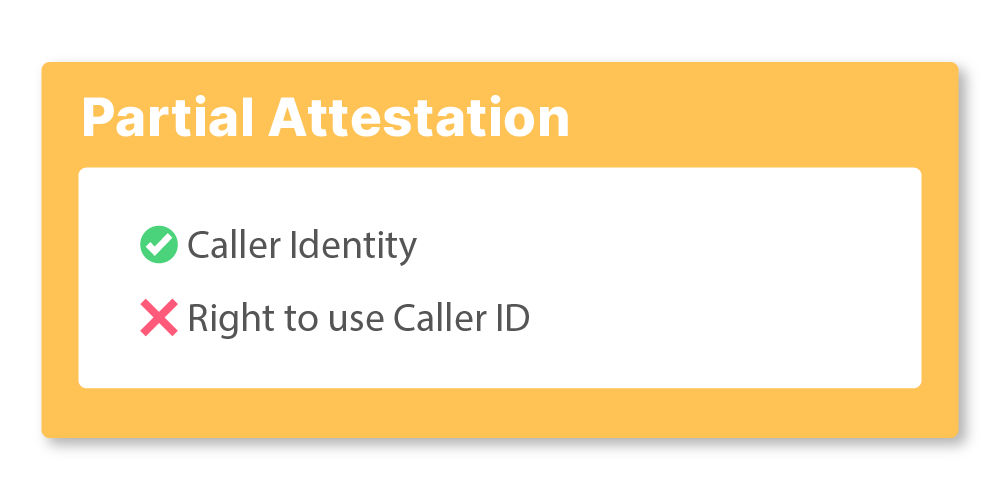
- Partial attestation (Level B) applies when the carrier knows the caller but cannot confirm authorization for that specific number, which often happens with numbers not directly provisioned through the calling platform’s carrier relationship.
- Gateway attestation (Level C) applies when the carrier cannot confirm caller identity or number authorization at all, typically for international calls or calls transiting multiple carriers, and reaching Level A requires a voice service provider with a verified relationship that grey-market VoIP providers often cannot establish.
Why campaign calls get flagged as Spam Likely
Carrier analytics engines do not just look at whether a number is authenticated. They analyze calling behavior patterns and flag numbers that look like spam sources, even when the calls are completely legal. Five triggers account for most spam labels on campaign numbers.
1. High call volume per number
A phone bank running 500 calls per day from a small pool of numbers looks identical to a robocall operation, from the carrier’s perspective. First Orion (the analytics engine used by T-Mobile), Hiya (used by AT&T), and TNS (used by Verizon) each track call velocity per number. High outbound volume from a single number in a short window is the most common trigger.
2. Unregistered numbers
If your campaign number is not registered with the carrier analytics engines, it has no reputation history. Numbers with no history are treated with more suspicion than numbers that have been verified and registered. Only 44% of the 9,242 voice service providers tracked by the U.S. PIRG Education Fund had proper caller ID authentication in place in 2025, which means the majority of calls on those networks are already starting from a position of low trust.
3. Recycled number pools
Phone numbers are reassigned after accounts are cancelled. If your calling platform assigns you a number that was previously used for spam or debt collection, that number may already carry a negative reputation before your first call. Always confirm with your provider that the numbers assigned to your campaign are clean.
4. Consumer complaints
Voters who receive calls they do not recognize can report a number as spam directly from their phone. A cluster of complaints against a number within a short period triggers an automatic flag from carrier analytics engines. This is why calling the same voter repeatedly before they have responded is a compliance and reputation risk, not just a TCPA one.
5. Missing STIR/SHAKEN attestation
Calls that arrive without a STIR/SHAKEN token, or with a low attestation level, are treated as higher risk by carrier filtering systems. A call arriving without full attestation is not automatically blocked, but it is scrutinized more heavily by analytics engines for the other four triggers above.
What does STIR/SHAKEN mean?
STIR/SHAKEN is the caller ID authentication standard mandated by the FCC under the TRACED Act. Understanding it is the foundation of fixing spam likely labels on political calls.
STIR (Secure Telephony Identity Revisited) is the authentication protocol. It creates a digital certificate that verifies the caller’s identity, confirming that the phone number shown on the caller ID is actually linked to the caller making the call.
SHAKEN (Signature-based Handling of Asserted information using toKENs) is how STIR gets implemented across real-world phone networks. It sets the technical standards for creating the digital certificate, attaching the token to the call, and validating the token at the receiving end.
Here is how the process works in practice:
- Your campaign places a call.
- Your carrier generates a digital certificate verifying your identity and attaches it as a token.
- The recipient’s carrier retrieves the token when the call arrives.
- The recipient’s carrier validates the certificate against its database.
- If valid, the call goes through with a “Verified” or “Caller Verified” display. If not, the call may be blocked or flagged.
This entire process happens in seconds, with no noticeable delay for the caller or recipient.
Read also: STIR/SHAKEN protocol: what you must know before making calls.
Attestation levels: what they mean and how to achieve Level A
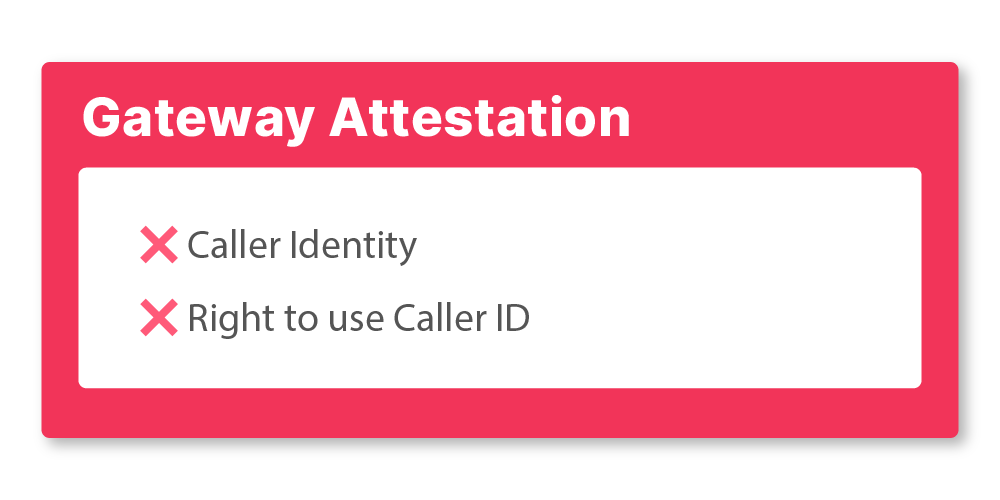
Attestation levels indicate how much trust the carrier places in your caller ID information. There are three levels.
[A] Full attestation: The carrier knows you as a customer and confirms you are authorized to use the specific phone number you are calling from. This is the highest trust level and the one that gives your calls the best chance of being delivered without a spam flag.
[B] Partial attestation: The carrier knows you but cannot confirm you are authorized to use the specific number. This happens when a campaign uses numbers that are not directly provisioned through the calling platform’s carrier relationship.
[C] Gateway attestation: The carrier cannot confirm the caller’s identity or number authorization, typically for international calls or calls transiting through multiple carriers.
How to achieve Level A attestation: Level A requires your voice service provider to have a verified relationship with you and to confirm that the numbers you are calling from belong to you or are authorized for your use. The practical implication is that using a reputable calling platform with established carrier relationships matters. Grey-market VoIP providers or platforms that assign numbers from unverified pools often cannot achieve Level A attestation on your behalf. CallHub’s STIR/SHAKEN registration process establishes this carrier-level verification for your campaign numbers.
What are the benefits of STIR/SHAKEN for campaigns?
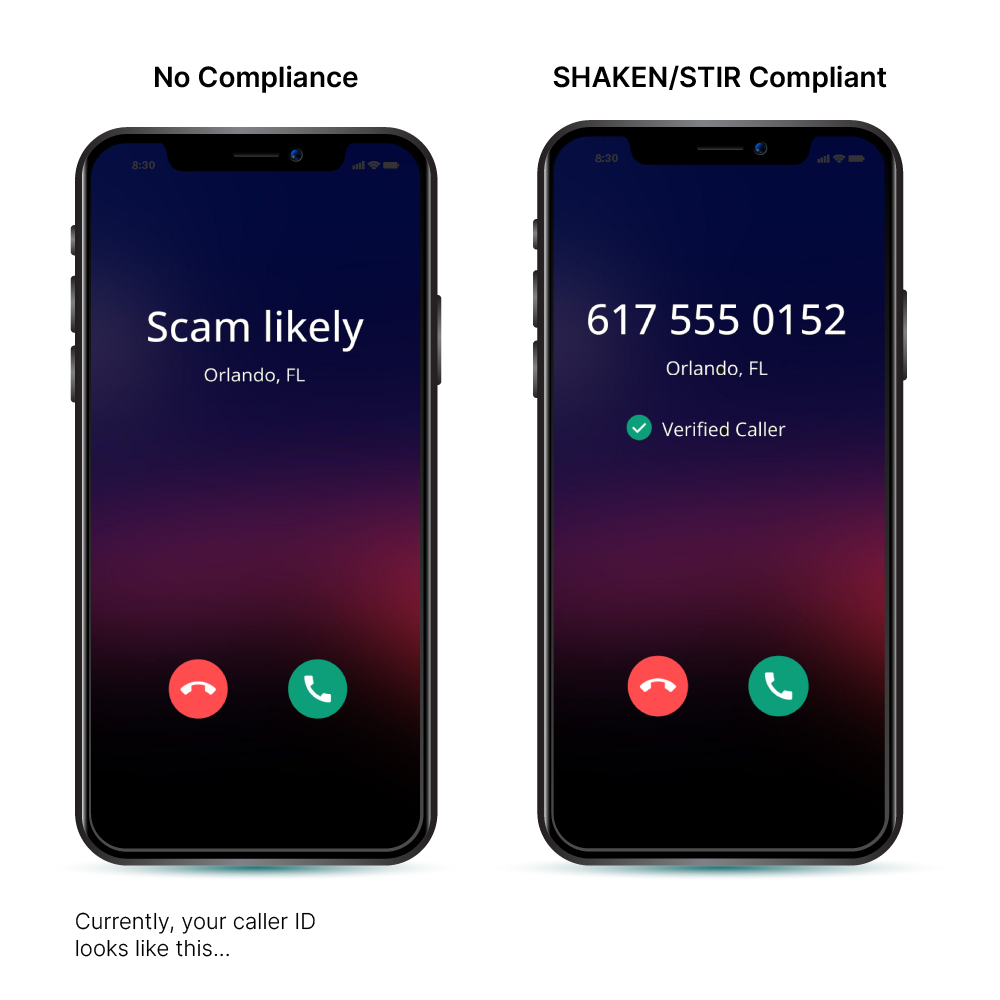
STIR/SHAKEN authentication delivers measurable improvements for political phone banking programs:
- Higher answer rates. CallHub data shows that campaigns using Spam Label Shield see a 2x increase in answer rates compared to unregistered numbers. Voters answer calls that show as “Caller Verified” rather than dismissing them as potential spam.
- Cost efficiency. Calls that get through translate directly to conversations. Spam-flagged calls that go unanswered are dead spend.
- Regulatory compliance. The TRACED Act requires voice service providers to implement STIR/SHAKEN. Using a compliant platform keeps your campaign on the right side of FCC requirements.
- Reputation protection. Authenticated numbers are less likely to accumulate complaint-driven flags from carrier analytics engines.
What happens if you ignore STIR/SHAKEN?
Calls placed without authentication carry no STIR/SHAKEN token. Carriers treat these as unverified and route them through tighter analytics scrutiny. Combined with any of the five spam triggers described above, an unauthenticated number will almost certainly pick up a spam label within a busy campaign week.
The downstream effects are direct: lower contact rates, frustrated phone bankers, wasted dialing hours, and voters who never receive your message.
For campaigns that operate across multiple states, the risk compounds. Different states have different carrier coverage patterns, and a number flagged in one state’s network can spread across carrier databases.
How to fix a Spam Likely label: step by step
If your number is already flagged, the fix is manageable but requires working through multiple channels in parallel. Here is the full process.
Step 1: Check your number’s current status
Before registering or disputing anything, confirm which numbers are flagged. The simplest check: call your own campaign number from a personal cell phone on a different carrier. If it rings as “Spam Likely” or “Scam Likely,” you have confirmed the problem.
For a more systematic check, use a carrier lookup tool or a number reputation monitoring service to see how your numbers appear across AT&T, T-Mobile, and Verizon networks simultaneously.
Step 2: Register with the Free Caller Registry
The Free Caller Registry is a coalition registry operated by First Orion, Hiya, and TNS. A single registration feeds all three carrier analytics engines simultaneously:
- First Orion powers T-Mobile’s call labeling
- Hiya powers AT&T’s call labeling
- TNS powers Verizon’s call labeling
Registering here is the single most effective step you can take to remove an existing spam label and prevent future ones. The process takes approximately 10 minutes. Registration typically takes up to 4 business days to propagate across carrier networks.
What you need to register:
- Your organization’s legal name
- The phone numbers you are calling from
- Your Employer Identification Number (EIN) if available
- The purpose of your calls (political outreach, voter contact, etc.)
If your campaign does not have an EIN, complete the registration with your organization name and contact details. The Free Caller Registry accepts non-commercial callers, including campaigns and advocacy organizations.
Step 3: Register your CNAM (Caller Name)
CNAM (Caller Name) is the display name that appears alongside your number on a recipient’s caller ID. When a voter sees “Smith for Senate” instead of a 10-digit number they do not recognize, they are far more likely to answer.
CNAM registration is separate from STIR/SHAKEN. Contact your calling platform or carrier to register a display name for your campaign numbers. There is typically a small per-number fee. Set this up at the start of each campaign cycle, before your phone banks begin.
Step 4: Enable STIR/SHAKEN through your provider
If you are using CallHub, STIR/SHAKEN registration is handled through the dashboard. Fill in the registration form with your organization details. CallHub submits this to the carrier, the carrier verifies and assigns an attestation level, and STIR/SHAKEN is enabled for your outbound calls.
If you are using a different voice platform, confirm with your provider that they support STIR/SHAKEN at Level A attestation for your numbers. If they cannot confirm Level A, consider whether the platform has the carrier relationships required to authenticate your calls correctly.
Step 5: Dispute directly with the carrier if the label persists
If your number remains flagged after completing steps 2 through 4, file a dispute directly with each carrier’s analytics engine:
- First Orion (T-Mobile): firstorion.com/products/free-number-registration
- Hiya (AT&T): hiya.com/hiya-protect
- TNS (Verizon): tnsi.com/solutions/call-guardian
Include your organization name, the flagged number, your registration confirmation from the Free Caller Registry, and a brief description of your calling program. Carriers typically respond to disputes within 3 to 7 business days.
How to maintain your caller ID reputation during a campaign
Getting a spam label removed is easier than keeping your numbers clean through a busy phone bank. Number reputation management is an ongoing practice, not a one-time setup.
Control call velocity per number
High outbound call volume from a single number in a short window is the fastest way to trigger a new flag, even on a registered number. Distribute calls across a larger number pool rather than burning through the same numbers repeatedly. A campaign running 1,000 calls per day should spread that load across at least 10 to 15 numbers.
Rotate numbers strategically
Retire numbers that have accumulated complaints or shown declining answer rates. Replace them with fresh, registered numbers. CallHub’s dynamic caller ID feature lets you manage number rotation across campaigns without interrupting your call program.
Keep your lists clean
Calling numbers on the Do Not Call registry, disconnected numbers, or voters who have previously opted out generates complaints that damage number reputation. Scrub your voter contact lists before each campaign cycle. Numbers that consistently go to voicemail or generate complaint patterns should be flagged for review.
Monitor during the campaign
Check your answer rates by number pool, not just overall. A sudden drop in answer rate for a specific number is an early warning of a spam flag. Catching it within 24 to 48 hours means you can pull that number from rotation and file a dispute before it affects your overall contact rate.
Stay compliant on opt-outs
Every voter who is called after opting out is a potential TCPA complaint and a reputation risk. Process opt-outs immediately and verify they are reflected across all your active campaigns before the next dial session.
Read also: The only TCPA compliance checklist you will ever need.
STIR/SHAKEN legislation
STIR/SHAKEN is mandated by federal law in the United States and recommended in Canada.
FCC and the TRACED Act: The Federal Communications Commission has required all U.S. voice service providers to implement STIR/SHAKEN under the TRACED Act (Pub. L. 116-105). Non-compliant providers can be removed from the Robocall Mitigation Database, which typically results in their traffic being blocked by other carriers.
TCPA: The Telephone Consumer Protection Act governs the rules for robocalls and automated calling independent of STIR/SHAKEN. Both frameworks apply simultaneously to campaign calling programs.
Canada (CRTC): The Canadian Radio-television and Telecommunications Commission recommends STIR/SHAKEN for IP-based calls. As of 2025, the CRTC has replaced semi-annual status reporting requirements with targeted information requests and simplified annual reports for providers still in the implementation process.
STIR/SHAKEN updates for 2025 and 2026
United States:
Per the FCC’s order on third-party authentication, originating providers must now use their own STIR/SHAKEN certificates and make independent attestation decisions, even if a third party signs calls on their behalf. Starting September 18, 2025, providers with a STIR/SHAKEN obligation must authenticate calls using a certificate tied to their own SPC token, not a third party’s.
If a provider does not meet these requirements, the FCC can remove them from the Robocall Mitigation Database. Removal typically leads to their call traffic being blocked by other carriers.
The FCC also released a Further Notice of Proposed Rulemaking in October 2025 proposing requirements around caller name display authentication (an extension of STIR/SHAKEN principles to the CNAM field). This is forward-looking and not yet in force, but campaigns should watch for finalized rules heading into the 2026 cycle.
What this means for brands and campaigns: Confirm with your calling platform that your STIR/SHAKEN setup, including certificates, attestation process, and Robocall Mitigation Database filings, matches the current FCC rules. If you are using CallHub, this is managed on your behalf as part of the STIR/SHAKEN registration process.
Canada:
The CRTC’s 2025 order eliminated semi-annual status reporting requirements for most providers, replacing them with targeted information requests. The core requirement to implement STIR/SHAKEN for IP-based calls remains in place.
How CallHub handles STIR/SHAKEN and spam label protection
CallHub implemented STIR/SHAKEN in its network in 2021 and offers integrated registration directly through the dashboard. The process:
- Fill in the STIR/SHAKEN registration form in your CallHub dashboard with your organization details.
- CallHub submits the information to the carrier.
- The carrier verifies your details and assigns an attestation level.
- STIR/SHAKEN is enabled for your outbound calls.
What information you need to register: Your organization’s legal name, the phone numbers you will use for outbound calling, your EIN (if available), and your calling purpose. If you do not have an EIN, complete the registration with your organization name and contact information. CallHub’s team can guide you through the alternative path.
Beyond STIR/SHAKEN registration, CallHub’s Spam Label Shield monitors your number reputation in real time, provides early alerts when answer rates drop for a specific number, and supports number rotation so flagged numbers can be pulled from rotation immediately.
Campaigns using CallHub’s phone banking software with Spam Label Shield active see a 2x improvement in answer rates compared to campaigns running on unregistered numbers (CallHub data).
Five-point action checklist before your next phone bank
- Check your number status. Call your campaign numbers from a personal cell phone on each major carrier. Confirm no spam labels are showing before your phone bank launches.
- Register with the Free Caller Registry. Go to freecallerregistry.com, register all campaign numbers, and allow up to 4 business days for propagation across First Orion, Hiya, and TNS networks.
- Set up CNAM. Register your campaign name as the caller ID display name through your calling platform or carrier before the first dial session.
- Enable STIR/SHAKEN. Complete the registration through your calling platform. Confirm you are receiving Level A attestation on your outbound calls.
- Monitor answer rates by number during the campaign. A drop in answer rate for a specific number is an early spam flag signal. Catch it fast, pull the number, and file a dispute.
CallHub handles STIR/SHAKEN registration, Spam Label Shield monitoring, and number reputation management in one place. Explore CallHub’s STIR/SHAKEN registration.
Frequently asked questions
Why are my political campaign calls showing as Spam Likely?
Spam Likely labels are applied by carrier analytics engines (First Orion, Hiya, and TNS) based on calling behavior patterns, not just legal compliance. The most common causes for campaign numbers are high call volume per number, unregistered numbers with no reputation history, recycled number pools, consumer complaints, and missing STIR/SHAKEN attestation. A number can be flagged even if every call made from it was fully TCPA-compliant.
How do I remove a Spam Likely label from my campaign number?
Register with the Free Caller Registry at freecallerregistry.com. This single registration feeds all three major carrier analytics engines simultaneously. Allow up to 4 business days for the change to propagate. If the label persists after registration, file a direct dispute with First Orion, Hiya, and TNS using your registration confirmation as supporting documentation.
Does STIR/SHAKEN stop calls from being marked as spam?
STIR/SHAKEN is necessary but not sufficient on its own. Authentication verifies that your caller ID is not spoofed, which removes one reason a carrier might flag your number. But spam labels are also driven by call velocity, complaint patterns, and number reputation history. A fully authenticated number with high call volume and no registration with the carrier analytics engines will still get flagged. STIR/SHAKEN and Free Caller Registry registration work together, not as alternatives.
What is the Free Caller Registry and how does it work?
The Free Caller Registry is a coalition registry operated by First Orion, Hiya, and TNS. These three companies power the call labeling systems used by T-Mobile, AT&T, and Verizon respectively. Registering your number at freecallerregistry.com submits your organization information to all three analytics engines simultaneously, establishing a verified identity for your calling number across all three major carriers.
How do I register my campaign number with AT&T, T-Mobile, and Verizon?
The most efficient route is a single registration through the Free Caller Registry, which feeds First Orion (T-Mobile), Hiya (AT&T), and TNS (Verizon) simultaneously. You can also register directly with each analytics engine if you need to accelerate a specific carrier dispute: First Orion at firstorion.com, Hiya at hiya.com, and TNS at tnsi.com.
What is a CNAM and how does it help my campaign?
CNAM (Caller Name) is the display name shown alongside your number on a recipient’s caller ID. Without CNAM registration, voters see only a 10-digit number they do not recognize. With CNAM, they see your campaign name, which significantly increases the likelihood they will answer. CNAM registration is separate from STIR/SHAKEN and is handled through your calling platform or carrier.
How long does it take to fix a Spam Likely label?
Free Caller Registry registration takes approximately 10 minutes and propagates across carrier networks in up to 4 business days. Direct carrier disputes typically resolve in 3 to 7 business days. If both channels are used simultaneously, most campaigns see label removal within one week. Plan your phone bank schedule accordingly.
How many times can I call a voter before I get flagged?
There is no federal per-voter call limit that triggers a spam flag. The FCC sets a 3-call-per-30-day limit for landline calls under political call rules, but carrier analytics engines operate on call-per-number velocity metrics, not per-voter counts. A single number placing 200 outbound calls in a day can trigger a flag regardless of how many different voters are being called. Distributing your call volume across a larger number pool is the most reliable way to stay below carrier thresholds.
What is call attestation Level A and how do I get it?
Level A attestation (Full Attestation) means your carrier knows you as a customer and has confirmed you are authorized to use the specific phone number you are calling from. To get Level A, your calling platform must have an established carrier relationship that includes number verification. Use a platform with direct carrier integrations and a formal STIR/SHAKEN registration process. CallHub’s registration process establishes the carrier-level verification required for Level A attestation.
What is the difference between Spam Likely and Scam Likely?
Different carriers use different label language for the same underlying reputation issue. AT&T tends to use “Spam Risk.” T-Mobile uses “Scam Likely.” Verizon uses “Spam.” Some smaller carriers display “Potential Spam” or “Suspected Spam.” All of these labels indicate the carrier’s analytics engine has flagged the number as high-risk. The fix process is the same regardless of the specific label: Free Caller Registry registration and, if needed, direct carrier disputes.
Who is required to implement STIR/SHAKEN?
All U.S. voice service providers are required to implement STIR/SHAKEN under the TRACED Act. This covers the platforms and carriers campaigns use to make calls. As a campaign using a calling platform, your obligation is to ensure your platform is STIR/SHAKEN-compliant and that your numbers are registered. If your platform cannot confirm STIR/SHAKEN compliance with Level A attestation, that is a signal to evaluate alternatives.
Read also: