
GOTV events, the rallies, phone bank parties, and canvass launches that show up in nearly every campaign strategy guide, get a bullet point and nothing more. None of those guides tells you which format fits your timeline, how to make it feel like a real gathering instead of a staffed campaign stop, or what to do with the names you collect once it ends.
A GOTV event is any in-person gathering, such as a rally, a phone bank party, or a canvass launch, organized specifically to build turnout energy and capture supporter contact information. It is not just an occasion for a campaign photo.
This guide covers five event formats and when to run each one, how to build genuine community instead of a staffed obligation, and the follow-up system that determines whether your event actually changes turnout numbers.
Key Takeaways
A GOTV event is any scheduled in-person gathering, such as a rally, phone bank party, or canvass launch, organized specifically to build turnout energy and capture supporter contact information.
Why events move voters
- Events work because they let people see each other show up, which a phone call or text to one household cannot replicate.
- Gerber, Green, and Larimer’s 2006 Michigan primary study found that mailers showing neighbors’ voting records raised turnout by 8.1 percentage points, an effect comparable to a door knock.
- The mechanism behind that lift was not new information but social visibility, the knowledge that other people would know whether someone voted.
- A GOTV event applies the same principle at a smaller scale, since watching 20 neighbors show up to canvass or phone bank makes voting feel like something the community does that week rather than something optional.
Five formats and when to run them
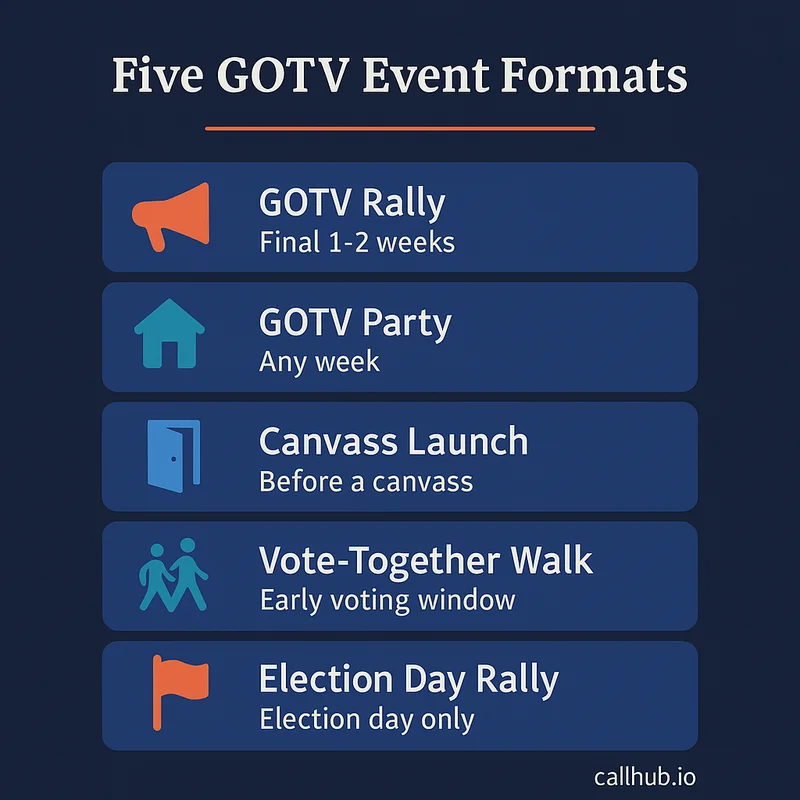
- GOTV rallies work best in the final one to two weeks before election day and deliver visibility, media coverage, and a volunteer surge.
- GOTV parties, or phone bank parties, can run any week of the GOTV window and turn a calling shift into a shared occasion.
- Canvass launches fit best the day of or the weekend before a canvassing push and are meant to energize volunteers before door knocking.
- Vote-together walks during the early voting window convert voter intention into a scheduled trip to the polls.
- Election day rallies are a one-time, last-push visibility event near polling locations.
- Parties and canvass launches can repeat weekly without losing impact, while rallies and election day events are one-time investments that need a larger confirmed guest list, and small campaigns can get the same social-visibility effect from a low-cost house party instead of a rally.
Making the event feel hosted, not staffed
- Assigning a specific person to greet each arrival by name, serving food, and playing music before the program starts signals that the gathering is a community choice rather than a campaign obligation.
- Recruiting a trusted local validator, such as a pastor, business owner, or block captain, to speak or simply stand at the front applies the same visibility principle to leadership, since supporters follow people they recognize before they follow a campaign brand.
The event is not the finish line
- Yale Institute for Social and Policy Studies research found door-to-door canvassing lifts turnout by 5 to 8 percentage points among contacted voters, the highest measured lift of any GOTV channel, and that lift comes from repeated direct contact rather than a single gathering.
- An event’s real value is the list of names it produces, and what the campaign does with that list afterward determines whether the turnout effect materializes.
- A dedicated sign-in table at the entrance, rather than a circulating clipboard, should capture phone numbers and contact permission the moment someone arrives and check new arrivals against the existing contact list to flag supporters already in the calling program.
What is a GOTV event, and why does it still work in a digital campaign?
A GOTV event is a scheduled, in-person gathering built to convert supporter enthusiasm into two things: Volunteer capacity and a captured list of names. Rallies, phone bank parties, and canvass launches all qualify. A call or a text reaches one household at a time. An event reaches a room at once, and it does something neither channel can: It lets people see each other show up.
That visibility is not incidental. It is the actual mechanism behind why events move people at all.
The social-visibility research behind why people show up
Researchers Alan Gerber, Donald Green, and Christopher Larimer tested this mechanism directly in a 2006 Michigan primary. Some households received a mailer listing their own recent voting record. Others received a mailer listing their neighbors’ voting records too. Gerber, Green, and Larimer (2008) found that the neighbors’ version raised turnout by 8.1 percentage points, an effect comparable to a door knock.
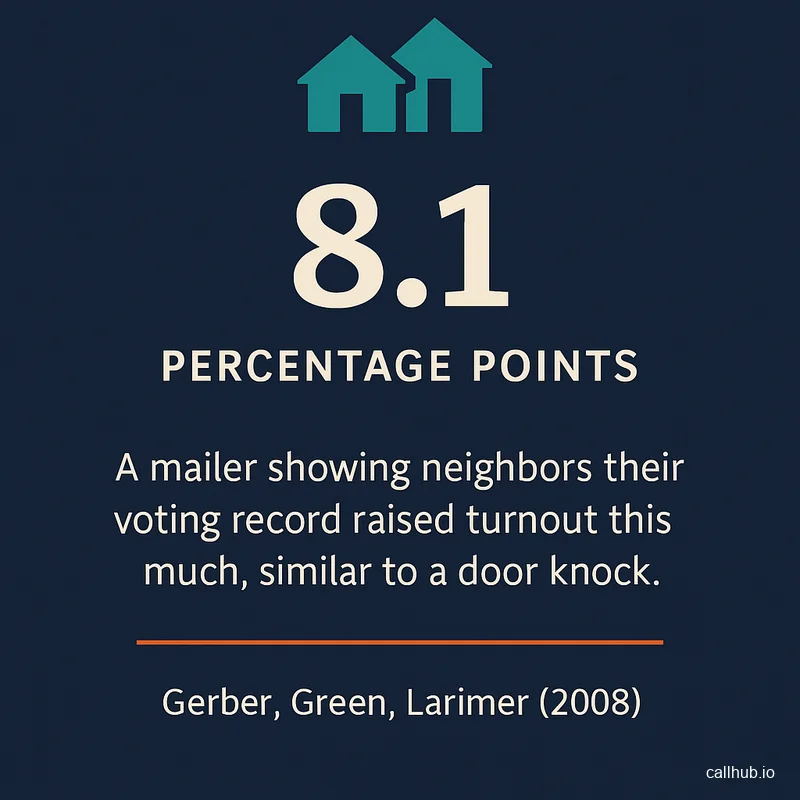
The mechanism was not information. Everyone already knew whether they had voted before. The mechanism was visibility: Knowing that other people would know.
A GOTV event runs on the same principle at a smaller scale. When a supporter sees 20 neighbors show up to canvass or phone bank, voting stops feeling optional. It becomes the thing your community does this week.
Five GOTV event formats (and when to run each)
Not every GOTV event does the same job. Match the format to where your campaign sits on the calendar, not the other way around. If you haven’t mapped your full calendar yet, start with CallHub’s GOTV timeline guide.
| Event format | Best timing | Primary goal |
|---|---|---|
| GOTV rally | Final one to two weeks before election day | Visibility, media coverage, volunteer surge |
| GOTV party (phone bank party) | Any week during the GOTV window | Turn a calling shift into a shared occasion |
| Canvass launch | Day of, or weekend before, a canvassing push | Energize volunteers before door knocking |
| Vote-together walk | During the early voting window | Convert intention into a scheduled trip to vote |
| Election day rally | Election day only | Last-push visibility near polling locations |
A GOTV party and a canvass launch can run every week of the GOTV window without losing impact. A rally and an election day event are one-time investments, so they need a larger confirmed guest list to justify the staff time. If you are running a GOTV party, pair it with a set of proven GOTV phone banking scripts so new volunteers do not freeze once the calling starts.
Campaign size changes which format to start with. A small local campaign or a single-issue nonprofit chapter rarely has the staff to pull off a rally, but a GOTV party at a volunteer’s house costs almost nothing and produces the same social-visibility effect on a smaller scale. Larger campaigns with paid field staff can run both: Weekly parties to sustain momentum, then a rally in the final stretch to convert that sustained energy into a single high-visibility moment.
Building genuine community at your GOTV event
The format only gets you halfway there. An event that feels staffed instead of hosted will not produce the social-visibility effect described above, no matter how many people attend.
Make it feel hosted, not staffed
Assign a specific person to greet each new arrival by name, rather than leaving check-in to whoever is free. Serve food. Play music before the program starts.
These are small operational choices, but they signal something important: This is a gathering your community chose to have, not a campaign obligation volunteers were assigned to attend.
Recruit visible local validators
Ask a known local figure, a pastor, a small business owner, a longtime block captain, to say a few words or simply stand at the front. Attendees do not need a full speech. They need to see someone they already trust standing behind the event.
This is the same visibility principle from the Gerber, Green, and Larimer research, applied to leadership. Supporters follow people they recognize before they follow a campaign brand.
Why the event can’t be the finish line
An event is a spike in energy, not a turnout program by itself. Foundational research from the Yale Institute for Social and Policy Studies on door-to-door canvassing found it lifts turnout by 5 to 8 percentage points among contacted voters, the highest measured lift of any GOTV channel. That lift comes from repeated, direct contact, not a single gathering.
For the full channel-by-channel breakdown, see CallHub’s voter turnout strategy guide.
An event’s real value is the list of names it produces. What you do with that list in the following days determines whether the event’s turnout effect shows up at all.
Capture contact data at the door, not after
Station a dedicated sign-in table at the entrance, not a clipboard that circulates informally during the program. Ask for a phone number and contact permission the moment someone arrives, while it still feels like part of attending rather than a follow-up chore. Check new arrivals against your existing contact list at the same table, so a supporter who is already in your calling program gets flagged instead of entered twice. Collect three things from every attendee:
- Name, phone number, and preferred contact method
- Whether they are already on your calling or texting list
- One specific next action they commit to, such as a shift, a canvass slot, or a confirmed vote plan
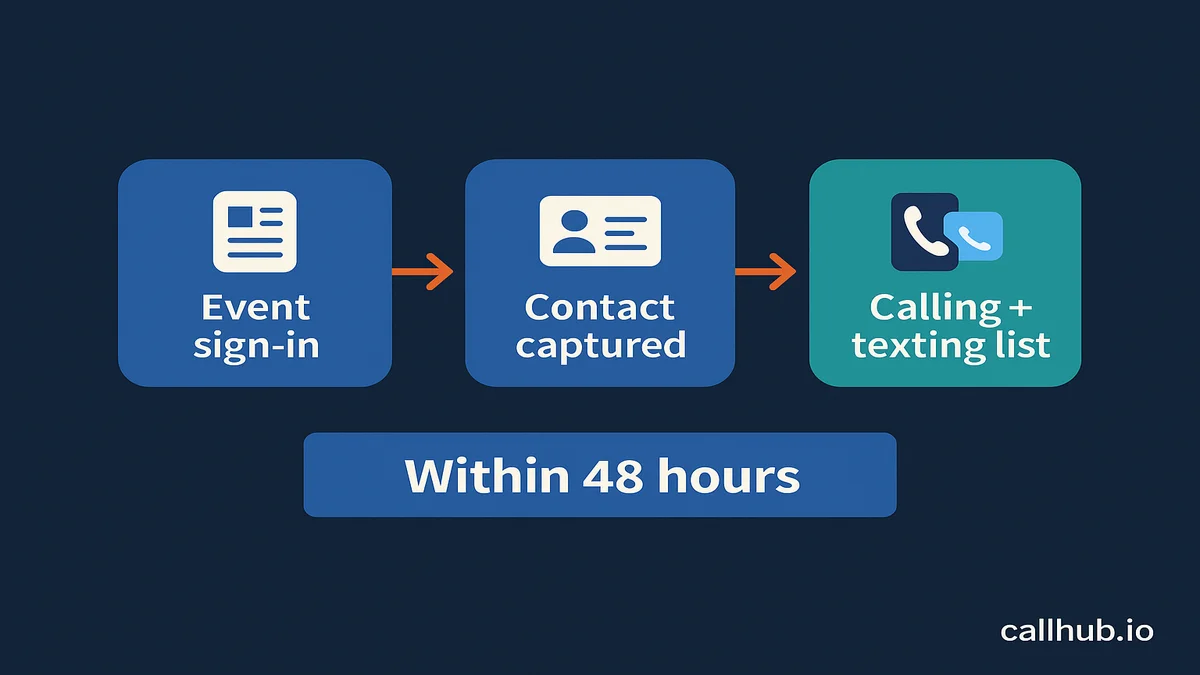
Fold attendees into your calling and texting lists within 48 hours
Names collected at an event lose value fast. Wait two weeks, and most attendees have forgotten what they signed up for.
New York Cares built its volunteer program around a version of this same principle. “There were a few times when we ran out of contacts, but we were able to pause an ongoing campaign and upload new contacts so the volunteers could continue,” says Kayla Lawrence-White, Community Relations and Program Design Office, New York Cares. The same logic runs in reverse: Names collected at an event are only useful once someone adds them to a live campaign before volunteers move on to the next list.
Set a standing rule: Sign-in sheets get uploaded into your calling and texting lists within 48 hours, not at the end of the week. This is where CallHub’s contact sync tools do the actual work. Import new names directly into a Power Dialer or Peer-to-peer texting campaign so volunteers are reaching fresh contacts within two days of the event, while the visit is still fresh in the attendee’s mind.
Pair the calling program with GOTV text reminders so attendees who prefer text over calls do not fall through based on channel preference alone.
Common mistakes that blunt a GOTV event’s turnout impact
The same mistakes show up across campaigns of every size.
| Mistake | Fix |
|---|---|
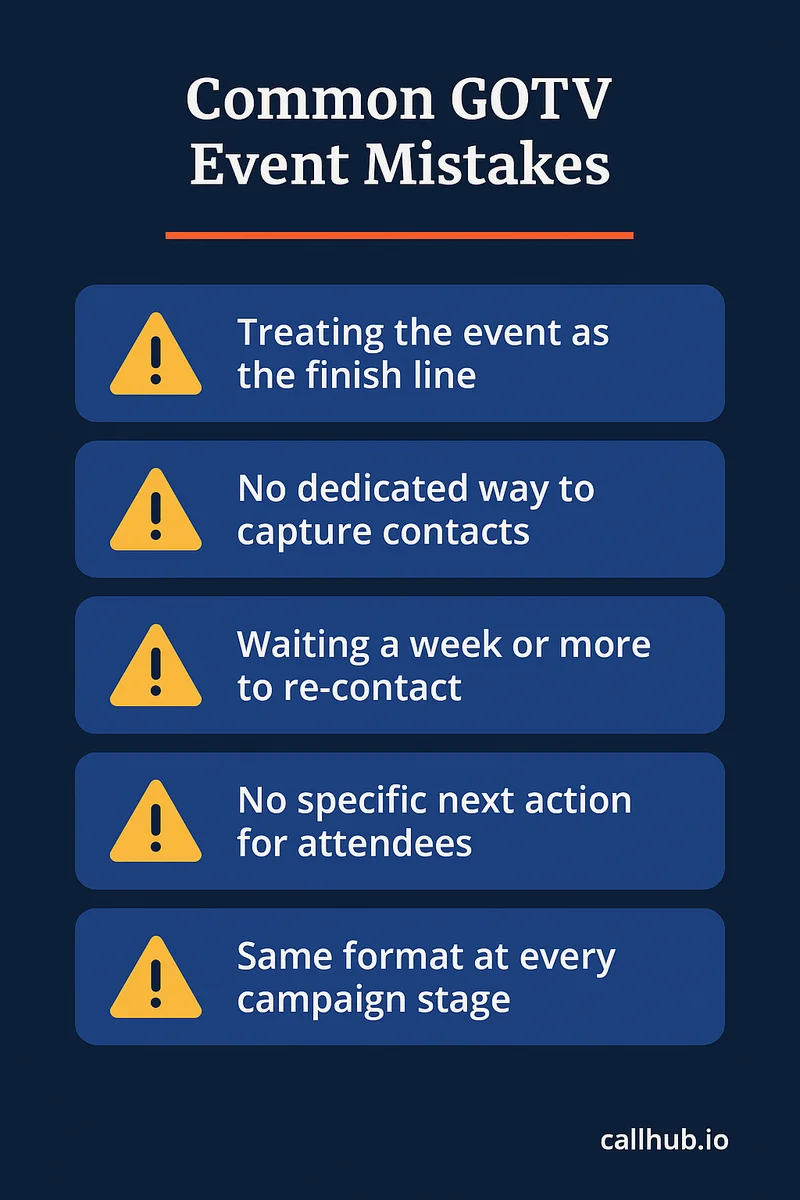
| Treating the event as the finish line | Build the follow-up plan into the event day itself, not as an afterthought |
| No dedicated way to capture contact information | Station a sign-in table at the entrance, not a clipboard passed around informally |
| Waiting a week or more to re-contact attendees | Upload new contacts into your calling and texting lists within 48 hours |
| Giving attendees no specific next action | End every event with one concrete ask: A shift, a canvass slot, or a confirmed vote plan |
| Running the same format at every stage of the campaign | Match rallies and election day events to the final stretch, parties and canvass launches to the weeks before |
Turn your next GOTV event into a turnout program, not a photo op
GOTV events build the visibility and community that make direct voter contact land. A rally or a phone bank party does not move turnout by itself. The turnout gain shows up only when the names collected at the door flow into a tracked calling and texting program within days, not weeks.
Plan your next event around that follow-up system from the start, not as a task for after. Explore CallHub’s voter outreach tools for political campaigns to see how calling and texting sync with the contact lists your events produce, or read the coordinated GOTV campaign strategy that ties events into the rest of your turnout program. For the complete phase-by-phase GOTV system that events fit into, see CallHub’s complete GOTV guide.
Frequently asked questions
What is a GOTV event?
A GOTV event is a scheduled in-person gathering, such as a rally, a phone bank party, or a canvass launch, organized to build turnout energy and capture supporter contact information. It differs from other GOTV tactics like calls or texts because it reaches a room of supporters at once rather than one household at a time.
Do political rallies actually increase voter turnout?
Rallies can increase turnout, but the effect depends heavily on scale. Snyder and Yousaf (2020) found that presidential campaign rallies from 2008 to 2016 raised turnout in the counties that hosted them, with the effect concentrated among the party’s own base. A 50-person local rally works through the same social-visibility mechanism, but should not be expected to match the scale of a presidential event.
What are the different types of GOTV events?
The five most common formats are GOTV rallies, GOTV parties (phone bank parties), canvass launches, vote-together walks during early voting, and election day rallies. Each fits a different point in the campaign calendar, from early organizing to the final week.
What is a GOTV party?
A GOTV party turns a routine phone banking or texting shift into a shared occasion, usually hosted at a volunteer’s home or a campaign office with food and music. It works especially well for smaller campaigns that cannot staff a full rally but still want the social-visibility effect of people calling alongside each other.
How do you organize a get-out-the-vote rally?
Pick a date in the final one to two weeks before the election, recruit a visible local validator to speak or stand at the front, and staff a dedicated sign-in table to capture contact information from every attendee. The event succeeds or fails based on what happens to that sign-in list in the 48 hours after it ends.
How do you turn event attendees into voters?
Capture full contact information and a specific next action at the door, then upload every new contact into your calling and texting lists within 48 hours of the event. Waiting longer lets the momentum from the event fade before your program can use it.
What’s the difference between a GOTV event and canvassing?
A GOTV event gathers many supporters in one place at one time, while canvassing sends volunteers out individually to contact voters door to door. Canvass launches are actually a hybrid: They are GOTV events built specifically to energize volunteers immediately before a canvassing shift.