


Table of Contents
There are many myths about door-to-door canvassing that are born out of different reasons.
For instance,
- A canvasser had a bad experience with the voter and tied it back to the reasons they could think of, which in reality is not true,
- The campaign manager misunderstood the laws,
- Something worked out well for the canvasser once, and they continued doing it, mistaking it for a best practice,
And so on.
In this article, we set the record straight about some of the most common myths about door-to-door canvassing in politics.
Key Takeaways
This article debunks nine common misconceptions that campaign managers and door-to-door canvassers hold about political canvassing, correcting each with the recommended practice.
Scripting and legal myths
- Canvassers should not read campaign scripts word for word, since voters respond poorly to robotic delivery and connect better when volunteers convey the script’s core message in a natural, conversational way.
- A ‘No soliciting’ sign does not legally bar a political canvasser from knocking, since the sign applies to businesses and organizations, though canvassers should approach these houses cautiously and move on if the resident is uninterested.
- Leaving campaign literature in a mailbox is a federal offense, so canvassers should leave literature at the door instead when no one answers, or hand it directly to a voter who is occupied at the moment.
Managing voter interactions
- Canvassers should limit each doorstep conversation to 3-5 minutes, and for supporters wanting a longer discussion, they should collect contact information and follow up later rather than extending the visit.
- Canvassers are not expected to answer every question a voter asks, and when they don’t know an answer they should direct the voter to the campaign website, leave their own contact information, or collect the voter’s details to follow up.
Effectiveness and doorstep persistence
- Door-to-door canvassing is not uniformly effective across all campaign types, performing best for persuasion-focused campaigns and for identifying or gathering information on specific voter segments, while being less effective for turnout-focused efforts.
- A study by UC Berkeley’s David Broockman and Yale’s Joshua Kalla found that political canvassing does not have the same impact in general elections as it does in primaries.
- Canvassers should knock on every door on their walksheet, including ones that appear empty, rather than skipping houses where no one seems to be home.
- Canvassers should wait only a few seconds at a door with no response and then move on, and if a voter firmly declines to engage or opposes the campaign, canvassers should thank them and move on rather than insisting.
9 myths about door to door canvassing
This section introduces you to the most common misconceptions about door-to-door canvassing, along with pointers on what the truth is or what practices you should follow.
Let’s get started.
1. You should strictly stick to the script
You may have heard some campaign managers ask their door to door canvassers to follow the script word to word. Although this comes from an idea that canvassers should convey the campaign messaging and not deviate from it, following a script verbatim has never been a good practice.
When you ‘stick to the script’, the voter would see a canvasser robotically reading from the script, and people don’t respond to such communication.
People connect through interactions.
Ask your volunteers to understand the essence and core elements of the script and let it flow naturally while canvassing door to door.
To better understand this area, check out our guide, ‘The Perfect Doorstep Interaction in Political Canvassing campaign’.
2. You are not allowed at doors marked ‘No soliciting’
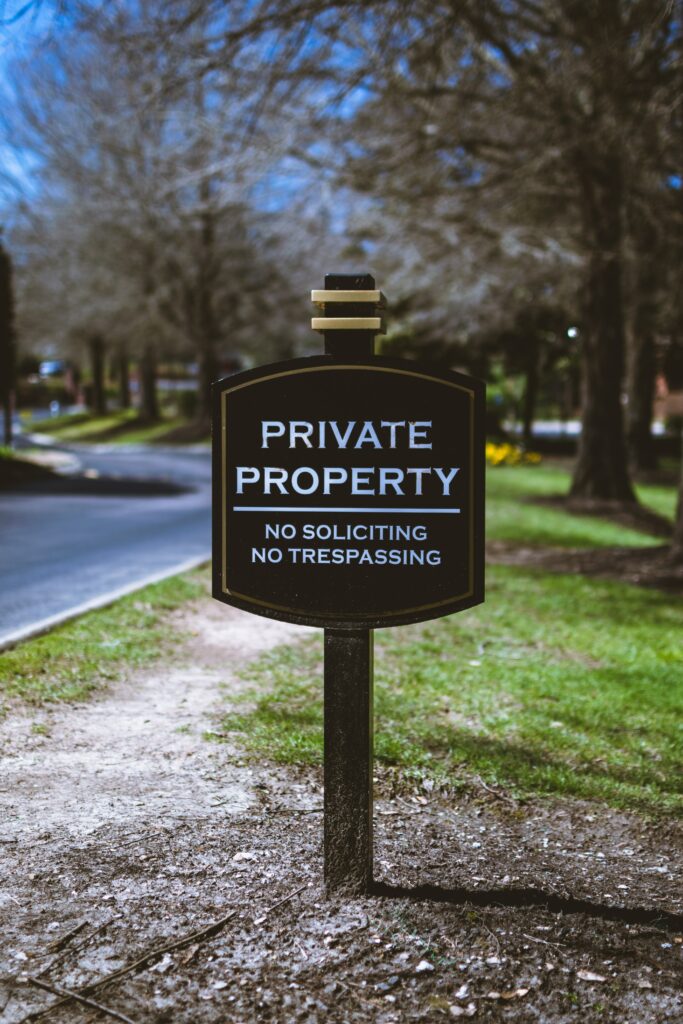
Among some canvassers, it’s still unclear what a ‘No soliciting’ sign means. The sign indicates that the voter does not want any business or organization to knock on their doors. So, in legal terms, as a political canvasser, you are still allowed to knock on their door.
Your approach to houses with such a sign needs to be slightly different, as the voters in these houses may not be too welcoming. However, do not skip these houses. Visit them with caution, and if they are not interested in interacting with you, you can thank them and move on.
3. You can drop the campaign literature in the mailbox if nobody’s home
It’s a federal offense to leave your campaign literature in the mailbox, as per political canvassing laws. If you find yourself visiting unanswered doors, leave the literature right at the door and never in the mailbox.
Also, if you see that the voter is busy when you knock on their door, say, taking care of a child, on a call, etc., you can hand out the campaign literature to them and move to the next door.
4. Engage in a long conversation with your voter
Your supporters may have many questions about your campaign and may be interested in discussing them all. However, remember that you have a long list of doors to knock on.
Limit your time at every door to between 3-5 minutes. If your voter seems to be interested in a lengthy discussion, politely let them know that you’ve got a long day ahead, and you would get back to them if they shared their contact information. Once you have their contact information, you can follow up with the answers they were looking for and move on to building a relationship through regular updates and interactions.
Alternatively, you can leave your contact information and ask them to reach out if they don’t seem comfortable sharing theirs.
5. You should answer every question
Although you should know about your candidate’s achievements and answer commonly asked questions, it doesn’t imply that you should know everything the supporter asks.
If you don’t know the answer to a question, you can do one of the following:
- Direct them to your website.
- Leave your contact information so they can reach out to you later.
- Collect their contact information so you can reach out and answer any questions.
6. Door to door canvassing works for all types of political campaigns
During my research hours, I often come across this question: “Is a door-to-door political campaign effective?”
The truth is, the answer to this is not binary.
Canvassing is effective when used for the right type of political campaign.
For instance, in a campaign where the focus is to persuade your supporters, a door-to-door campaign is highly effective. Whereas, in one where the focus is on the turnout, not so much.
A study conducted by UC Berkeley’s David Broockman and Yale’s Joshua Kalla reveals that political canvassing does not have the same impact during general elections as it does during the primaries.
Apart from this, you can use canvassing
- When you are targeting a specific audience like voters who don’t know much about the candidates.
- For voter identification and voter persuasion.
- To collect more information on the voters in your list.
Here’s a guide to help you understand where and how door-to-door canvassing is effective.
7. Skip a door if it looks like nobody is home
Never skip any door from your list, no matter what. You need to reach out to as many people from your walksheet as possible and aim to be the first. So, knock on every door even if it looks like nobody is home.
8. Keep waiting till somebody opens the door
Although you should knock on every door, it doesn’t mean you wait there till somebody opens the door. Wait for a few seconds and move on if there’s no sign of anyone coming.
9. Insist till they agree to hear you out
Not everybody will be a supporter, and it’s normal for all political canvassing campaigns to encounter opposers. You may face opposition or a firm ‘No’. In such cases, it’s best not to waste your time and instead thank them and move on.
What to do next
Now that you understand the misconceptions you need to stay away from, share these pointers with your canvassing team. To improve their performance further and for a successful door-knocking campaign, here’s a comprehensive list of dos and don’ts of canvassing.
Featured image: Photo by Tirachard Kumtanom from Pexels