
On National Voter Registration Day in 2020, Twitter placed a registration prompt in front of every U.S. user and directed them to TurboVote. The platform supplied attention. Democracy Works supplied the path to action.
That distinction matters. A GOTV social media program can spread deadlines, recruit volunteers, collect reminder sign-ups, and reinforce direct outreach. It cannot reliably tell you which individual voter saw a post, made a voting plan, or needs another contact. For the complete voter-turnout framework this fits into, see CallHub’s complete guide to GOTV.
Social media earns attention and captures intent. Phone calls, texts, and canvassing turn that intent into a trackable conversation.
The strongest programs plan both parts together. A post should lead somewhere your campaign controls, such as a signup page, an event form, or a reminder opt-in. From there, trained organizers can follow up through a consented channel.
Key Takeaways
Social media in get-out-the-vote (GOTV) campaigns is effective at generating attention and capturing intent, but phone calls, texts, and canvassing are the channels that convert that intent into a trackable voter action.
Social media’s role in GOTV
- On National Voter Registration Day in 2020, Twitter placed a registration prompt in front of every U.S. user and directed them to TurboVote, a tool from the nonpartisan nonprofit Democracy Works.
- A GOTV social media program can spread deadlines, recruit volunteers, and collect reminder sign-ups, but it cannot reliably tell which individual voter saw a post, made a voting plan, or needs another contact.
- Every post should lead to a destination the campaign controls, such as a signup page, event form, or reminder opt-in, so trained organizers can follow up through a consented channel.
Planning each post
- Before choosing a platform or format, campaigns should answer six questions: who should see the post, what they should do next, which platform reaches that audience, where the click leads, which direct channel handles follow-up, and which metric shows whether the post worked.
- Reach and likes measure creative performance only and are not a substitute for tracking actual voter turnout.
Organic vs. paid social
- Organic social suits supporter updates, partner sharing, community proof, and volunteer recognition, but offers low control over distribution beyond existing followers and partner networks.
- Paid social gives more control over budget, delivery, and audience settings, making it useful for broader distribution, signup acquisition, event promotion, and retargeting where policy and law allow.
- Compliance obligations apply to both: organic posts still require truthful information and privacy and consent practices, while paid ads may also need political-ad authorization, disclaimers, and targeting limits that vary by platform and region.
Platform-specific tactics
- Recommended tactics include reaching younger voters with a concrete action, running a photo campaign, using X for real-time updates, using Facebook for community distribution and sign-ups, repurposing YouTube explainers, distributing creative with a measurable CTA, and using Instagram formats to move supporters to owned channels.
- Youth-focused campaigns should pick channels from current platform usage data rather than relying on a single broad claim about ‘young voters,’ and should use clear CTAs like ‘Check your registration’ that send users to a mobile-first page continuing the same message.
- A photo campaign sets up a booth in a high-traffic area such as a college campus, has participants write why their vote matters, photographs them with permission, and posts the image with a CTA that continues the journey, such as a registration resource.
- X can be used to share registration, early-vote, mail-ballot, and election-day deadlines, post polling-place information from the relevant election authority, correct rumors with a source link, and measure qualified traffic through tagged links, though a trending hashtag should not be assumed to create a turnout effect on its own.
GOTV with social media strategies
A social plan works when every post has a job. Before choosing a platform or format, answer six questions:
- Who should see this?
- What should they do next?
- Which platform can reach that audience?
- Where will the click lead?
- Which direct channel will handle follow-up?
- Which metric will show whether the post worked?
That last question keeps the program honest. Reach and likes can diagnose creative performance. They are not voter turnout.
Organic vs. paid social for GOTV
| Dimension | Organic social | Paid social |
|---|---|---|
| Best use | Supporter updates, partner sharing, community proof, volunteer recognition, and rapid information | Broader distribution, signup acquisition, event promotion, and retargeting where policy and law allow it |
| Control | Low control over distribution beyond existing followers and partner networks | More control over budget, delivery, and audience settings, within platform restrictions |
| Cost | No media spend, but it still requires staff time, creative, and moderation | Media cost plus creative, landing-page, tracking, and compliance work |
| Compliance burden | Campaign identification, truthful information, privacy, consent, and community standards still apply | Political-ad authorization, disclaimers, targeting limits, and regional availability may also apply |
| Useful outcome | Partner shares, qualified traffic, volunteer interest, and reminder opt-ins | Cost per qualified signup, RSVP, volunteer shift, or consented contact |
Platform rules change quickly. Check the current policy in every geography before launch. Meta, Google, and other platforms may apply different authorization, disclaimer, targeting, or availability rules to political and social-issue content.
Here are seven social media strategies to support a GOTV program:
- Reach younger voters with a concrete action.
- Start a photo campaign.
- Use X for real-time GOTV updates.
- Use Facebook for community distribution and sign-ups.
- Repurpose YouTube explainers across channels.
- Distribute campaign creative with a measurable CTA.
- Use Instagram formats to move supporters to owned channels.
Use social media to reach youth
Younger adults use several social platforms, but the mix is not uniform. Pew Research Center’s latest social media use research shows why campaigns should select channels from current audience data instead of repeating one broad claim about “young voters.”
Social use also does not equal political knowledge or turnout. Your creative needs to convert attention into one practical next step:
- Open an official registration or election-information resource.
- Build a voting plan.
- Opt in to a reminder sequence.
- RSVP for an event.
- Take a volunteer shift.
Use clear CTA labels such as “Check your registration,” “Make your voting plan,” or “Choose a volunteer shift.” Send each click to a mobile-first page that continues the same message.
Related resource: How to get young people to vote
Related resource: How to run a social media political campaign
Start a photo campaign
A photo campaign is one of the easiest and most creative ways to spread the word and get out the vote. It’s also a great way to gain supporters. You must pick a high-traffic area like a college campus, set up a booth, and get people to visit it.
Here’s what you can do at the photo booth:
- Once you have people at your booth, ask them to show their support by writing why they think their vote matters. For example, their reasons could be supporting their preferred candidate, policies, or opposing another candidate.
- Take a photo of the person holding the message and post it on your social media.
- Tag people and encourage them to share these images on their profiles. You can create voter awareness and get them to hit the polls.
Photo booth for elections. Source: Flickr
Get permission before publishing a participant’s photo. Give the post a CTA that continues the journey, such as a registration resource or reminder signup.
Use X (formerly Twitter) for real-time GOTV updates
In the 2020 U.S. election cycle, Twitter used prompts, notifications, hashtags, and resources from TurboVote to support registration and turnout. TurboVote is an online tool from the nonpartisan nonprofit Democracy Works.
Historical 2020 example. Source: Twitter
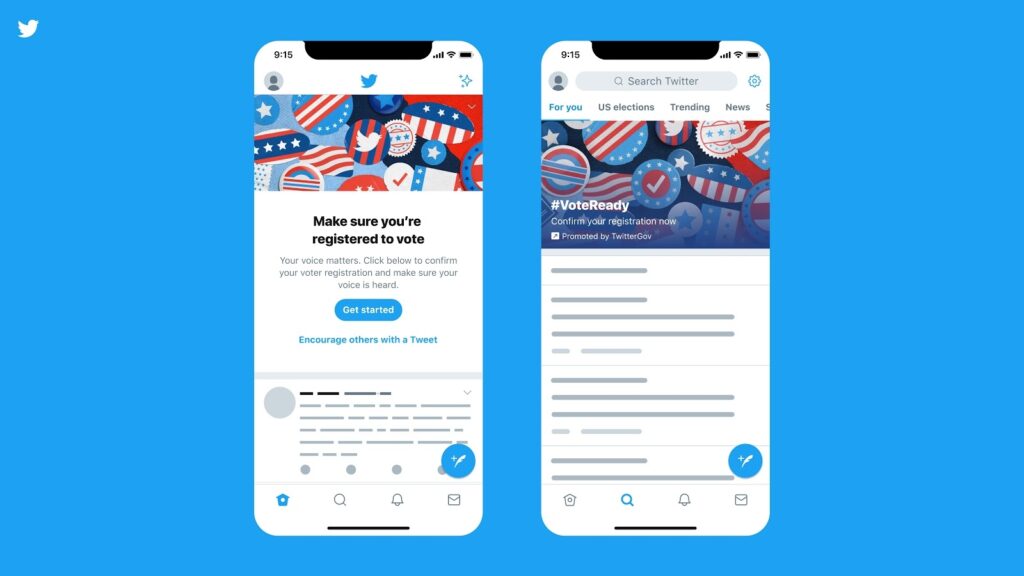
The lesson still holds, even though the platform and its features have changed: Use real-time social channels for time-sensitive information and rapid correction, then direct people to an authoritative destination.
Campaigns can use X to:
- Share registration, early-vote, mail-ballot, and election-day deadlines.
- Post polling-place information sourced from the relevant election authority.
- Correct a rumor with a source link.
- Coordinate messages with partners, local reporters, and trusted community voices.
- Use tagged links to measure qualified traffic.
Historical hashtag example. Source: Twitter
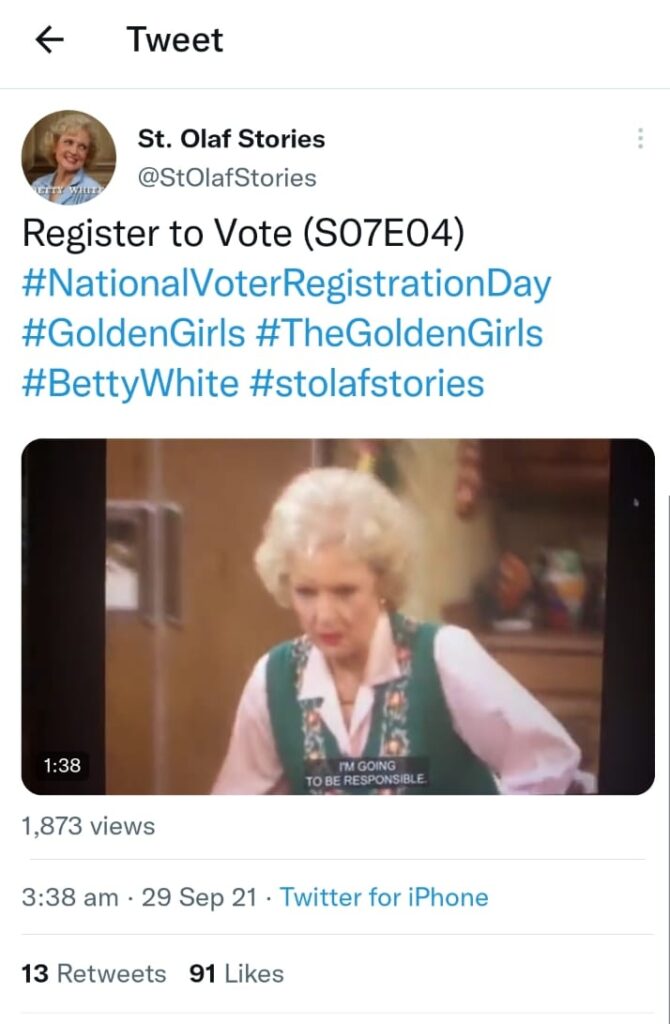
Do not assume a trending hashtag creates a turnout effect. Treat it as distribution. Measure the action that follows the click.
Use Facebook for community distribution and sign-ups
Facebook reported helping 4.4 million people register ahead of the 2020 U.S. election, according to USA Today’s coverage of the initiative. That is a dated platform-led example, not a promise that a campaign page will produce the same outcome.
For a campaign, Facebook is useful for:
- Sharing updates through local groups and partner pages.
- Promoting events and volunteer shifts.
- Sending traffic to owned signup and reminder pages.
- Answering common questions in comments with sourced information.
- Running paid distribution where the campaign, geography, and creative meet current requirements.
Meta maintains authorization and disclaimer rules for ads about politics or social issues. Review the current Meta political advertising guidance before launch and have counsel review jurisdiction-specific requirements.
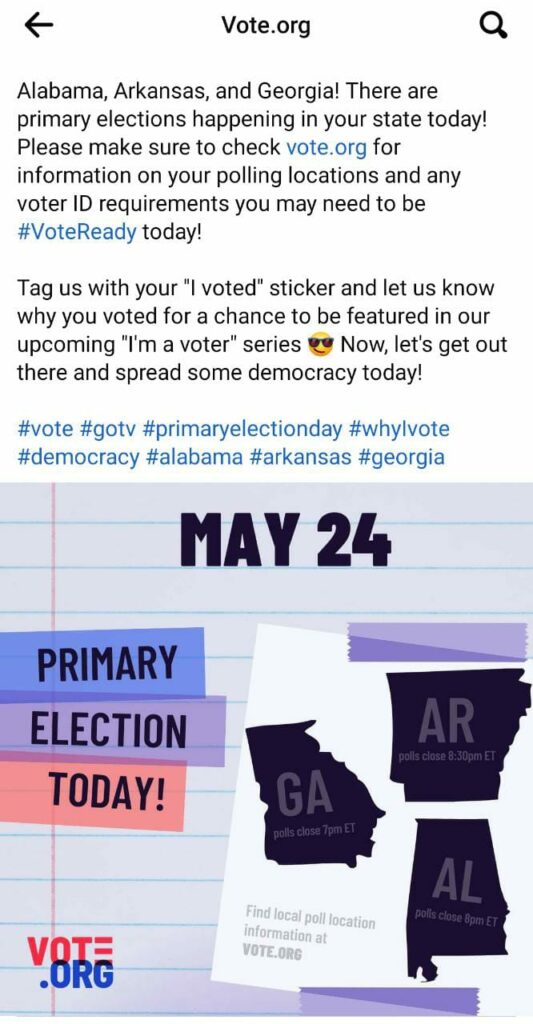
Historical Facebook GOTV example. Source: Vote.org
Repurpose YouTube explainers across channels
YouTube works best in GOTV when a campaign needs more room to explain a process. A video can show how to request a ballot, explain a deadline, train volunteers, answer common voting questions, or provide accessible versions of campaign information.
In 2016, YouTube and creators used the #voteIRL campaign to publish registration and turnout messages. Keep that as a historical creative example, not a current platform playbook.
For a current program:
- Create one full explainer, then cut it into short clips for other platforms.
- Add captions, a descriptive title, and a source link.
- Put the deadline or action in the first part of the video.
- Link viewers to an official election resource or owned campaign page.
- Check videos against YouTube’s election misinformation policy.
A video should answer a voter’s question and create the next action. It should not become another content asset with no follow-up path.
Distribute GOTV creative with a measurable call to action
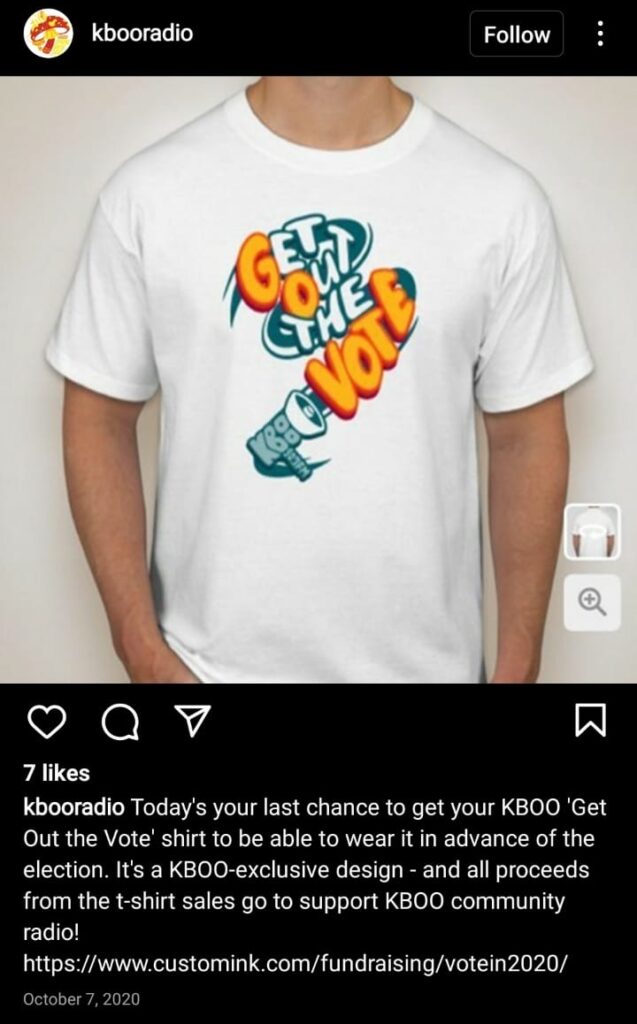
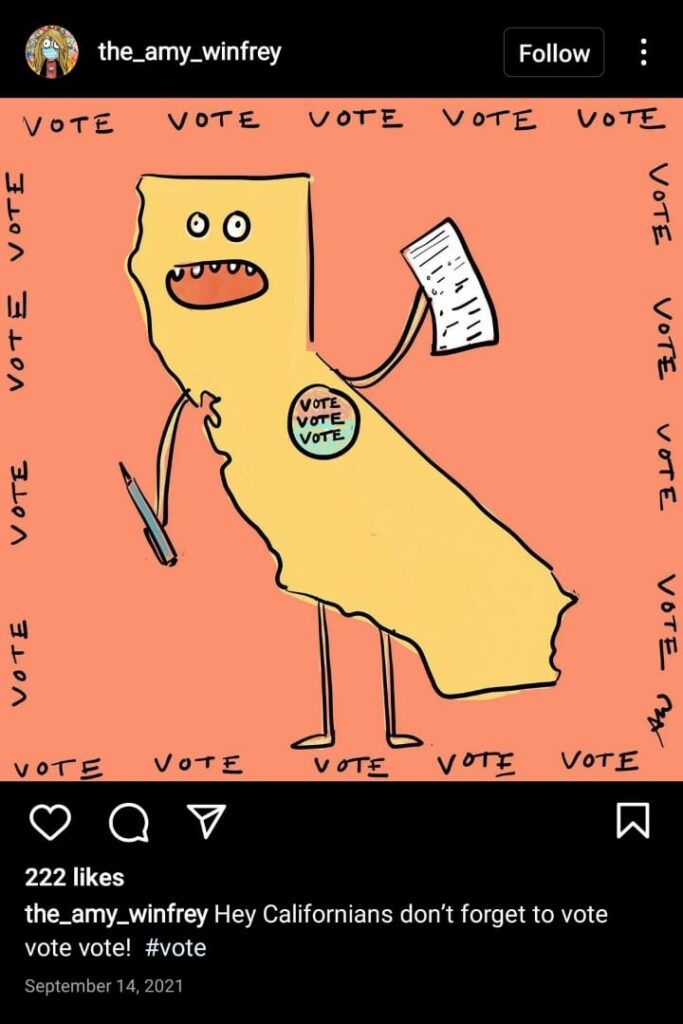
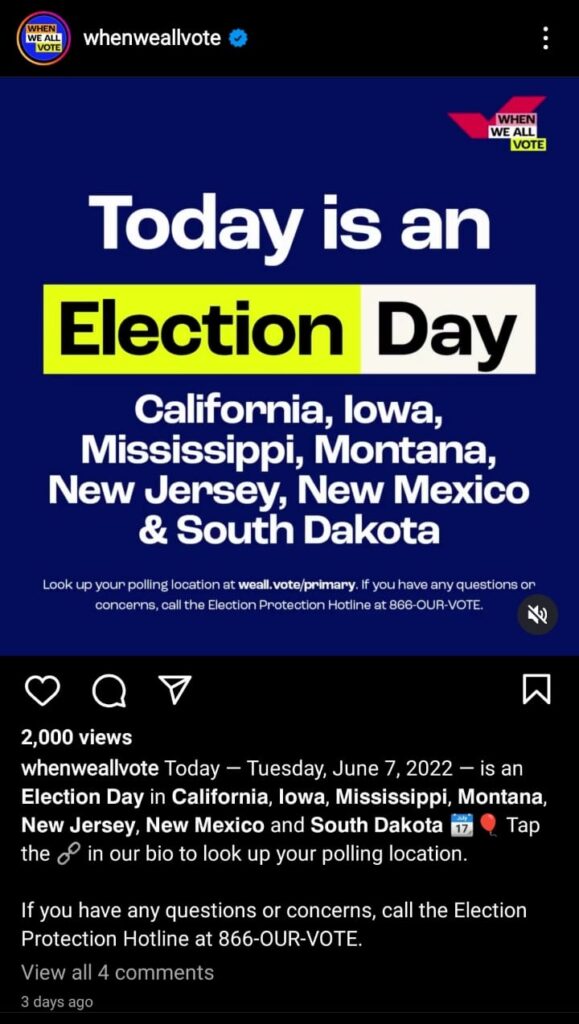
Posters, short videos, campaign literature, and volunteer photos can reinforce a GOTV message. The creative needs more than a slogan. Give the reader one clear action, the relevant date, an authoritative information source, campaign identification, and one trackable destination.
Historical campaign design example.
Historical vote poster example. Source: Amy Winfrey
Historical campaign poster example. Source: When We All Vote
Send the click to a matching landing page. A volunteer-recruitment post should open a short shift form. A reminder post should open a consent-based reminder signup. A voting-information post should open the correct official resource.
For more creative guidance, see political campaign literature types and best practices.
Use Instagram formats to move supporters to owned channels
Instagram gives campaigns several durable content formats: Short video, Stories, carousels, creator collaborations, photos, and clear visual reminders. Choose the format after deciding the task. A carousel can explain a process. A short video can introduce a volunteer ask. A Story can reinforce a deadline and direct people to a signup page.
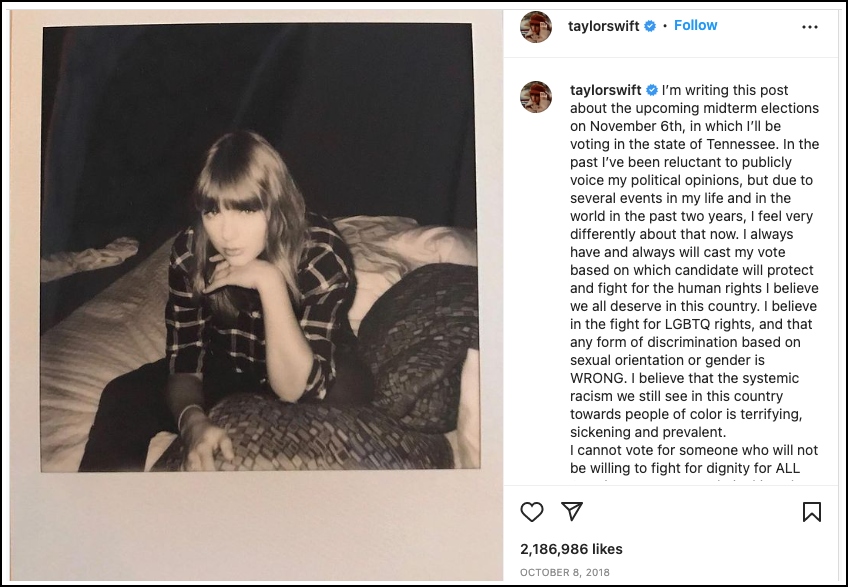
Taylor Swift’s 2018 Instagram activity remains a useful example of reach and social proof. It should be labeled by year and not presented as a repeatable turnout result for every campaign.
Historical 2018 GOTV example. Source: Taylor Swift
Campaigns can adapt the underlying pattern:
- Ask trusted volunteers, endorsers, and partners to post a clear action.
- Give them approved language, source links, and accessible creative.
- Use several formats, but keep the action consistent.
- Route viewers to an owned signup, event, or reminder flow.
Choose platforms by audience and task
No social platform is universally best for GOTV. Select one by matching the audience evidence, campaign task, available creative, and path to follow-up.
| Platform | Useful GOTV job | Recommended CTA | Core limitation |
|---|---|---|---|
| Community distribution, local events, partner amplification, and volunteer recruitment | RSVP, take a shift, or open a local resource | Page followers are not a voter universe, and paid political rules vary | |
| Visual reminders, creator partnerships, short explainers, and social proof | Open a reminder or signup page | Engagement does not show voter eligibility or completed action | |
| YouTube | Process explainers, searchable resources, and volunteer training | Open an authoritative resource or campaign form | Production and viewing do not guarantee follow-up |
| X | Deadline updates, rapid response, press and partner coordination | Open the source or take a time-sensitive action | Fast distribution can also spread incorrect information |
| TikTok | Short educational content and creator-led reach where current rules permit | Open a sourced, mobile-first resource | Political advertising and content rules require a current policy check |
Connect social media to direct voter outreach
A follower is not automatically a contactable supporter. A platform audience is not a voter universe. The bridge is an owned, consent-based conversion path.
How social attention becomes a direct GOTV follow-up workflow.
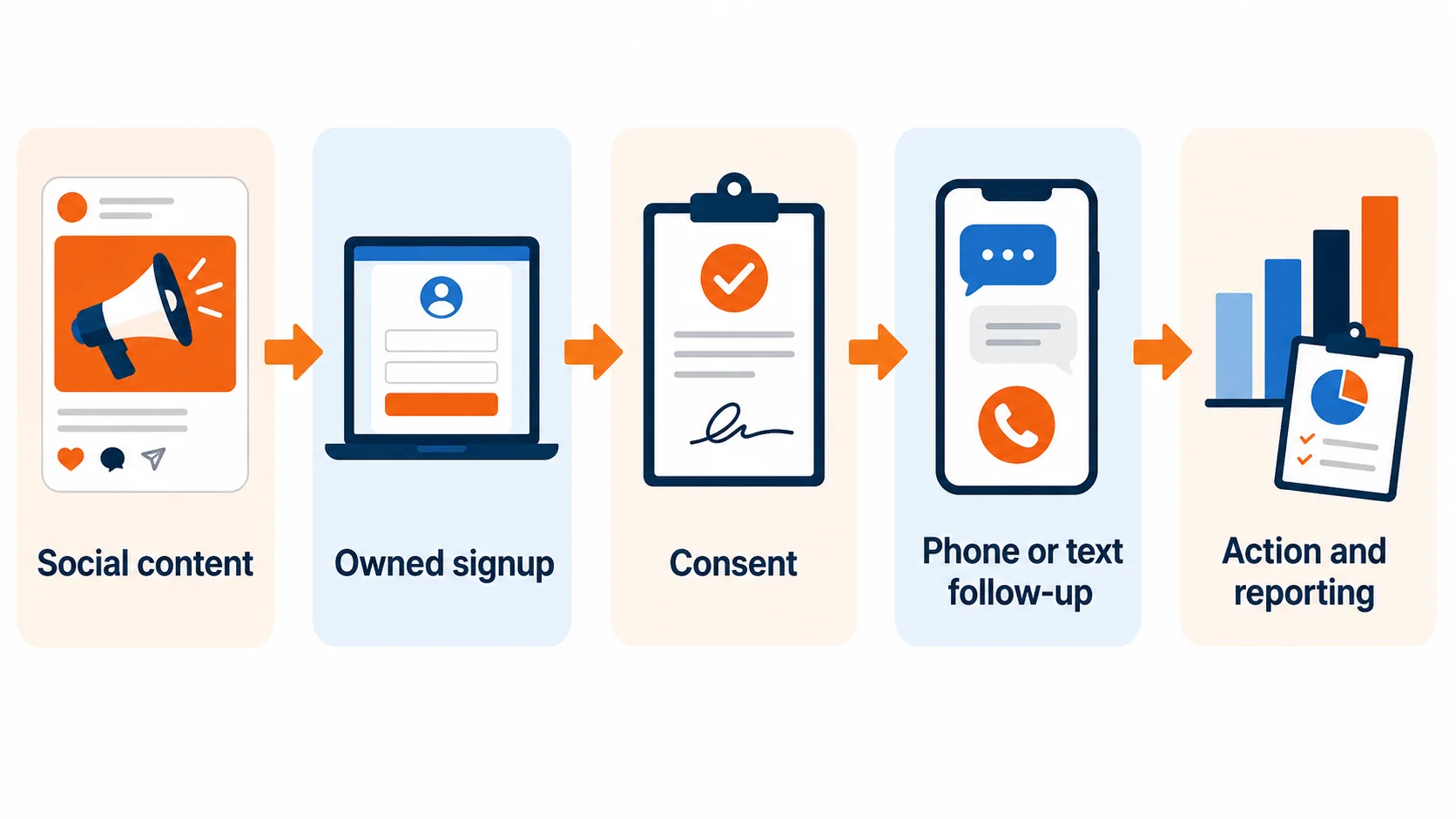
- Social content: Publish one audience-specific message with one action.
- Owned signup: Send the click to a fast, mobile-friendly form or landing page.
- Consent: Explain what the person is signing up for and capture the permissions your program needs.
- Phone or text follow-up: Route the new contact to the relevant reminder, volunteer, or support workflow.
- Action and reporting: Log outcomes, suppress completed actions where appropriate, and report the result by source.
This is where a unified GOTV outreach platform helps. A social signup can enter a volunteer phone-bank queue or a consented peer-to-peer texting program without losing its source data.
Measure what social contributes to GOTV
Use a funnel report, not a single engagement total.
| Stage | Useful metrics | What it tells you |
|---|---|---|
| Distribution | Reach, frequency, video completion, and partner shares | Whether the intended audience had a chance to see the message |
| Traffic | Link clicks, click-through rate, and landing-page sessions | Whether the creative produced interest strong enough to leave the platform |
| Conversion | Signup rate, RSVP rate, cost per qualified signup, and reminder opt-ins | Whether the destination and ask converted interest into an owned relationship |
| Direct outreach | Contact rate, response rate, volunteer shifts filled, and completed dispositions | Whether the campaign could follow up and move the person toward the intended action |
| Outcome | Completed campaign actions that the organization can legitimately track | Whether the complete workflow delivered value, with appropriate attribution limits |
Likes and impressions are diagnostic metrics. They are not evidence that someone voted. Use source tags and consistent campaign parameters so you can compare social-generated signups with other acquisition sources.
Limits and safeguards
- Algorithmic reach: Even followers may not see an organic post.
- Digital exclusion: A social-only plan misses people with limited access or different media habits.
- Misinformation: Source every deadline and process claim from the correct election authority.
- Changing policies: Review political content, advertising, and targeting rules before every launch.
- Privacy and consent: Do not move a person into phone or SMS outreach without the required permission and disclosure.
- Accessibility: Add captions, alt text, readable contrast, and plain-language versions.
- Comment moderation: Train responders to correct false information, protect personal data, and escalate complex election questions to official resources.
Social media can amplify a trusted answer. It can amplify a false one just as quickly. Build source review and escalation into the publishing workflow.
The way forward
A strong social program does not try to replace field, phone, or text outreach. It gives those channels more qualified people to contact and reinforces the same action across the campaign.
Start with one audience, one action, and one follow-up path. Then measure how many people moved from a platform you do not control to a relationship you can support.
For the wider campaign framework, use CallHub’s GOTV resources alongside the guide to running an effective social media political campaign.
Frequently asked questions about GOTV social media
What is GOTV social media?
GOTV social media is the use of organic and paid social content to support voter-turnout work. It can distribute deadlines, recruit volunteers, collect sign-ups, and reinforce reminders. Direct channels still handle the individual follow-up that social platforms cannot reliably provide.
Can social media directly increase voter turnout?
Social media can contribute to turnout, but a campaign should not treat views or clicks as proof that someone voted. The strongest evidence comes from a complete workflow that connects social exposure to an owned signup, direct contact, and a legitimately trackable action.
Which social media platform is best for GOTV?
No platform is best for every campaign. Choose based on current audience data, the action you need, available creative, platform policy, and how the click will enter your direct outreach program.
Should a GOTV campaign use organic or paid social media?
Most campaigns can use both for different jobs. Organic social supports partners, volunteers, and existing followers. Paid social can broaden distribution or drive sign-ups, but it adds cost and political-ad compliance requirements.
How can social media recruit GOTV volunteers?
Use a specific ask, name the shift and task, and link to a short mobile signup form. Follow up quickly by phone, text, or email, then track whether each social source produces completed volunteer shifts rather than only form submissions.
How do social media, phone calls, and text messages work together?
Social content creates awareness and captures intent. A consented signup moves the person into a phone or text workflow where volunteers can answer questions, confirm plans, send reminders, and record outcomes.
What should a GOTV social media post include?
Include one action, the relevant date or deadline, campaign identification, an authoritative source where needed, and one trackable link. Keep the landing page consistent with the promise made in the post.
How should campaigns measure GOTV social media performance?
Measure the full funnel: Reach, clicks, landing-page conversion, cost per qualified signup, direct-outreach contact rate, and completed campaign actions where trackable. Report likes and impressions as diagnostic measures, not turnout outcomes.
Featured image source: Magnus Mueller