
Building a campaign from the ground up through collective action is no easy task. You need two things working together: a clear voter contact strategy and powerful phone banking software built for grassroots campaigns.
Campaigns have used CallHub for years to reach voters, mobilize supporters, and win tight races. Drawing on the needs and results of those campaigns, this guide shows how modern phone banking software supports every step of your grassroots program, from early voter identification to last-minute GOTV.
For nonprofits and advocacy organizations, phone banking operates under additional rules and with different goals — a dedicated section covering nonprofit-specific use cases, scripts, and compliance requirements is included below.
Key Takeaways
Phone banking software acts as the operational backbone of grassroots campaigns, combining voter contact strategy with tools for targeting, personalizing outreach, managing volunteers, and executing get-out-the-vote efforts.
Voter Identification and Data
- Autodialers such as power and predictive dialers let each agent make more than 100 calls per hour, sharply increasing contact attempts.
- Political phone banking carries an average live-answer rate of roughly 20-22%, based on an analysis of over two million calls.
- Live phone and text surveys built into the campaign collect data on issues, candidate preferences, and likelihood of turnout.
- Call dispositions let volunteers classify each contact as a supporter, undecided, needing follow-up, or a bad number, giving data teams a clear picture of the voter universe.
- Keeping voter lists clean and current prevents campaigns from wasting resources on incorrect or inactive numbers.
Six Pillars of a Grassroots Phone Banking Program
- Voter identification finds supporters, undecideds, and non-voters quickly.
- Personalization tailors scripts and messages to each voter’s profile.
- Targeting focuses outreach on high-priority segments and precincts.
- Donor outreach turns one-time donors into recurring supporters.
- Volunteer management trains, monitors, and motivates volunteers at scale.
- GOTV execution reminds supporters to vote through calls, texts, and voice broadcasts.
Personalizing Outreach at Scale
- Personalized scripts let campaigns reference a voter’s issues, past engagement, or local context while volunteers view contact details on their dashboard.
- Branching scripts use response logic to route conversations differently for strong supporters, undecideds, or opponents.
- Merge tags insert details like first name, location, or previous action into calls and texts to keep messaging personal without extra manual effort.
- Tracking which channel a supporter responds to best lets campaigns segment lists and match voters to their preferred contact method.
Targeting the Right Segments
- Phone banking software identifies strong supporters, consistent opponents, unregistered voters, and persuadable segments from previous call data.
- Syncing tags and fields into a CRM keeps targeting and reporting aligned across tools.
- List segmentation groups voters by geography, age, issue interests, or support level so campaigns can send tailored messages instead of one script to everyone.
How does phone banking software support grassroots campaigns?
Grassroots campaigns traditionally rely heavily on local, one-to-one conversations, supported by digital tools that let small teams run large-scale outreach. Phone banking software sits at the center of that effort by making it easier to target the right contacts, personalize conversations, and track every interaction in one place.
Used well, a phone banking platform becomes more than just a dialer. It becomes your campaign’s command center for data, volunteer activity, and GOTV execution — all while keeping you compliant and efficient.
Read also: Grassroots Mobilization: Enabling ordinary people to effect extraordinary changes.
In the sections below, see how phone banking software helps you:
- Identify and understand voters
- Personalize every message
- Focus outreach on the right segments
- Build and nurture donor relationships
- Train and manage volunteers at scale
- Run high-impact GOTV programs
How to use phone banking software to identify and understand voters
The foundation of any grassroots program is knowing who your voters are, what they care about, and how they prefer to be contacted. While door-knocking will always matter, phone banking lets you talk to thousands of voters quickly and capture rich data from every interaction.
With the right phone banking software, you can:
- Use autodialers (such as power and predictive dialers) so each agent can make more than 100 calls per hour, dramatically increasing your contact attempts in the same time.
- Take advantage of strong average answer rates for phone banking, making calls more effective than many other mass outreach methods when you need real conversations.
| The average live-answer rate for political phone banking is around 20-22%. Read CallHub’s analysis of over two million calls to know more. |
|---|
- Run live phone or text surveys directly within your campaigns to collect data on issues, candidate preferences, and the likelihood of turnout.
- Log call outcomes with dispositions so volunteers can classify each contact (supporter, undecided, needs follow-up, bad number, etc.), giving your data team a clear picture of your universe.
- Keep your lists clean and up to date so you are not wasting time on incorrect or inactive numbers and can focus your resources on the people most likely to take action.
Read also: Political Surveys: Explaining The What, Why, And How.
The 6 pillars of a strong grassroots phone banking program
Modern phone banking platforms like CallHub support every stage of a grassroots campaign through six core functions:
- Voter identification: Find supporters, undecideds, and non-voters quickly.
- Personalization: Tailor scripts and messages to each voter’s profile.
- Targeting: Focus outreach on high-priority segments and precincts.
- Donor outreach: Turn one-time donors into recurring supporters.
- Volunteer management: Train, monitor, and motivate volunteers at scale.
- GOTV execution: Remind supporters to vote via calls, texts, and voice broadcasts.
Personalize your message at scale
Every meaningful contact with a voter is an opportunity to build trust and secure a vote. Phone banking software helps you turn one-off conversations into ongoing relationships by capturing data and using it to tailor future outreach.
Over your first few interactions, you will quickly see which supporters respond best to calls, texts, or email. With that information in your system, you can segment lists and match each voter to their preferred channel.
Key features that enable personalization include:
- Personalized scripts: Campaigns can build scripts that reference a voter’s issues, past engagement, or local context. Volunteers see both the script and contact details on their dashboard, allowing them to adapt the conversation while still hitting key talking points.
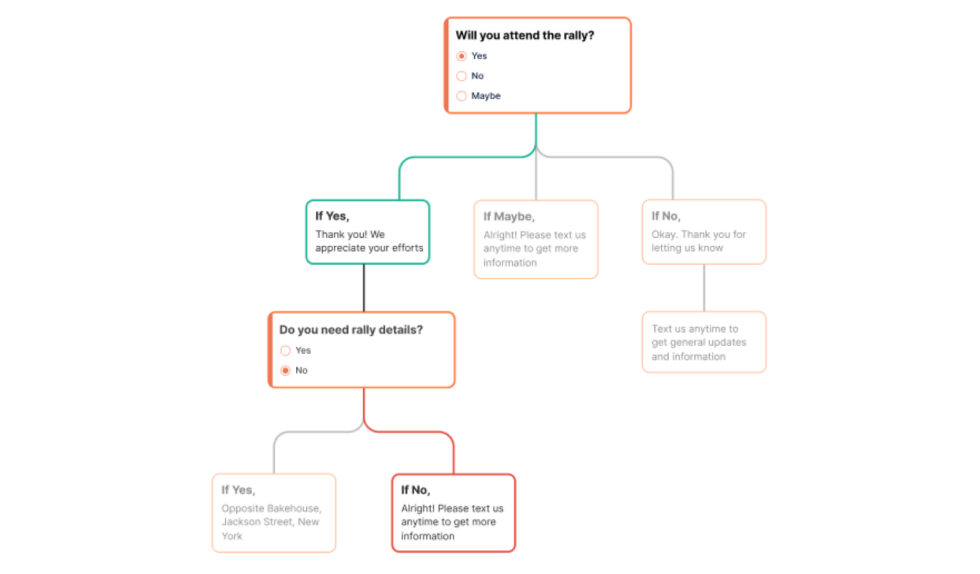
- Branching scripts: Logic-based scripts guide volunteers based on how voters respond — moving to different questions for strong supporters, undecideds, or opponents. So every conversation feels relevant, and volunteers never get stuck.
- Merge tags: Adding merge fields like first name, location, or previous action to calls and texts keeps messages personal without extra manual effort, improving engagement and response rates.
Read also: These Eight Voter Engagement Strategies Are All You Need to Know.
Focus outreach where it matters most
As your phone banking program grows, you will quickly build data on supporter strength, likelihood of turnout, and demographic patterns. The next step is using that information to focus your resources.
Read also: Master Voter Identification with VoteBuilder: The Ultimate Guide
Phone banking software makes it simple to:
- Identify strong supporters, consistent opponents, unregistered voters, and persuadable segments from previous calls.
- Sync those tags and fields into your CRM, so your targeting and reporting stay aligned across tools.
- Use list segmentation to group voters by geography, age, issue interests, or support levels, and send tailored messages to each segment rather than broadcasting the same script to everyone.
- Run microtargeted phone banking campaigns in high-priority neighborhoods or precincts rather than stretching volunteer capacity across too wide an area.
| How effective is microtargeting? Studies on nonpartisan volunteer phone banks targeting young voters estimated an average turnout boost of about 4.5 percent. |
|---|
Read also: How To Personalize Campaign Messages With Voter Profiling.
Build and strengthen donor relationships
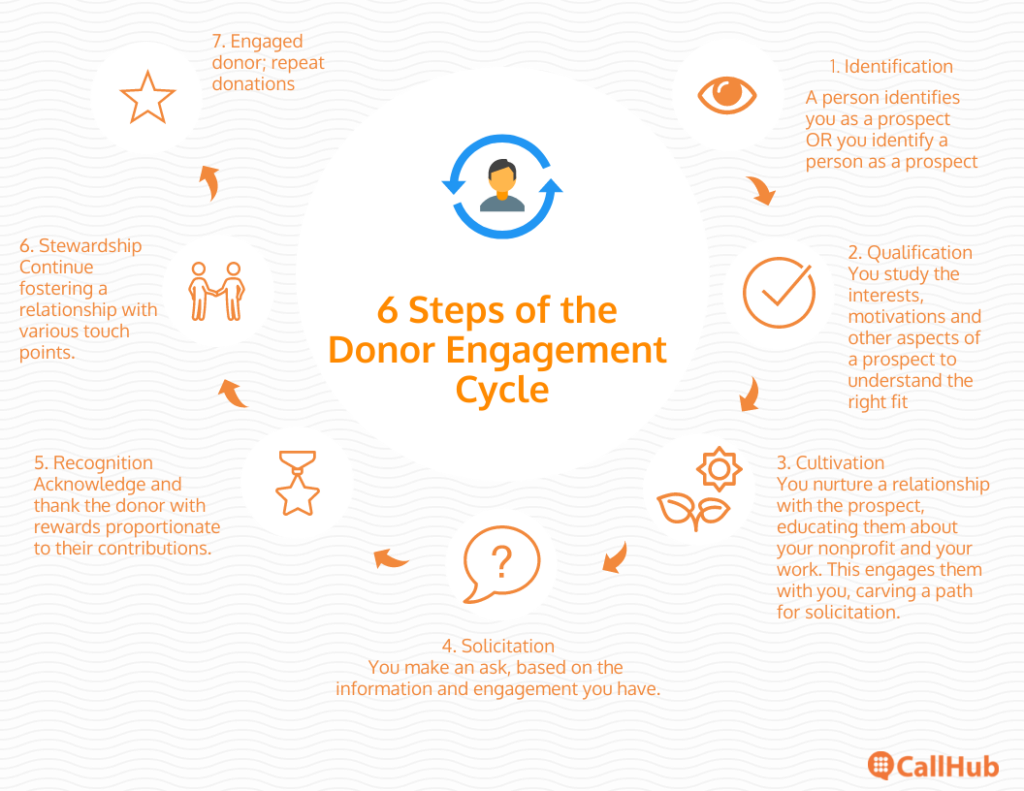
Fundraising is crucial for grassroots campaigns, and phone calls remain one of the most effective ways to secure donations and keep donors engaged.
Some experiments have shown that phone-based donor follow-up can significantly increase the funds collected compared to no personal contact.
Read also: The Ultimate Guide to Donor Retention Strategies
Phone banking software helps you:
- Identify high-potential donors based on previous gifts, event attendance, or expressed interest, and route them to specialized fundraising call lists.
- Use scheduled callbacks so fundraisers can reconnect with donors at a time that works best for them, rather than losing the relationship after a missed call.
- Send text message follow-ups immediately after a pledge or conversation, including donation links, reminders, or thank-you notes, to increase the likelihood that donors follow through.
Read also: Your guide to donor research through political donor lookup tools.
Train and manage volunteers with ease
Volunteers are the heart of a grassroots campaign. But many are new to phone banking and not always comfortable with technology.
Good phone banking software should make it easy for them to get started, stay motivated, and improve over time.
| One of our users, Celine Trojand from Organizing for Change, says about CallHub: “A lot of our folks are volunteers, a lot of them are retired, they are often anxious with technology, and they were able to use CallHub easily. The feedback on the user interface was really good. People felt like the tool was easy to use, and volunteers had a great time. It’s empowering for volunteers who don’t see themselves as very tech-savvy to be able to pick up a new piece of software and a new program and just use it, so that was great.” |
|---|
A grassroots voter outreach software will provide multiple features to encourage and train volunteers:
Live call monitoring: Campaign managers can listen to live calls by volunteers to understand whether volunteers are conveying all necessary information and give them feedback to improve. Live call monitoring makes training volunteers much simpler.
Agent leaderboard: Agent leaderboard is a way to incentivize volunteers engaged in phone banking. It showcases top-performing volunteers who you can reward, and lets you identify volunteers who could improve and train them.
Additionally, CallHub’s phone banking tools reflect your phone scripts on the agent’s dashboard. Each contact’s information and scripts combined on the agent’s dashboard help them easily navigate conversations.
Read also: The Most Effective Volunteer Recruitment Methods and Tools for Your Cause.
How to use phone banking software for GOTV success
Get Out The Vote (GOTV) efforts in the final days and weeks before an election can make the difference in close races. Research has shown that well-run GOTV programs can increase turnout meaningfully (up to 5%) among the voters they reach.
Because volunteers cannot knock every door in a short window, phone banking software lets you scale your GOTV reminder program across your universe quickly and systematically.
Modern outreach platforms like CallHub give you multiple tools for GOTV:
- Peer-to-peer texting: Volunteers send initial texts to voters, then respond one-to-one to answer questions and provide polling place details or ballot information. This combines the scale of texting with the personal feel of a conversation.
- Mass texting: Use broadcast SMS to send quick reminders about early voting periods, election-day hours, or transportation options to voters who have opted in. It is low-effort for your team and gets information out instantly.
- Voice broadcast: Schedule pre-recorded or text-to-speech voice messages from candidates or trusted messengers to reach thousands of supporters with final reminders to vote.
Phone banking for nonprofits and advocacy organizations
The sections above cover phone banking for political campaigns and grassroots voter outreach. Nonprofits and advocacy organizations use many of the same tools and techniques — but with different goals, different audiences, and different compliance rules.
Phone banking is one of the most effective tools a nonprofit or advocacy organization has for mobilizing supporters, driving legislative action, and connecting with the communities it serves. A 2022 study cited in CallHub’s nonprofit voter mobilization case study found that nonprofits mobilizing voters through personal outreach increased the likelihood of voting by 56% among the people they reached — a result that reflects the power of direct, issue-connected contact.
But nonprofit phone banking is not the same as political campaign calling. The goals, the scripts, the compliance rules, and the success metrics are all different.
How nonprofit phone banking differs from political phone banking
| Nonprofit and advocacy phone banking | Political campaign phone banking | |
|---|---|---|
| Target audience | Existing supporters, community members, stakeholders, donors | General voter universe, undecided voters, identified supporters |
| Primary goal | Issue advocacy, supporter mobilization, legislative action, fundraising, event turnout | Candidate support, voter persuasion, voter ID, GOTV |
| Script tone | Issue-based; no partisan framing for 501(c)(3); specific action ask | Candidate-focused; partisan framing permitted |
| Success metrics | Supporter activation rate, legislative contact rate, event attendance rate, donation conversion | Voter turnout, supporter ID rate, persuasion lift |
| Compliance framework | IRS 501(c)(3) or 501(c)(4) rules + TCPA | TCPA + FEC guidelines |
| List source | Existing supporter or donor database; community member lists | Voter file, purchased lists, party data |
For a comprehensive overview of political phone banking, read the complete guide to political phone banking.
Nonprofit phone banking use cases
Nonprofit and advocacy calling covers a wider range of activities than political phone banking. The most common use cases:
Advocacy and legislative action calls. Supporters are called and asked to take a specific action on a policy issue — contacting their representative, signing a petition, or attending a hearing. The script is issue-based and leads with why the issue matters to the community being served.
Patch-through calls. A patch-through call connects a supporter directly to their legislator’s office during the call. The supporter dials in or is called by a volunteer, has a brief conversation about the issue, and is then transferred to their senator’s or representative’s office to deliver the message directly. This is one of the highest-engagement formats in advocacy organizing. CallHub’s patch-through call playbook covers how to structure and run these campaigns.
Nonpartisan voter registration and GOTV. 501(c)(3) organizations can conduct nonpartisan voter registration drives and GOTV phone banking. The key constraint: calls must not name a candidate or party in a way that indicates preference or support. Scripts should focus on the act of voting, registration deadlines, and polling place information — not on who or what to vote for.
Fundraising and donor stewardship. Thank-you calls after a donation increase donor retention. Major donor cultivation calls build relationships between programs and key supporters. Lapsed donor reactivation calls ask former donors to re-engage. These calls benefit from a power dialer, which gives the caller time to review donor history before dialing and take notes after the call.
Event and rally mobilization. Calling supporters to attend a town hall, rally, community meeting, or legislative hearing. The script is action-specific: date, time, location, and why showing up matters. Follow-up texts after confirmed RSVPs reduce no-show rates.
Writing an advocacy phone banking script
An advocacy script for a 501(c)(3) organization differs from a political script in two fundamental ways: it focuses on the issue, not a candidate, and it must never imply support for or opposition to a specific political party or candidate.
Structure the script around:
- Who you are: Organization name and purpose.
- The issue: One clear statement of why this issue matters to the community.
- The ask: A specific, actionable request — call your senator about X bill, attend the hearing on Y date, or register to vote before the Z deadline.
- Plan-making questions: Ask when and how the supporter will take the action, not just whether they will. This mirrors what research shows about GOTV scripts — “When are you available to call your representative?” is more effective than “Will you call?”
Sample 501(c)(3)-compliant advocacy script
Introduction:
Hi, my name is {agent_name} calling from {organization_name}. Am I speaking with {supporter_name}?
If yes: Hi {supporter_name}, I’m reaching out because {issue — e.g., ‘the state legislature is considering a bill this week that would affect affordable housing access in our area’}.
The ask:
We’re asking supporters to call their state representative before {deadline} to share their concerns. It only takes about two minutes. Would you be willing to make that call?
If yes: Great — do you know who your representative is? [If not, offer to look it up.] When do you have a few minutes to call — today or tomorrow?
If no/unsure: I understand. Is there anything about the issue I can share that would help? Is there another way you’d like to stay involved?
Close: Thank you for your time, {supporter_name}. We’ll send you a follow-up text with the phone number and a talking point or two. Have a great day.
This script avoids all candidate and party references and focuses entirely on the issue and the specific action — both requirements for 501(c)(3) compliance.
501(c)(3) vs 501(c)(4) compliance for phone banking
Compliance is the most consequential difference between nonprofit and political phone banking. The rules depend on your organization’s tax status.
What 501(c)(3) organizations can do
501(c)(3) public charities may, per the IRS and the National Council of Nonprofits:
- Conduct nonpartisan voter registration drives that do not favor any party or candidate.
- Conduct nonpartisan GOTV activities — reminding people to vote without indicating how to vote.
- Engage in issue advocacy — taking public positions on policy issues and urging supporters to contact legislators.
- Conduct lobbying (direct advocacy on legislation) as long as it does not constitute a substantial part of the organization’s overall activities. The 501(h) expenditure election, per IRS guidance, provides clearer dollar-based safe harbors for lobbying activities.
What 501(c)(3) organizations cannot do
501(c)(3) organizations face an absolute prohibition on partisan political campaign activity, per the IRS. This means:
- Calling supporters to vote for or against a specific candidate.
- Using scripts that name a candidate in a way that indicates support or opposition.
- Producing or distributing materials that favor a political party.
- Coordinating any phone banking activity with a political campaign.
Violation of this prohibition risks loss of tax-exempt status. If a phone banking script names a candidate, it should not be used by a 501(c)(3) organization, regardless of how the framing is described.
What 501(c)(4) organizations can do
501(c)(4) social welfare organizations have more flexibility. They may engage in political activity, including advocacy for candidates and parties, as long as political activity is not their primary purpose. In practice, this means political activity must account for less than half of the organization’s total activities — though determining what counts as political activity has historically been contested.
A September 2025 federal court decision (Freedom Path v. IRS) found that the IRS standards for determining what constitutes political activity by a 501(c)(4) are unconstitutionally vague, per reporting by Brownstein Hyatt Farber Schreck and BakerHostetler. Organizations operating as 501(c)(4)s with active political phone banking programs should consult legal counsel given this ongoing uncertainty.
TCPA applies to all
Nonprofit status does not create a TCPA exemption. Organizations calling cell phones without prior express consent face the same liability as any other caller. The political call exemption under TCPA applies specifically to calls made for political purposes by political campaigns — it does not apply broadly to nonprofits making advocacy calls. Confirm with legal counsel that your calling program has the consent documentation it needs before launching.
This overview is not legal advice. Consult a nonprofit attorney or tax advisor before designing phone banking programs that may implicate your organization’s tax-exempt status.
Mobilizing supporters for issue campaigns
The mechanics of mobilizing nonprofit supporters by phone differ from voter persuasion in a political campaign. Your list is already warm — these are people who have given, volunteered, or expressed interest in your cause. The goal is activation, not persuasion.
Practical principles for nonprofit supporter mobilization:
Segment by engagement level. Callers who donated in the last 12 months should receive a different script than people who signed up for a newsletter three years ago. Branching scripts in CallHub let you route to different conversation paths based on the supporter’s history without managing multiple separate campaigns.
Lead with the issue, close with the action. Nonprofit callers who open with why the issue matters get longer conversations than those who open with the ask. Give the supporter one compelling reason to care, then make the specific request.
Use plan-making questions. Asking “When are you available to call your representative this week?” is more effective than “Would you be willing to call?” The first question assumes the action will happen and helps the supporter commit to a specific time.
Follow up by channel. After a phone call where a supporter commits to taking action, send an automated text within 30 minutes with the specific information they need — a legislator’s number, an event address, a registration link. Supporters who receive a follow-up text after a phone commitment are significantly more likely to follow through.
Track what matters. Nonprofit phone banking success metrics differ from political campaigns: supporter activation rate (percentage of calls where the supporter committed to the asked action), legislative contact rate (percentage of supporters who confirmed they contacted their representative), event attendance rate, and donation conversion rate for fundraising calls. Set these as your campaign dispositions before launching so the data is clean at the end of each shift.
Get started with phone banking software for your grassroots campaign
Grassroots voter outreach software is vital to any campaign. It integrates with every activity and enables you to deliver personalized messages to every voter or supporter.
Whether you are running a political campaign, a nonprofit advocacy program, or a nonpartisan voter mobilization effort, the same platform capabilities apply: targeted lists, branching scripts, CRM sync, automated follow-ups, and real-time analytics.
CallHub’s outreach software has been used by campaigns, nonprofits, and advocacy organizations of all sizes to reach voters and supporters across every channel. See what it can do for your program at callhub.io/platform/phone-banking/.
FAQs about grassroots phone banking software
What is grassroots phone banking software?
Grassroots phone banking software is a campaign tool that helps volunteers and staff call voters, log conversations, and track supporter data from a central dashboard. It automates dialing, enables personalized scripts, and syncs data to your voter file or CRM so small teams can run large-scale outreach efficiently.
How does phone banking software help political campaigns win?
Phone banking software increases your contact rate by automating dialing, improves persuasion with personalized and branching scripts, and focuses your outreach on high-priority voter segments. Together, these capabilities help campaigns identify supporters, mobilize them to vote, and raise more money with fewer resources.
What features should I look for in phone banking tools?
Key features for campaigns include multiple dialer modes (power, predictive, preview), contact tagging and dispositions, survey questions, list segmentation, CRM or voter-file integrations, and tools for texting and voice broadcasts. Volunteer-friendly interfaces, live call monitoring, and leaderboards also help train and motivate callers.
Is phone banking still effective compared to other outreach methods?
Yes. Research and campaign data show that volunteer phone banks can deliver meaningful turnout gains, typically 3-5% among contacted voters, especially when targeting young or low-propensity voters. Phone outreach remains one of the most effective ways to have two-way conversations at scale, compared with email or social media.
How can I train new volunteers to use phone banking software?
Start with a short orientation that walks volunteers through logging in, reading the script, recording dispositions, and asking for help when needed. Use live call monitoring, sample calls, and simple scripts to build confidence, then keep volunteers engaged with clear goals, leaderboards, and quick feedback after each shift.
Can a 501(c)(3) organization do phone banking?
Yes, with restrictions. 501(c)(3) public charities can conduct nonpartisan voter registration calls, nonpartisan GOTV calls, and issue advocacy calls — as long as the scripts do not name a candidate or party in a way that indicates preference or support. 501(c)(3) organizations face an absolute prohibition on partisan political campaign activity per IRS guidelines. Violation risks loss of tax-exempt status. This overview is not legal advice; consult a nonprofit attorney before launching a phone banking program with any political dimension.
What is the difference between advocacy and political phone banking?
Advocacy phone banking focuses on an issue — a bill, a policy, an event — and asks supporters to take a specific action (call a legislator, sign a petition, attend a hearing). Political phone banking focuses on a candidate or party and asks voters to support, oppose, or turn out for an election. For 501(c)(3) organizations, only advocacy phone banking is permitted. The script structure, the ask, and the success metrics are different for each.
What is a patch-through call?
A patch-through call connects a supporter directly to a legislator’s office during the call itself. The volunteer or automated system calls the supporter, has a brief conversation about the issue, and then transfers the supporter directly to their senator’s or representative’s office to deliver the message personally. It is one of the highest-engagement advocacy formats because it removes the barrier of asking a supporter to make a separate call on their own. CallHub’s patch-through call playbook explains how to set up and run these campaigns.
What metrics should nonprofits track for phone banking?
Nonprofit phone banking metrics differ from political campaigns. Track: supporter activation rate (percentage of contacts who committed to the requested action), legislative contact rate (for advocacy campaigns), event attendance rate (for mobilization campaigns), donation conversion rate (for fundraising calls), and DNC rate (to monitor list quality and consent). Voter turnout and supporter ID metrics are relevant only for nonprofit programs conducting nonpartisan GOTV.
Can nonprofits use autodialers for phone banking?
Yes. TCPA rules apply to nonprofits exactly as they apply to any other caller. Calling cell phones without prior express consent exposes your organization to TCPA liability regardless of nonprofit status. The political call exemption under TCPA does not apply broadly to nonprofits. Confirm your consent documentation with legal counsel before running any high-volume automated calling program.