

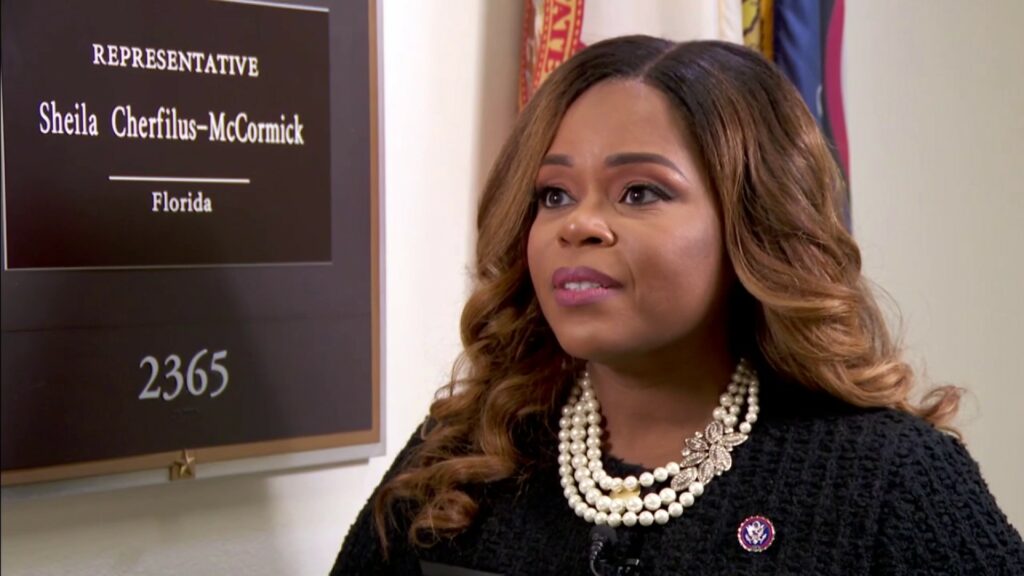
Elections can be a close race to the finish line, making every vote count. For Sheila Cherfilus-McCormick’s campaign, this was quite literal.
Sheila contested the Special Democratic primary for the U.S. House (from Florida) and won by five votes!
What did they do right to secure 23.8% of the votes and win? The campaign strategist for Sheila for Congress, Mark Goodrich, attributes a significant part of their success to text messaging.
Key Takeaways
Sheila Cherfilus-McCormick’s campaign for a Florida U.S. House special primary won by just five votes, and strategist Mark Goodrich credits much of that margin to a disciplined MMS and SMS texting strategy built on CallHub.
Why MMS over plain SMS
- MMS lets the campaign attach images, video, gifs, or voice notes and raises the character limit from SMS’s 160 to 1600, holding attention longer than plain text.
- Opponents relied on plain texts and sent fewer messages, letting Sheila’s campaign stand out with more frequent, richer messaging.
- Goodrich chose CallHub over cheaper alternatives specifically because it stayed compliant with all relevant texting laws.
Campaign structure and targeting
- The contact universe started at 90,000 super voters who had voted in every past election and leaned Democrat, excluding confirmed opposition supporters to cut costs and lower opt-outs.
- The campaign ran nine text campaigns over five months, starting in June, continuing through July to October, and closing with a GOTV push in November.
- Goodrich spaced out messaging deliberately to avoid over-texting contacts, reasoning that fewer touches reduced diminishing returns and kept people from getting annoyed.
- An initial A/B test on 5,000 contacts compared two message framings, and the higher-performing version, measured by website traffic, was rolled out to the rest of the list.
- Messages stuck to one call to action, always linking to Sheila’s campaign website, and never asked for donations to avoid triggering opt-outs.
- Peer-to-peer texting supplemented broadcast messages with personalized conversations on weekdays from 4-8pm and weekends from 10am-2pm.
- The campaign ended with a 2% opt-out rate, well below the roughly 5% industry average, which Goodrich attributes to precise targeting.
CallHub features used
- Shortcodes, 5 or 6 digit numbers, let the campaign send up to 100 texts per second versus one per second on a standard 10-digit long code, with dedicated shortcodes costing $500-1000 and shared ones costing $25.
- The duplicate campaign feature let the team clone a campaign with a new name and contact list while keeping script and scheduling intact, with the ability to pause and edit either version.
Best practices distilled
- Use images and video to boost engagement over plain text messaging.
- Narrow the contact list to the actual target audience rather than casting a wide net.
- Test messaging on a small sample before scaling it to the full list.
- Stick to a single call to action and a single link per message to drive traffic to one destination.
Overview
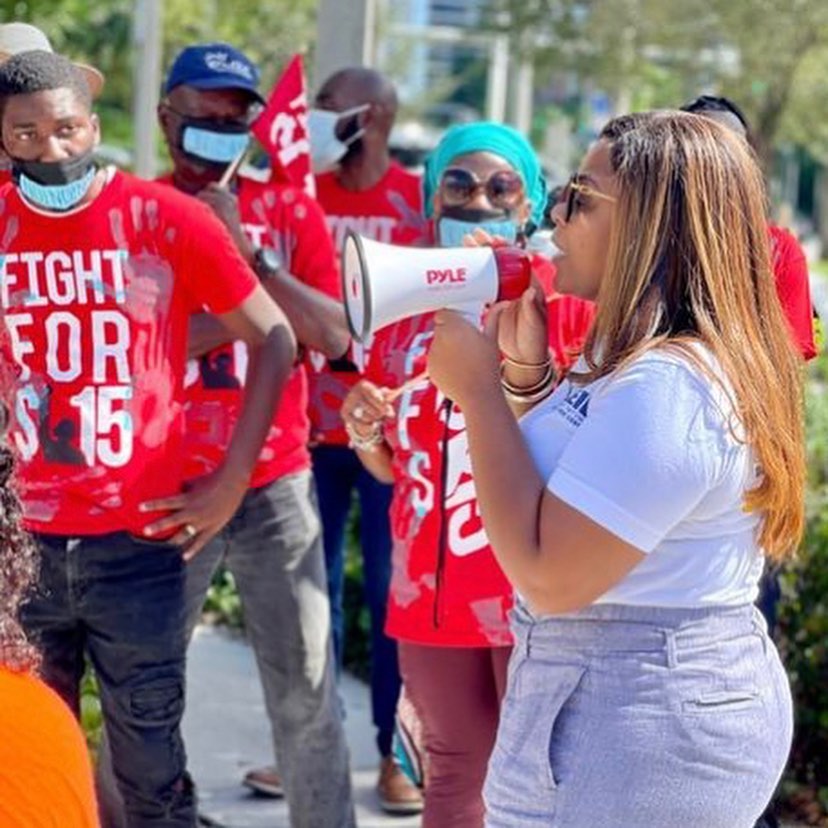
Sheila Cherfilus-McCormick’s campaign has used CallHub since January 2021 and had previously leveraged our SMS broadcast and MMS broadcast tools for mayoral and district-level elections.
The November 2021 primaries were the first time the team scaled up outreach via texts and, needless to say, found success.
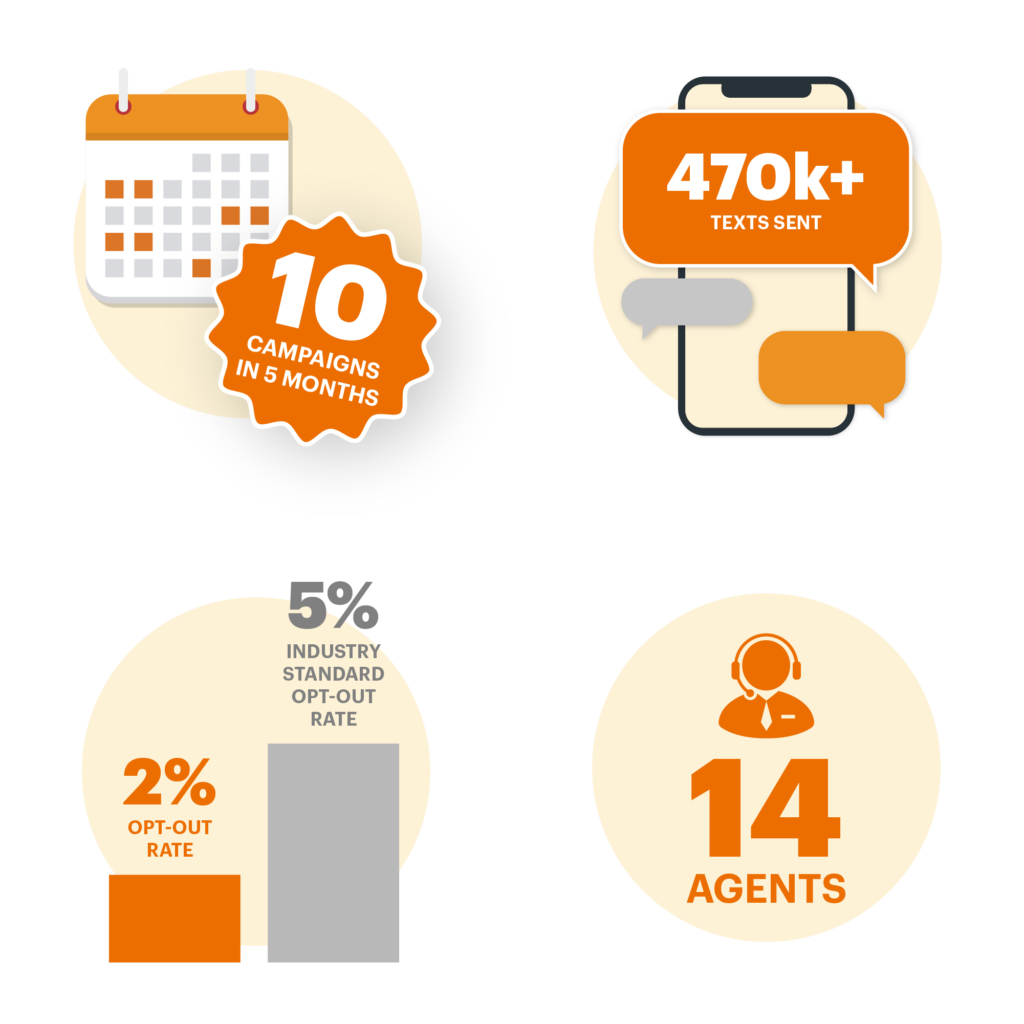
Here’s an overview of their usage.
Leveraging MMS to win elections
Mark was confident that he wanted to use media for nurturing, persuasion, and GOTV campaigns as much as possible. An image or video holds attention for longer and can result in more engagement than plain texts. Mark was aware of this and wanted to leverage it.
Enter MMS!
An MMS (Multimedia Messaging Service) allows the sender to attach an image, video, gif, or voice note in a message. Additionally, it increases the character limit to 1600 from an SMS’ 160 limit.
This use of texts to send multimedia messages distinguished Sheila’s campaign from opponents. Their opponents used plain texts and did not send out as many messages as Mark did.
Mark has a long-standing relationship with CallHub and chose to use our services for this election.
Did cost become a factor in the choice of the text marketing company?
“There are cheaper ways to do it (MMS text marketing), but CallHub is compliant to all the laws.”
A closer look at the text campaign structure
“CallHub was extremely helpful because our opponents were saying that they thought that our messaging was very clever.”
| Highlights: • The campaign used a targeted approach, making their contact universe only of party supporters and potential supporters. Confirmed opposition supporters were left out. • Mark ran A/B tests on messaging throughout the 5 months of text campaigning. • Messages focused only on persuasion. They did not ask for donations. • Texts typically carried a link to Sheila Cherfilus-McCormick’s election website—driving traffic to the online information base. |
Mark started the campaign with a contact universe of 90,000 “super voters” or people who had voted in all elections in the past and leaned Democrat. They were confident that over half of them would vote this time too. They left out others to
- Cut costs
- Cut opt-out rates.
By the end of the campaign, they got an average of 2% opt-out rate, which compares great against the average text marketing opt-out rate of ~5%.
Mark attributes this success to clever targeting, and we agree.
Focusing on confirmed and potential voters for persuasion can work better than simply casting a vast net, hoping for a larger catch (hint: those who do not want to vote for you will opt out, disgruntled.)
Next, the campaign manager spread out his outreach over a span of weeks, giving breather time to his contacts. “One thing we wanted to do was not text [contacts] too much because I felt like that would give us diminishing results,” he tells CallHub.
They sent their first text in June and then carried eight more campaigns between July and October. The last one was a GOTV campaign, closer to the elections, in November.
This worked because as he continues, “They weren’t mad at us; they just didn’t want any texts.”
Mark approached the campaign in a targeted manner. The initial texts were framed in two distinct ways for an A/B test on 5000 contacts. Each message had a link to Sheila’s campaign website.
They spotted the winner from this test (more traffic to the website) and sent that message to the rest of the contacts, thus ensuring a higher success rate.
Each text had multiple functions.
- It checked for responsiveness of the contacts (visits to the website).
- It aimed to persuade voters.
- They also collected data on voters with every message, which helped design the following outreach or ask.
None of the messages pursued fundraising. “I believe it is unfair to ask for donations as well as votes. We wanted one thing— for them to engage with us, and asking for money, in my opinion, would be the first thing to make them ask for an opt-out,” Mark shares.
The campaign aimed to persuade supporters and get them to vote. Personal conversations thus become an important aspect of political outreach. Enter P2P texts.
The campaign also initiated peer-to-peer texts for personalized conversations with their voters on weekdays, between 4-8 pm, and weekends between 10 am-2 pm.
CallHub features that stood out
Shortcode: Shortcodes are 5 or 6 digit numbers that allow you to send up to 100 texts per second (a 10-digit long code sends 1/second). A dedicated shortcode is unique to one campaign and can cost $500-1000 in the US. A shared shortcode costs $25 but is used by multiple campaigns.
Duplicate campaign: CallHub allows you to duplicate a campaign with a single click.
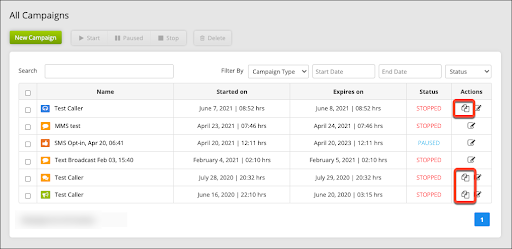
This way, you can recreate campaigns with a new name and a different contact list, keeping all other elements (e.g., script and scheduling) intact. You can always go back to the original or duplicated campaign, pause it and edit them.
To Conclude
Mark Goodrich’s strategies to target their voter universe solidified some best practices otherwise known in the industry through anecdotal recommendations. To summarize, these practices are:
- Use images, videos, and other multimedia.
- Narrow down the contact list as per your target audience.
- Test your message before sending it to a large group.
- Stick to one CTA.
- Add one link to direct your audience to a desired website/landing page.