

Table of Contents
Did you know? First-time donors who receive a thank-you call within 48 hours are four times more likely to give again. That’s why nonprofits call their supporters. It helps build relationships, express gratitude, and encourage ongoing engagement. However, managing these calls efficiently requires the right tools. That’s where the right nonprofit call center software makes all the difference. How? Let’s explore.
Benefits of a nonprofit call center
The best nonprofit call center services help teams scale this outreach without losing the personal touch
- Donor engagement – Personalized outreach via calls, texts, and email boosts giving. Donors contacted through these channels showed a 58% overall giving rate, highlighting the power of multi-channel engagement with a nonprofit call center.
- Personalized communication – Personalized communication significantly boosts donor contributions. Segmented campaigns have seen donation increases of up to 760%
- Insight gathering – Insights include data on giving frequency, donation size, preferred channels, and cause interests, which help tailor personalized communication. By using these insights, organizations can refine their strategies and increase donor retention.
- Surveys & feedback – Collects valuable input to shape future campaigns through text or call surveys.
- Donor retention – Donor Retention – Timely, personalized communication is key to building lasting relationships. A study found that first-time donor retention rates increased from 33% to 41% with just one thank-you call and up to 58% with multiple calls within 90 days
- Cost efficiency – Automates tasks, saving time and resources.
- Scalability – Handles high call volumes to ensure consistent support.
- Multi-channel outreach – Integrates calls, texts, and emails for broader engagement.
With these benefits in mind, let’s explore how you can choose the best nonprofit call center software platform.
Types of nonprofit call centers
Before choosing a platform, it helps to understand the three main models. Most modern nonprofit call center software can function across all three.
- Outbound call center
Your team initiates calls to donors, supporters, or prospects — for fundraising pledges, thank-you calls, event promotion, and voter or supporter mobilization. Auto-dialers dramatically increase conversations per volunteer per hour by skipping busy signals and unanswered calls automatically.
Best for: High-volume proactive donor outreach and fundraising campaigns
2. Inbound call center
Handles incoming calls from donors, volunteers, or the public — often paired with outbound to create a blended call center where agents handle both. Essential for organizations with active donor support lines or event registration hotlines.
Best for: Donor support lines, pledge hotlines, event registration
3. Virtual / cloud-based call center
Agents and volunteers work remotely via browser or mobile app — no hardware, no physical infrastructure. This is the most common model for modern nonprofit campaigns in the US, enabling distributed teams across multiple states to participate in a single, coordinated campaign.
Best for: Distributed volunteer teams and nonprofits without a central office
How to choose the best nonprofit call center software (8 must-have features)
You need to have a well-informed checklist to choose the best nonprofit call center solution. We have listed key features that separate the best nonprofit call center software from the rest.
Ideally, the call center should be able to:
1. Help you segment data
Segmentation is a critical aspect of any nonprofit campaign, allowing you to connect with your contacts in a more personalized, meaningful way.
| American Red Cross – STAART |
| The Red Cross segmented its donor base to optimize fundraising efforts. Through the STAART (Strategy Through Applied Analytics, Research, and Testing) program, donors are categorized into three groups: 1. Pre-qualified leads (PQL): Individuals who have donated once in response to a disaster. 2. Cultivation: Donors who have given a second time and are now considered “current supporters.” 3. Lapsed: Donors who gave a second gift but have not donated in the last 18 months. This segmentation enabled the Red Cross to develop targeted strategies for each group, aiming to convert one-time donors into long-term supporters. |
A good nonprofit call center platform lets you segment contact lists based on:
| Segment Type | What It Covers | Campaign Use |
|---|---|---|
| Demographic data | Age, income level, job title | Tailor messaging for major donors vs. small monthly givers |
| Geography | State, city, congressional district | Localized fundraising drives and regional event promotion |
| Donor motivation | Cause passion, tax benefits, peer influence | Message to what drives each individual to give |
| Engagement history | Past donations, event attendance, volunteer hours | Lapsed donor reactivation vs. active stewardship calls |
| Channel preference | Phone, SMS, email, mail | Past donations, event attendance, and volunteer hours |
How CallHub handles it: Automated tagging, dynamic list segmentation, custom fields, and suppression lists let you build targeted campaign audiences without manual spreadsheet work — and sync them instantly with your CRM.
2. Blended inbound and outbound call center
Nonprofit call center software is not just about making outbound calls. What if a vital donor did not pick up your call and wants to call back? This is where inbound calls come into the picture. Having a blend of both inbound and outbound calls is crucial. Some important features include:
- Eliminate the need for separate inbound agents: Incoming calls can be automatically routed to the next available agent in a campaign, so donors don’t have to wait.
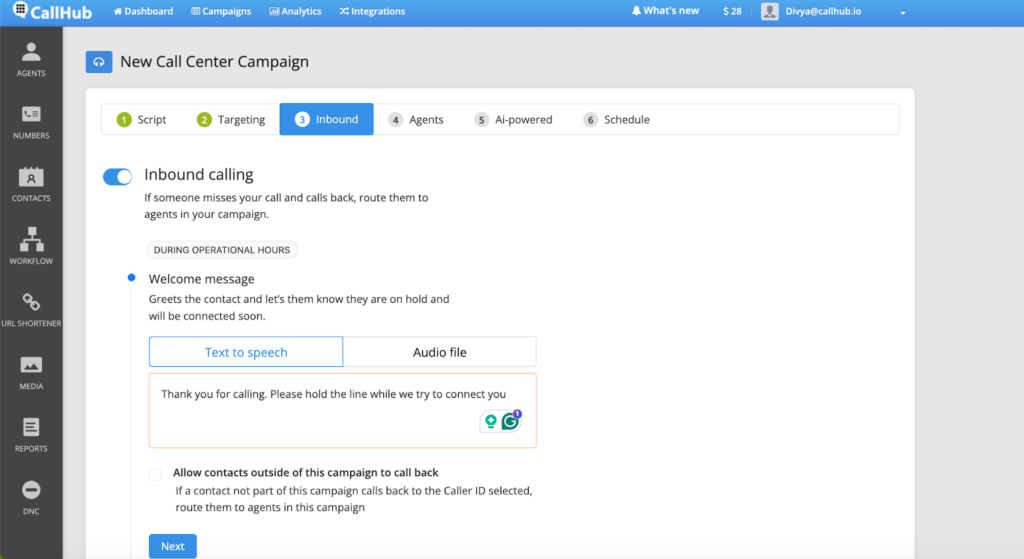
- Welcome message for incoming calls: If a donor is waiting, a nonprofit call center should allow you to create custom greeting messages for callers waiting to connect with an available agent. You can either upload an audio file or type the message, which will be converted to speech, keeping callers engaged while they wait. This is especially important during busy phone-a-thons or retention calls to prevent callers from hanging up.
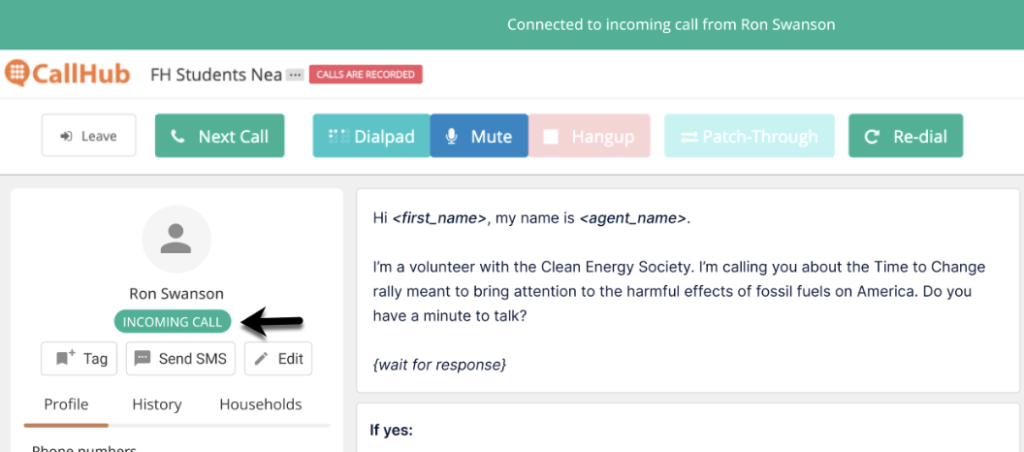
- Incoming call tagging: When agents receive inbound calls, tagging them helps prioritize calls that may have been missed. This ensures agents can quickly follow up on essential calls that were not answered initially. CallHub provides this feature so agents can identify that a call was previously dialed.
3. Text from call center
Apart from phone calls, text messages are an efficient way to keep donors informed and engaged. With texting, nonprofits can reach supporters instantly, share important updates, and maintain consistent communication. A nonprofit call center software should provide the following essential features for texting:
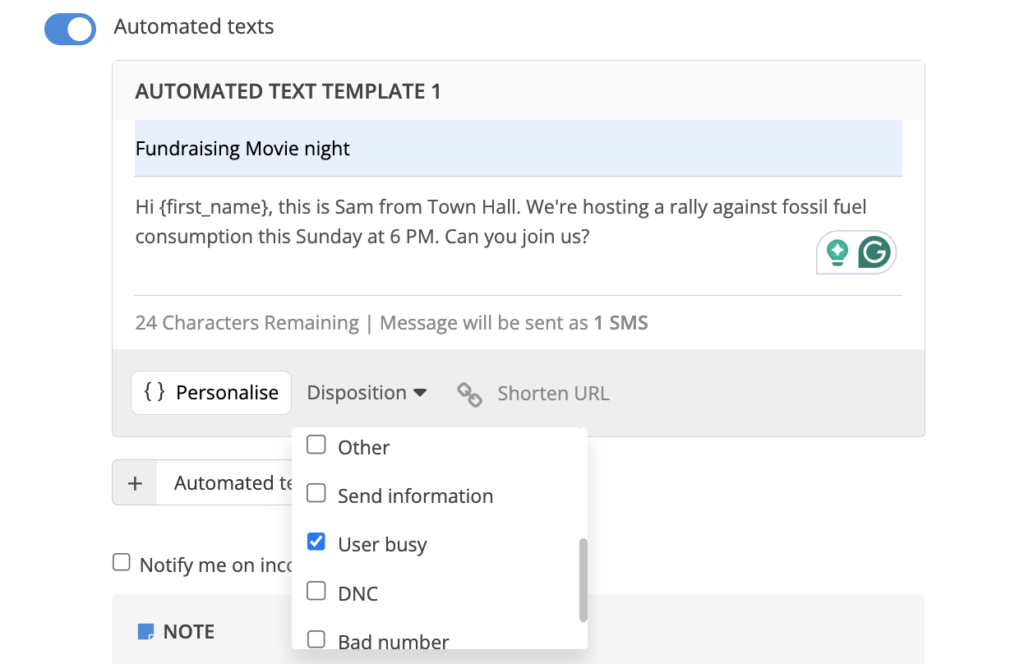
- Automated texting: A nonprofit call center should be able to send automated texts, enabling organizations to quickly reach large groups of contacts with updates, donation requests, or thank-you messages. CallHub sends automated text messages based on the call disposition you mark (like busy, unanswered, callback, etc.).
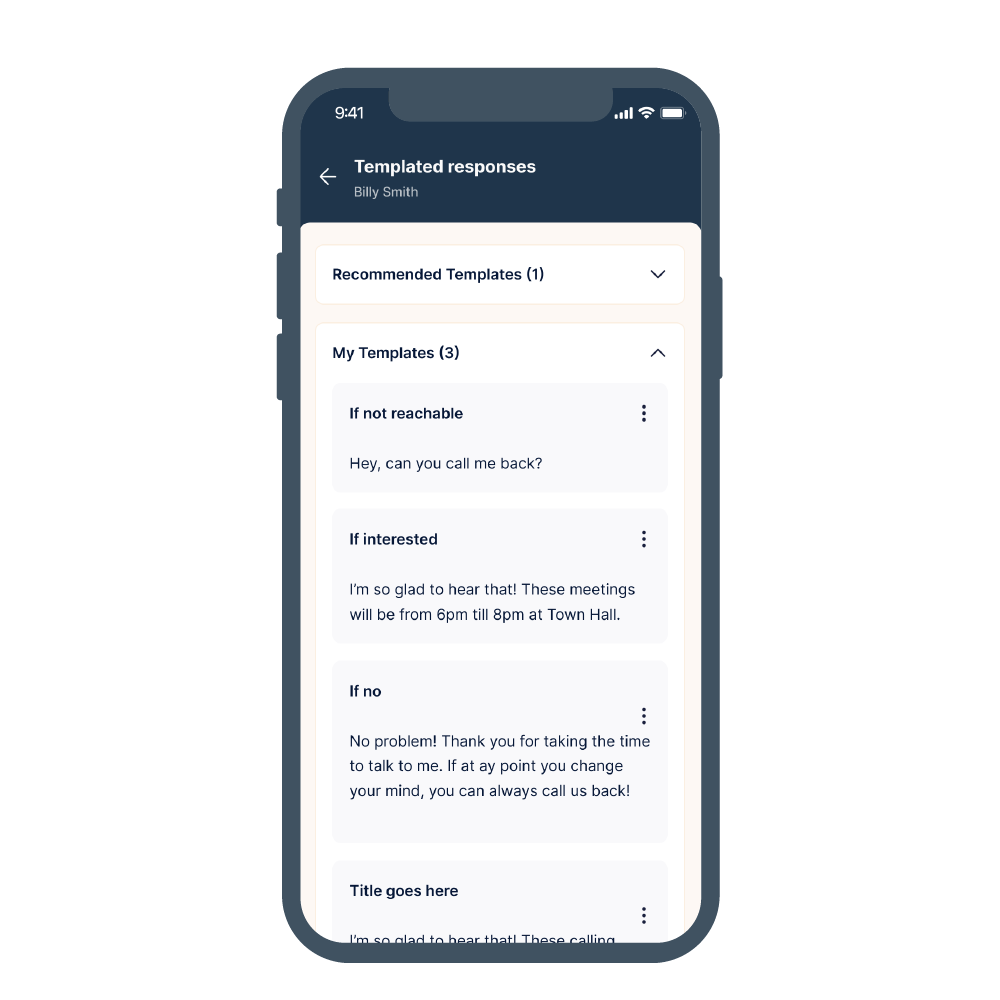
- Manual texting: While automated messages are great for mass communication, sometimes a personal touch is needed. Nonprofit call center software must be able to save multiple customizable templates for each conversation. Here is an example of how CallHub provides it
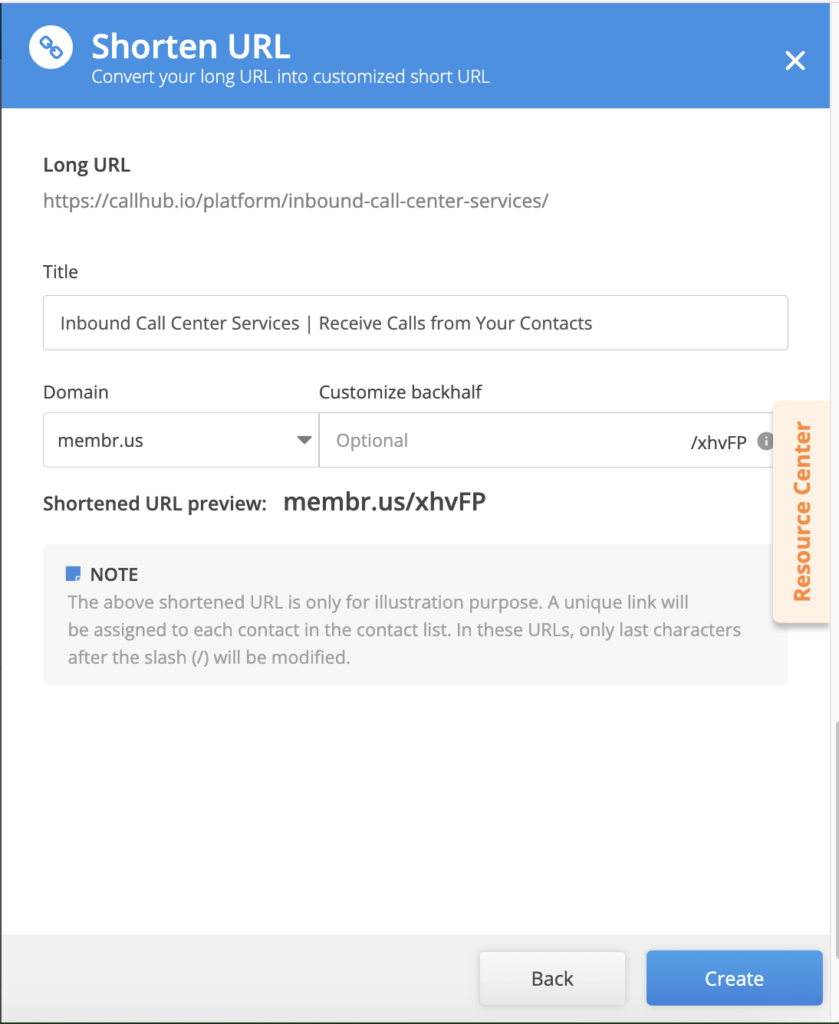
- URL shortener: Including URLs in text messages is common, but long, unmanageable links will cost you more and might not get any clicks. A nonprofit call center should include a built-in URL shortener to condense links and present them more cleanly in text messages. This is especially useful for donation pages or event registration links.
4. Compliant software
When managing donor calls, ensuring compliance with various regulations is essential to avoid legal issues and protect your organization’s reputation. Nonprofit call center services should include the following compliance features to ensure smooth and lawful operations:
- TCPA compliance: The Telephone Consumer Protection Act (TCPA) requires that calls to cell phones be made with the recipients’ prior consent. Compliant call center software will scrub all phone numbers for compliance, offering features such as opt-in consent tracking and safe calling practices.
- Do not call (DNC) list: Call centers must avoid contacting numbers on the national or internal Do Not Call (DNC) list. A compliant software will automatically scrub your contact lists against these databases, ensuring you don’t call individuals who have opted out. Additionally, you can create and maintain your suppression list to block specific numbers, including DNC.
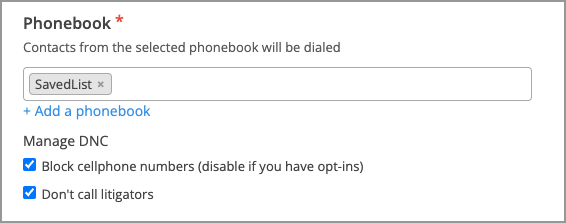
- Litigator blocking: Litigators may pursue legal action against unsolicited calls. Compliant call center software like CallHub can automatically identify and block these numbers to prevent contact, thereby minimizing legal risks. As shown below, CallHub helps to block both DNC and litigators.
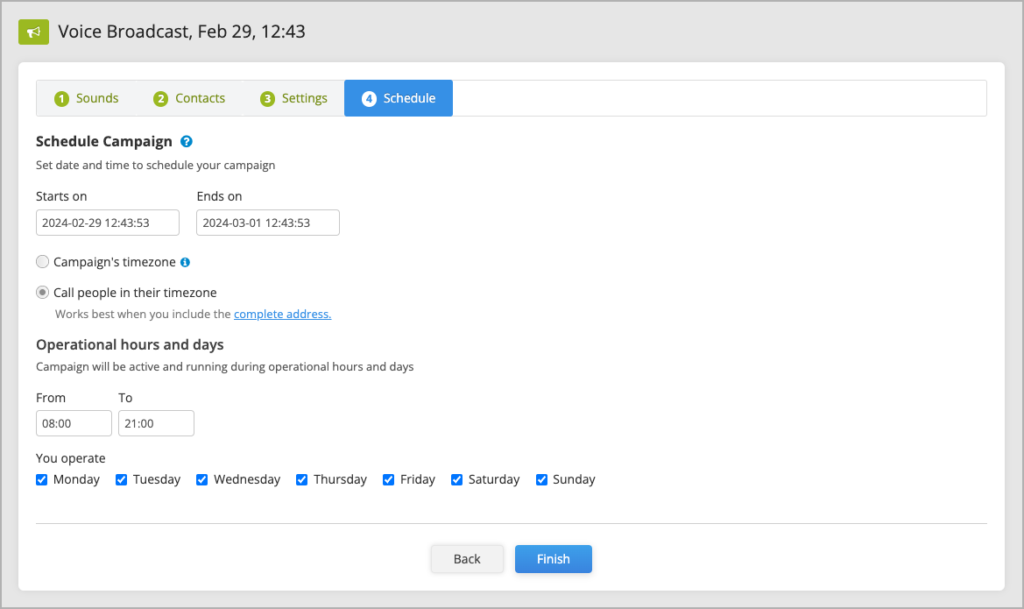
- Time zone calling: Calling people at inappropriate times can result in heavy fines and lawsuits. A good call center software should be able to detect a contact’s time zone and schedule calls accordingly, ensuring that calls are made only within legally acceptable hours. While planning the campaign, CallHub lets you call people in their timezone.
- SOC2 compliance: System and Organization Controls (SOC2) certification ensures that the software follows strict data security protocols and is committed to safeguarding customer data. This is crucial for any nonprofit handling sensitive donor information and building trust with its supporters.
- ISO 2007 certification: The ISO 2007 certification standard demonstrates that the software adheres to internationally recognized best practices for quality management systems. This is vital for maintaining high standards in operational efficiency and donor communications.
- SHAKEN/STIR compliance: SHAKEN/STIR is a framework to combat illegal robocalls by verifying the authenticity of the calling party’s number. By enabling SHAKEN/STIR, nonprofits can ensure their outbound calls are not flagged as fraudulent, reducing the risk of being blocked or labeled as spam.
CallHub ensures compliant, secure outreach with features such as consent-based dialing, DNC filtering, time-zone calling, and robust data security. These safeguards help nonprofits maintain trust, avoid legal risks, and streamline engagement while adhering to industry regulations.
5. Improves answer rates
A major challenge for nonprofits is getting calls answered, as 74% of consumers ignore numbers flagged as ‘SPAM.’ A reliable nonprofit call center solution should prevent this to maintain engagement and trust.
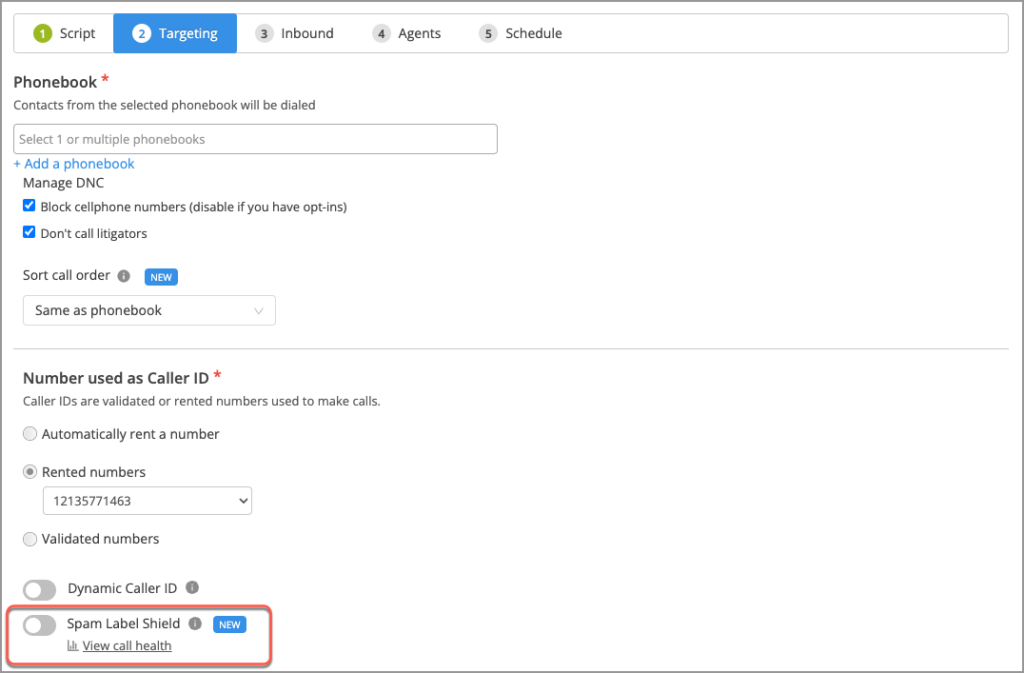
- Spam label shield: This helps protect your numbers from being marked as ‘spam’ by monitoring call reputation, rotating numbers, and using SHAKEN/STIR compliance.
| CallHub monitors the health score of the phone numbers in use. As the volume of calls made from a number increases, its health score may decrease, potentially causing it to be flagged as “SPAM” If this happens, CallHub will automatically remove the number and add a new one, provided this option is enabled in the settings. |
Learn more about how CallHub prevents spam labeling in this video.
6. Helps multi-channel communications
Nonprofit call center software shouldn’t rely solely on calls. Research shows that multi-channel donors give over three times as much as single-channel donors, yet only 3% of nonprofits use multi-channel outreach. Expanding to calls, SMS, and email ensures nonprofits connect with supporters on their preferred platforms, improving engagement and donations.
- Calls: Phone calls enable nonprofits to build trust, have real-time conversations, and gather immediate feedback. Calls create a personal connection, increasing the likelihood of donations and deepening supporter relationships.
- SMS: With 90% of text messages read within three minutes, SMS is highly effective for urgent updates, event reminders, and donation requests. Its direct, non-intrusive nature allows for quick responses, increasing engagement and conversions.
- Email: Studies show 48% of donors say regular emails keep them engaged and inspire repeat donations. Email allows nonprofits to share detailed updates, personalize appeals, and segment outreach to improve donor retention and long-term support.
CallHub offers multi-channel communication, including calls, SMS, and email, as well as voice broadcasting, enabling nonprofits to engage supporters effectively, boost donor conversions, and maximize outreach—all from one platform.
7. Seamless CRM integrations
Integrating nonprofit call center software with your CRM system is essential for efficient donor management and engagement. It ensures that all donor interactions and information are consistently updated across platforms, providing a comprehensive view of each supporter.
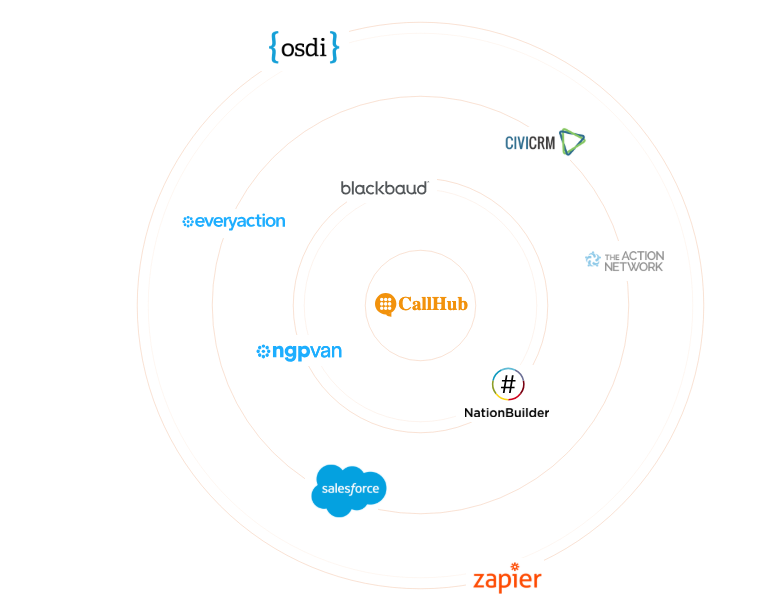
CallHub offers seamless integration with various CRM systems to streamline your nonprofit’s operations. Popular integrations include Salesforce, NGP VAN, NationBuilder, and Zoho CRM, enabling nonprofits to optimize donor outreach and improve retention efforts through real-time data syncing.
8. Helps manage distributed volunteer teams
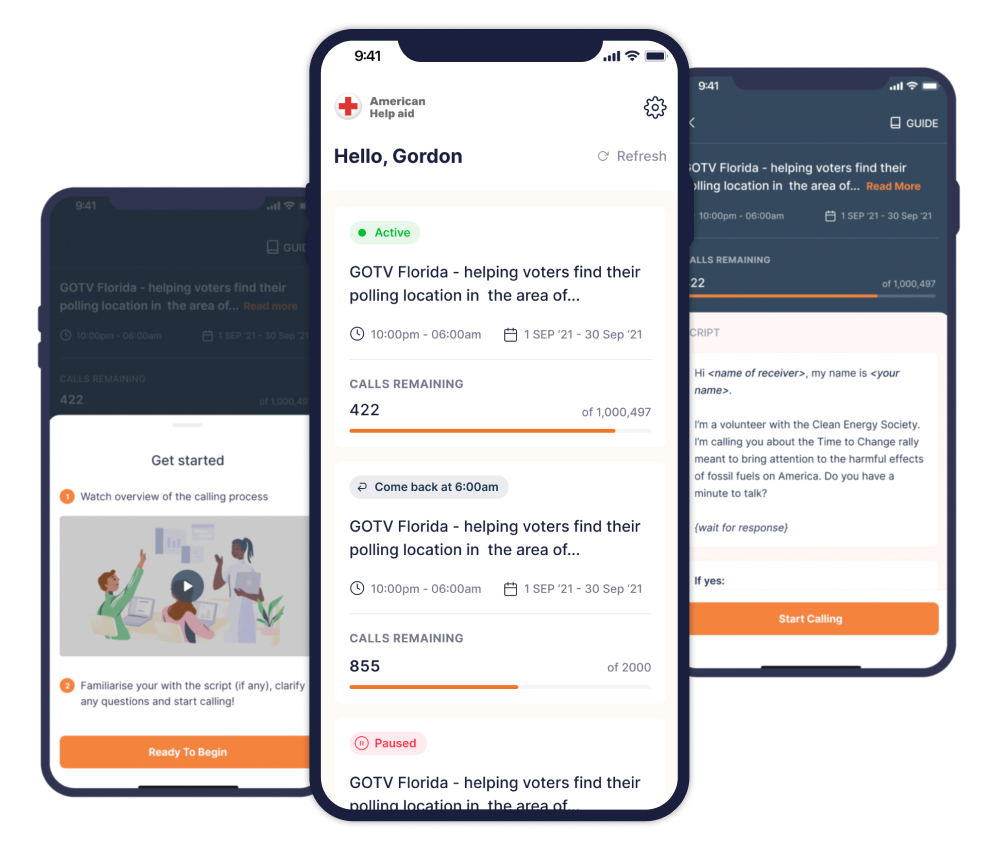
Nonprofit call centers can significantly benefit from robust volunteer and agent management solutions, ensuring smoother operations, enhanced communication, and more effective outreach. Here are several ways a nonprofit call center software can assist in managing distributed volunteer teams:
- Remote calling: Volunteers can join campaigns from anywhere, directly from their mobile phones.
- Volunteer training & support: Effective training is crucial for nonprofit call center volunteers. Structured onboarding with scripts and guides ensures nonprofit call center volunteers are prepared.
Also read: Volunteer management best practices
| CallHub simplifies volunteer management with remote training, live monitoring, and easy access to scripts and templates. Both Android and Apple apps are available. |
 |
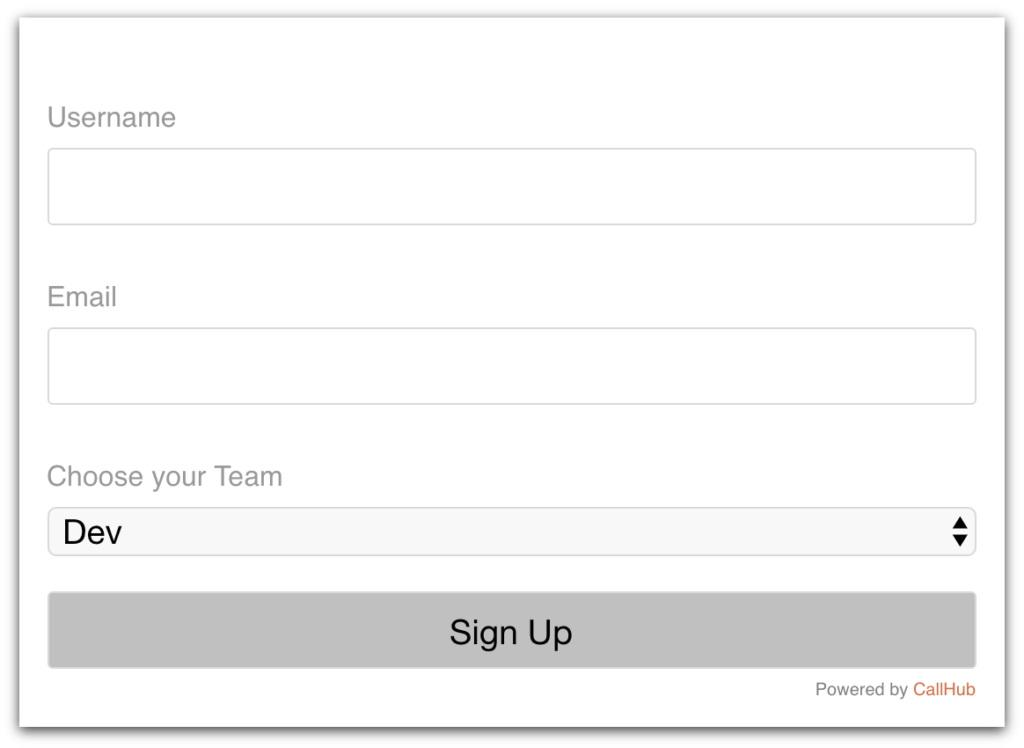
- Team selection for volunteers: Allowing volunteers to choose their own teams streamlines participation and improves engagement. A web form can simplify sign-ups, letting volunteers register for specific campaigns and automatically join their chosen teams.
Watch how to set up your nonprofit call center campaign with our step-by-step video guide.
Looking for a nonprofit call center? We have a solution…
At CallHub, we provide nonprofit call center software designed to simplify your work. helping you achieve tremendous success. With over 8,000+ organizations trusting us, we’re committed to providing exceptional service and support.
With features like multi-channel communication, CRM integrations, compliance assurance, and tools for managing distributed volunteer teams, it’s clear why CallHub is the go-to nonprofit call center software for nonprofits looking to elevate their outreach.
Talk to an expert at CallHub today to explore our nonprofit call center software today.
FAQs: Nonprofit call center
1. Why should nonprofits use a call center instead of handling calls in-house?
Call centers offer scalability, professional training, compliance, and advanced technology that may be hard to maintain internally. This leads to better donor engagement and more efficient campaigns.
2. What features should I look for in nonprofit call center software?
Look for multi-channel outreach, CRM integration, compliance tools (DNC, TCPA), data segmentation, volunteer management, texting options, and reporting/analytics.
3. How do nonprofit call centers help with donor retention?
They enable timely, personalized follow-ups, segment donor lists, and track engagement, all of which strengthen relationships and increase repeat giving.
4. Can a nonprofit call center handle both inbound and outbound calls?
Yes, modern solutions like CallHub support both, with features like call routing, custom greetings, and call tagging.